Jobsai Risk Guide: Why Bot-Style Auto-Apply Can Backfire (and the Safer Autofill-Then-Review Way)
Searching for “jobsai”? Learn what goes wrong when a bot submits for you, and use a safer autofill-then-review approach to send accurate applications.
Free Chrome extension
Autofill your next job application
JobWizard is a free Chrome extension that fills applications, tracks statuses, and optimizes your resume.
Jobsai is tempting, but bot auto-apply often creates avoidable damage
If you’re searching for jobsai, you’re probably trying to apply faster. The catch: many “apply bot” setups don’t just save time—they can send the wrong answers, the wrong resume details, or incomplete responses that hurt your chances.
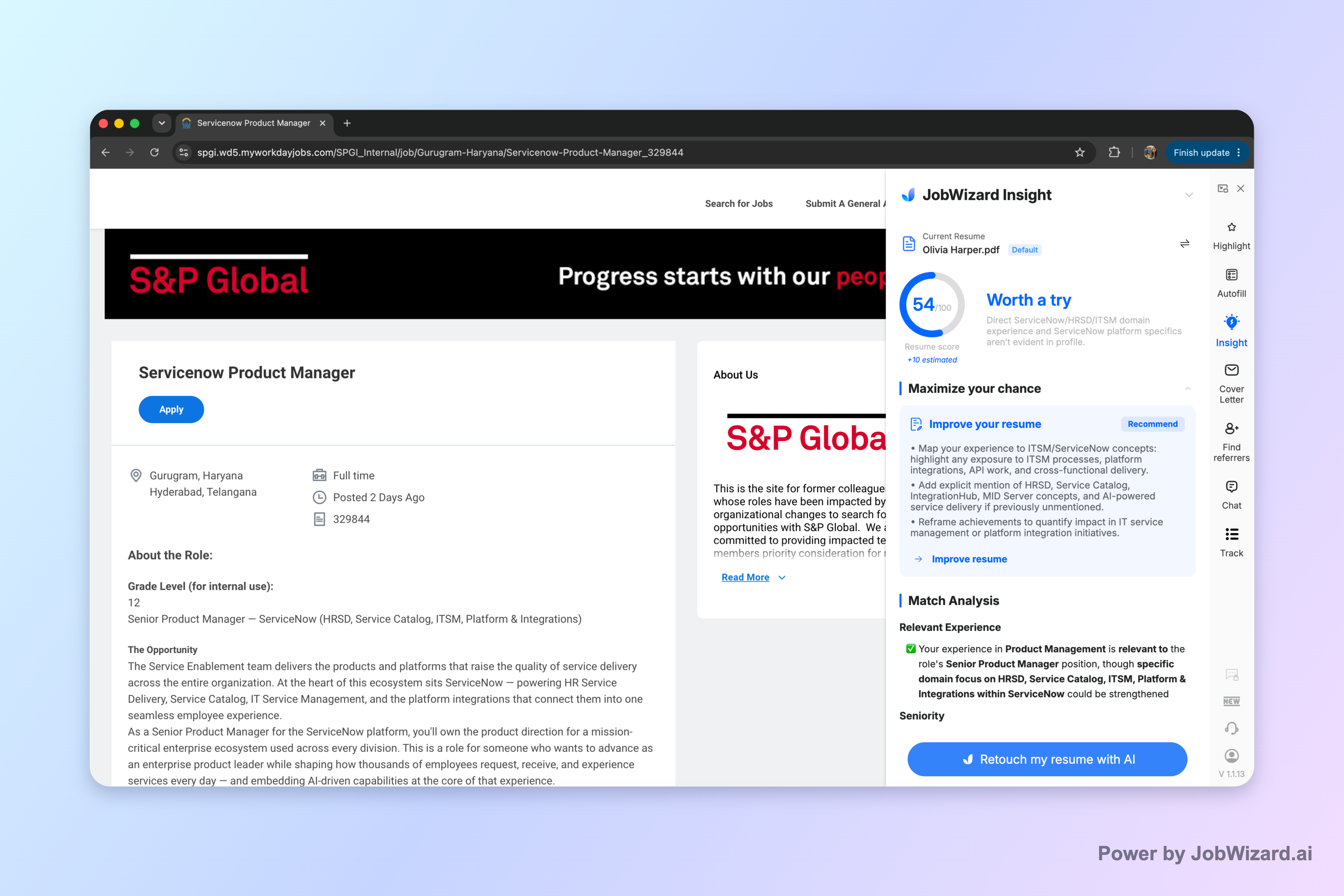
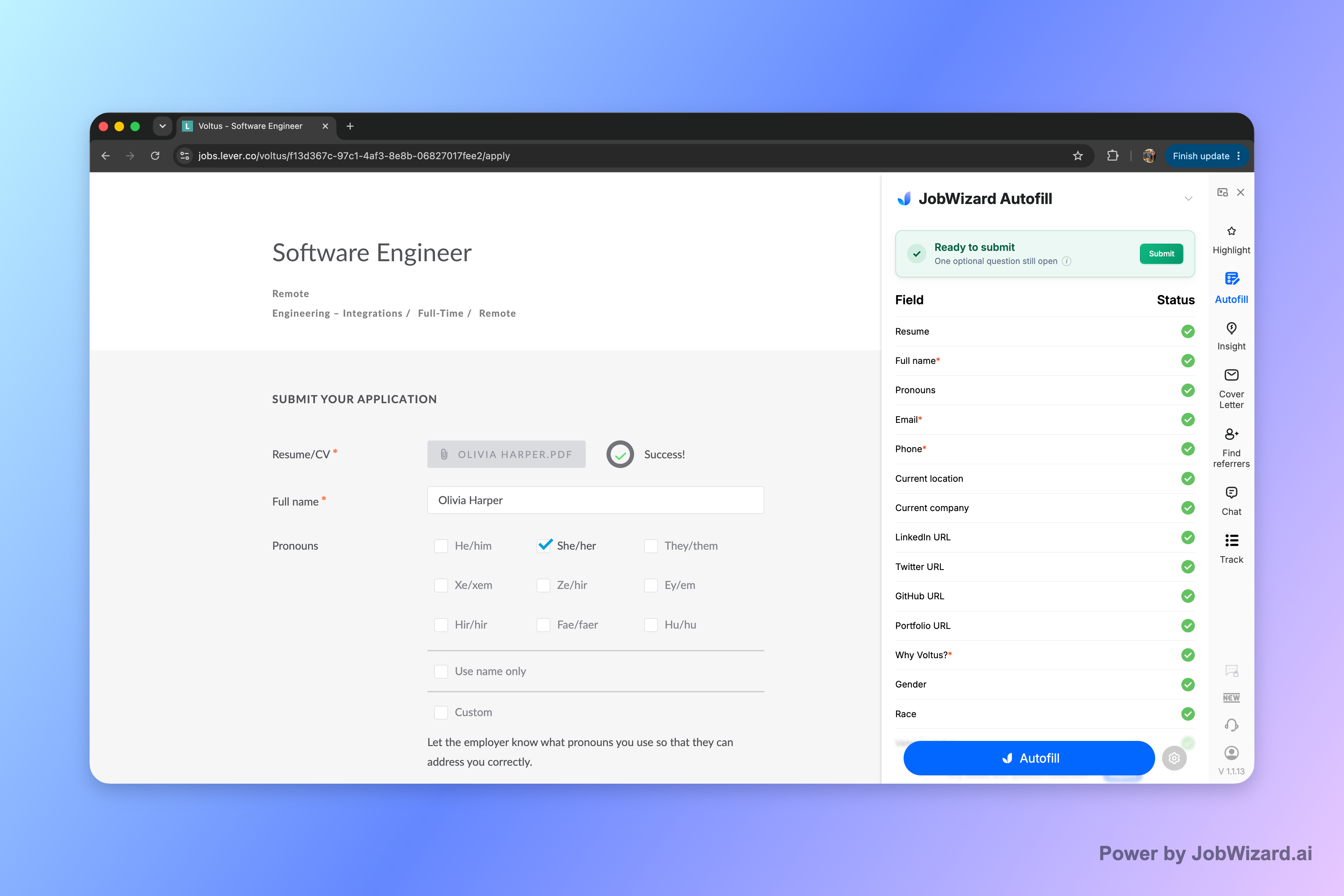
JobWizard takes a different approach: it autofills application fields on a job you’re already on, then you review everything and submit yourself. That single design choice matters because most failures in bot-driven auto-apply come from taking control away from the applicant at the exact moment the application must be accurate.
What goes wrong when a bot submits for you
Bot-style auto-apply can fail in predictable ways—especially around screening and eligibility questions. When your submission is automated, small inaccuracies become “locked in” at the employer’s end.
1) Screening questions get answered incorrectly (or too generally)
Many job posts include knock-out questions: eligibility to work, experience level, location constraints, timing, or specific tool familiarity. A bot may provide an answer that looks plausible but doesn’t match your real situation.
- Wrong eligibility basis: the bot guesses “yes” or chooses the wrong option.
- Missing context: the bot can’t interpret wording that depends on your exact background.
- Overly generic responses: answers that don’t align with the “must-have” requirements.
The result isn’t just reduced responses—it can be rejection on the basis of criteria that you would have corrected in seconds if you were reviewing before submit.
2) Your resume details don’t match what the form asks
Even when a bot claims it can “apply with your resume,” the application form often wants specific data: job titles, dates, education formatting, locations, or experience summaries. If the bot maps your resume to the form incorrectly, you can end up submitting a mismatch.
- Date or title drift: work history fields don’t correspond to your actual timeline.
- Different wording: the form asks for “X years” or “Y experience,” but the bot can’t translate your resume precisely.
- Education/credential mismatches: school names, degrees, or certification identifiers don’t match the details employers expect.
That mismatch can look sloppy to reviewers—and it’s difficult to “fix” after submission.
3) Employer systems may flag repeated or low-quality submissions
Many companies use automated review systems and spam/reputation checks. Bot-driven auto-apply often increases the odds of sending submissions that appear templated, inconsistent, or duplicate across roles.
Job search tools differ in behavior, but the general risk is the same: when the content is sent without the applicant’s final checks, the application can look like mass noise rather than a tailored candidacy.
In general, a safer approach is to fill repetitive fields fast, then confirm screening/eligibility and any custom questions yourself before hitting submit.
4) You can damage your relationship with companies you actually want
Reputation isn’t only about who accepts you—it’s also about how you show up in a system. If you submit incorrect or mismatched applications to a company you genuinely want, it can create a record that’s hard to unwind.
- Incorrect answers can lead to “not a match” outcomes you could have avoided.
- Mismatch patterns can make future applications less likely to be trusted.
- Custom question errors are especially damaging because they signal low effort to human reviewers.
The safer alternative: autofill the easy parts, then review-before-submit
The best way to move quickly without turning your applications into guesswork is an autofill-then-review-before-submit workflow. You still do the final verification; you just remove the repetitive typing burden.
With JobWizard, the workflow is straightforward: you open the application on the employer site, JobWizard autofills repetitive fields, and you review the rest—including anything that requires personal judgment or accuracy—before submitting.
What to let automation handle
Generally, the “right” targets for autofill are the repeatable inputs that don’t usually require interpretation. These typically include standard identity and contact fields, plus other structured fields you’ll see across postings.
What you should never skip reviewing
Before you submit, focus on the elements most likely to be wrong if a bot guesses. This is where bot auto-apply commonly breaks down.
- Screening questions (eligibility, experience level, availability, location constraints).
- Work authorization and EEO-related prompts where the wrong option changes meaning.
- Compensation, custom questions, and open-ended fields that require your specific context.
- Resume-mapped details (titles, dates, education, and any form-specific formatting).
Why this approach matches real hiring scrutiny
Employers don’t just look for “a submission.” They look for evidence that you meet requirements. When you stay in control of the final answers, you reduce avoidable mismatches while still gaining speed.
Is “jobsai” more like speed or more like risk? Compare the trade-offs
When people search jobsai, they’re often comparing tools that promise speed. The more important question is: where does your control end—especially at the submit moment?
| Approach | What it’s trying to optimize | Main risk | Best-fit for |
|---|---|---|---|
| Bot-style auto-submission | Applying without manual review | Incorrect screening answers, resume/form mismatches, and templated content that can trigger scrutiny | Short-term volume goals—if you accept the accuracy trade-off |
| Autofill + review-before-submit (JobWizard) | Reducing repetitive typing while keeping final control | Requires you to review before submitting (but that’s the safety mechanism) | Applicants who want speed without submitting incorrect answers |
| Manual-only | Full accuracy | Slower throughput; more fatigue from repetitive forms | Highly tailored applications and lower application counts |
For many job seekers, the “sweet spot” is autofill for the routine parts and deliberate checking for the high-impact parts—because that’s exactly where bot auto-apply tends to create problems.
Try the right workflow: autofill applications the way you’d audit them
If you want results that don’t create extra risk, treat each submission like a quick audit instead of a blind run.
- Open the exact application page so the autofill is applied to the form you’re currently working on.
- Autofill repetitive fields to remove typing friction and reduce the chance of copy/paste errors.
- Review every screening and custom question (this is where bots usually guess wrong).
- Confirm resume-mapped details like dates, titles, and education to ensure the form matches your background.
- Submit yourself only after you’ve verified the information is accurate for that specific employer.
If you want to go deeper on the “fill fast, still review” idea, start here: How to Autofill Job Applications (Step-by-Step with JobWizard).
You’ll also benefit from comparing common failure modes from other approaches: Applyai: What “Bot Apply” Gets Wrong—and the Safer Autofill-Review Way with JobWizard and Lazy Apply: What Goes Wrong With Auto-Submission—and the Smarter Autofill-Then-Review Fix.
For the most practical checklist, use Auto Fill Job Applications the Right Way: Speed Up Forms, Still Review Before You Submit.
On the broader effectiveness side, JobWizard usage shows how widely applicants rely on autofill + review-before-submit: over 720,000+ applications have had fields submitted through the workflow and 600,000+ autofill sessions have been run. Typically, autofill fills around ~18 repetitive fields per application (often 11–23). Most notably, this time savings tends to be greatest on Workday-based flows—helping applicants focus on the answers that only they can verify.
Do this automatically with JobWizard
Skip the manual work — JobWizard's Smart Autofill handles this for you.
FAQ: Jobsai questions job seekers ask before they choose a tool
Is “jobsai” the same as auto-submitting applications for you?
No. Tools people group under “jobsai” may submit automatically, but JobWizard autofills fields on a job you’re already viewing—then you review and submit yourself.
What are the biggest problems when a bot answers screening questions incorrectly?
Wrong or missing answers can happen when the bot guesses at screening details, uses the wrong eligibility basis, or can’t interpret context. That can lead to rejection you could have avoided with a quick manual review.
Will autofill with JobWizard prevent employer-side spam filtering?
It can’t guarantee it will avoid filters. However, because you review and submit yourself, you reduce the chance of sending obviously mismatched or placeholder answers that trigger scrutiny.
How do I use an autofill-then-review workflow safely?
Open the application on the employer site, autofill repetitive fields, then review every screening question, work authorization, compensation/EEO/custom prompts, and your resume details before you submit.
Which is better for job searching: bot auto-apply or autofill-then-review?
Autofill-then-review is usually safer. Bot auto-apply increases the risk of incorrect screening answers, resume mismatches, and a degraded relationship with companies you want to reach—while you stay in control of what gets submitted.
Ready to apply faster without taking on bot-style risk? Try JobWizard to autofill repetitive application fields on jobs you’re already viewing—then review and submit with confidence.
Frequently Asked Questions
Autofill your next job application
JobWizard is a free Chrome extension that fills applications, tracks statuses, and optimizes your resume.