“Automatically Apply for Jobs” Sounds Fast—Here’s What Goes Wrong (and the Safer Reviewed Alternative)
“Automatically apply for jobs” can backfire when screening answers, resumes, and details don’t match. JobWizard helps by autofilling what you’re on—then you review and submit.
Free Chrome extension
Autofill your next job application
JobWizard is a free Chrome extension that fills applications, tracks statuses, and optimizes your resume.
“automatically apply for jobs” can feel like the fastest path to interviews—but automation often turns speed into avoidable mistakes. When the wrong answers go into screening questions, the wrong resume goes with the wrong role, or submissions get flagged as low-quality, you don’t just waste time—you can harm the chances you actually care about.
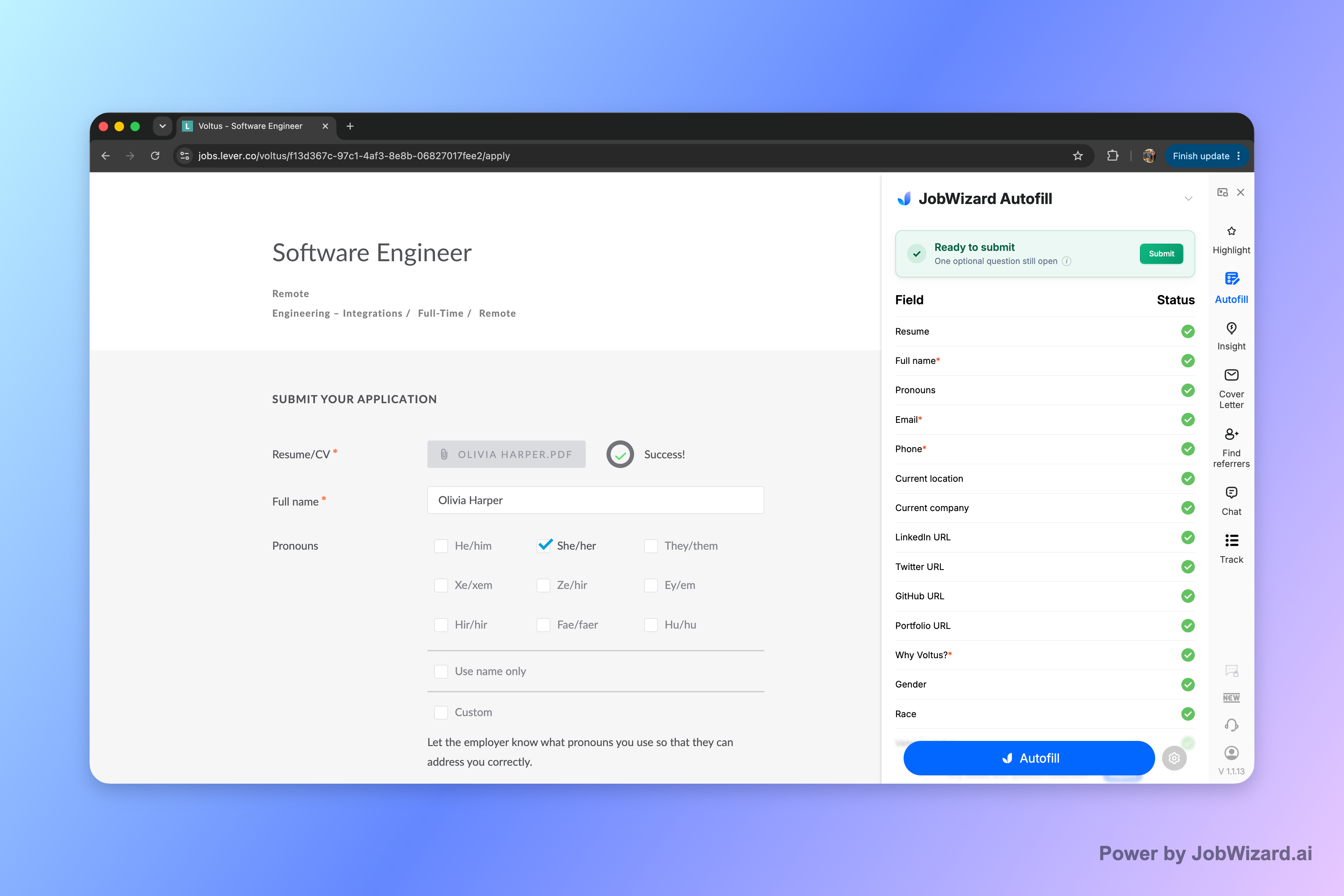
This article breaks down what commonly goes wrong when a bot submits for you, why it happens, and a safer alternative: fill repetitive details quickly, then review-before-submit. Along the way, we’ll also ground the discussion in how autofill differs from true “auto-apply” behavior.
When a bot auto-submits, the “small” mismatches become deal-breakers
automatically apply for jobs tools usually work by filling forms for you—sometimes extremely quickly. The problem is that speed is not the same thing as accuracy, and job applications are full of details recruiters treat as signals.
Here are the most common failure modes that happen when submissions are automated rather than reviewed:
- Screening answers mismatch: The bot fills eligibility questions using the wrong interpretation (or outdated info), such as dates, authorization status, salary expectations, or preferred work location.
- Resume/profile pairing errors: The wrong document version (or wrong section emphasis) gets attached—especially when you have multiple resumes tailored to different roles.
- Custom question defaults: Free-response prompts that require specifics may get generic or incomplete text, which reads like template spam to hiring teams.
- Data drift across applications: Over multiple applications, one field being off—job titles, tool keywords, employment dates—can make your story inconsistent.
Even when an application looks “complete,” those mismatches can push you out of the process before a human ever sees you.
Wrong answers + the wrong resume can trigger screening and spam filters
automatically apply for jobs often fails in two places at once: applicant tracking systems (ATS) screen for minimum criteria and employer-side controls watch for patterns that look like low-effort volume.
What “looks fine” on the surface can be interpreted differently by the system:
- Eligibility questions are treated as hard gates: If you answer “No” to something you actually meet—or “Yes” in a way that’s inconsistent with your resume—you may be filtered out.
- Keyword logic can backfire: Some postings require specific experience wording. If autofilled answers don’t align with what’s in your resume, the system may assume you don’t have the claimed background.
- Spam/quality heuristics may activate: Repeated submissions with minimal context (or identical wording across distinct roles) can lower trust and lead to suppression or rejection.
And importantly: automation doesn’t just risk “not hearing back.” It can also damage your standing at companies you genuinely want—because inconsistent submissions read like mismatched intent.
Job applications aren’t just forms. They’re credibility checks. When a bot submits without your review, you lose control of how those checks are answered and interpreted.
Why bots submit “for you” in ways you can’t meaningfully validate
automatically apply for jobs tools typically optimize for throughput, not for the specific, role-by-role nuance that hiring teams expect. The result is that you’re no longer verifying the exact content being sent.
Three things make this particularly risky:
- Custom questions require context: Many forms ask for work examples, specific tooling, or role motivation. Those prompts need your voice and the role’s details.
- Forms can change posting-to-posting: Two companies may ask similar questions with different wording. A bot may answer “close enough,” but screening relies on exact values.
- Attachments and field mapping aren’t always transparent: Even if a tool reports that it “attached a resume,” you still need to confirm which version and which sections are effectively presented.
Once a bot submits while you’re away, you can’t reliably confirm that every relevant field is correct at the moment of submission. That means you might only discover the mistake later—if you discover it at all.
The safer alternative: fill faster, then review-before-submit yourself
automatically apply for jobs isn’t the only way to move faster. You can reduce repetitive typing while keeping control over what actually gets submitted.
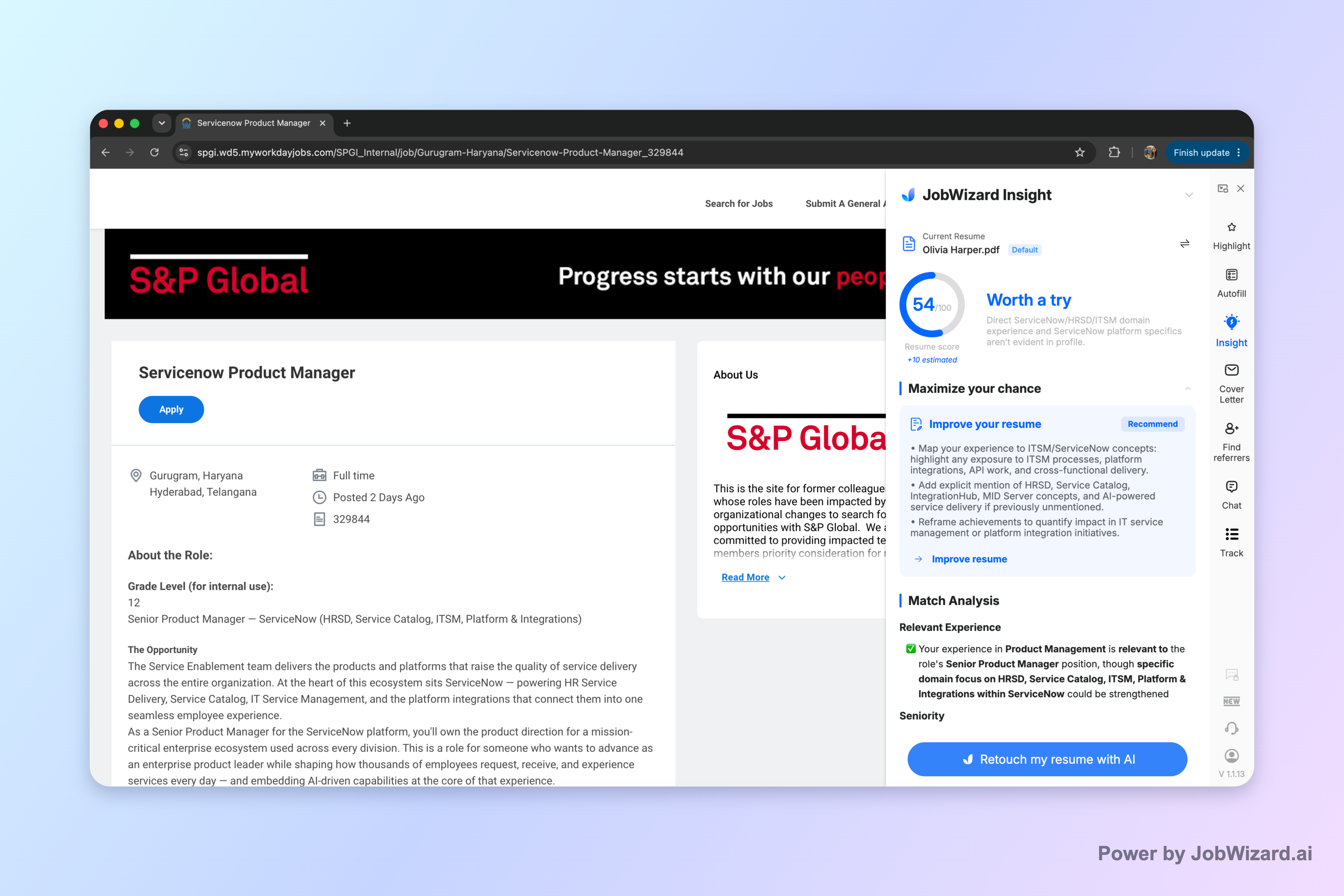
That’s the key distinction: JobWizard is built to autofill application fields you’re already on, so you can complete them quickly—then you review and submit. It never submits by itself, never mass-applies, and doesn’t apply while you’re away.
In practice, that workflow helps prevent the worst failure modes:
- Screening questions stay under your control: you can verify every answer before clicking submit.
- Resume selection remains deliberate: you confirm the correct document version for that specific role.
- Custom responses get your final pass: you can tailor the few lines that matter most to each posting.
JobWizard also sees strong practical usage in major ATS workflows—autofill + review-before-submit runs frequently across systems where repetitive fields are common. In our verified usage data, JobWizard autofills an average of ~18 repetitive fields per application (typically 11–23), and roughly 65% of applications are on Workday (with ~19% on Greenhouse, ~12% on Ashby, and ~4% on Lever).
Those numbers describe speed for repetitive fields—not blind auto-submission. The point is that you still review what’s filled before submitting.
How to choose a workflow that’s fast without turning your applications into noise
automatically apply for jobs strategies often fail because they trade away verification. The best workflow keeps throughput high while preserving application integrity.
Use this simple, reviewed approach:
- Open the posting and make sure the role matches what you want (title, level, and location).
- Let autofill handle repetitive fields (contact info, basics that don’t change, and structured items).
- Skim every screening question and confirm values are accurate for your current situation.
- Confirm the resume and profile match the job—especially if you have multiple versions.
- Tailor the “few lines” that matter in custom prompts so the application doesn’t read like a template.
- Submit yourself only after a final check of the full form.
If you’re comparing tools, a useful way to think about the trade-off is this: the more a tool aims to remove your involvement, the more it increases the chance that your submission includes content you didn’t verify. You can still be efficient—just make sure efficiency doesn’t come from surrendering review.
Ready to speed up repetitive data entry while keeping the final check in your hands? Try JobWizard and use autofill + review-before-submit to move faster with fewer avoidable mistakes.
Do this automatically with JobWizard
Skip the manual work — JobWizard's Smart Autofill handles this for you.
FAQ: Automatically apply for jobs—risk, alternatives, and what “review” really changes
Is it safe to automatically apply for jobs with a bot?
No—bots can submit incorrect or incomplete screening answers, pair the wrong resume/profile with the posting, and trip employer filters. Even if the form looks filled, you’re responsible for verifying what will be submitted.
What are the most common problems caused by automatically apply for jobs tools?
The biggest issues are screening question mismatch (wrong dates, titles, or eligibility answers), resume/profile mismatches, and employer-side spam or quality filters triggered by repeated, low-context submissions.
How does JobWizard avoid the “bad submission” problem?
JobWizard autofills repetitive fields on applications you’re already viewing, then you review and submit. That keeps the speed benefit for copy-and-form repetition while protecting you from sending wrong answers.
If I want faster applications, what workflow should I use instead of auto-apply?
Use a reviewed autofill workflow: open each role, let the tool fill repetitive fields quickly, skim every screening and custom question, confirm the correct resume and contact details, then submit yourself.
Can automatically apply for jobs tools hurt my reputation with employers?
Yes. If a company receives clearly mismatched or low-quality submissions (for example, inconsistent experience or eligibility answers), it can reduce your chances with roles you actually care about—even if the mistake was caused by automation.
Frequently Asked Questions
Autofill your next job application
JobWizard is a free Chrome extension that fills applications, tracks statuses, and optimizes your resume.