HR Assistant Resume Keywords That Beat ATS: Use Job-Post Clues to Tailor Faster
Learn HR assistant resume keywords to mirror what job postings ask for—then validate your wording with an ATS-style match check before you apply.
Free Chrome extension
See your resume's match score for any job
JobWizard compares your resume to each job description and shows the exact keywords to add — free.
HR Assistant Resume Keywords: the missing step between “I applied” and “I got a reply”
If you’ve been applying for HR assistant roles and hearing “we went with other candidates”, the issue is often not your intent—it’s your wording. HR assistant resume keywords are the specific phrases hiring teams look for inside resumes and the fields ATS-style systems index from your experience, skills, and summary. When your resume doesn’t mirror the language of the job description, your application can get filtered out before a human ever sees your best work.
So instead of guessing, you need a repeatable workflow: extract the role’s requirements, translate them into your resume bullets, and validate what changed against the same job description.
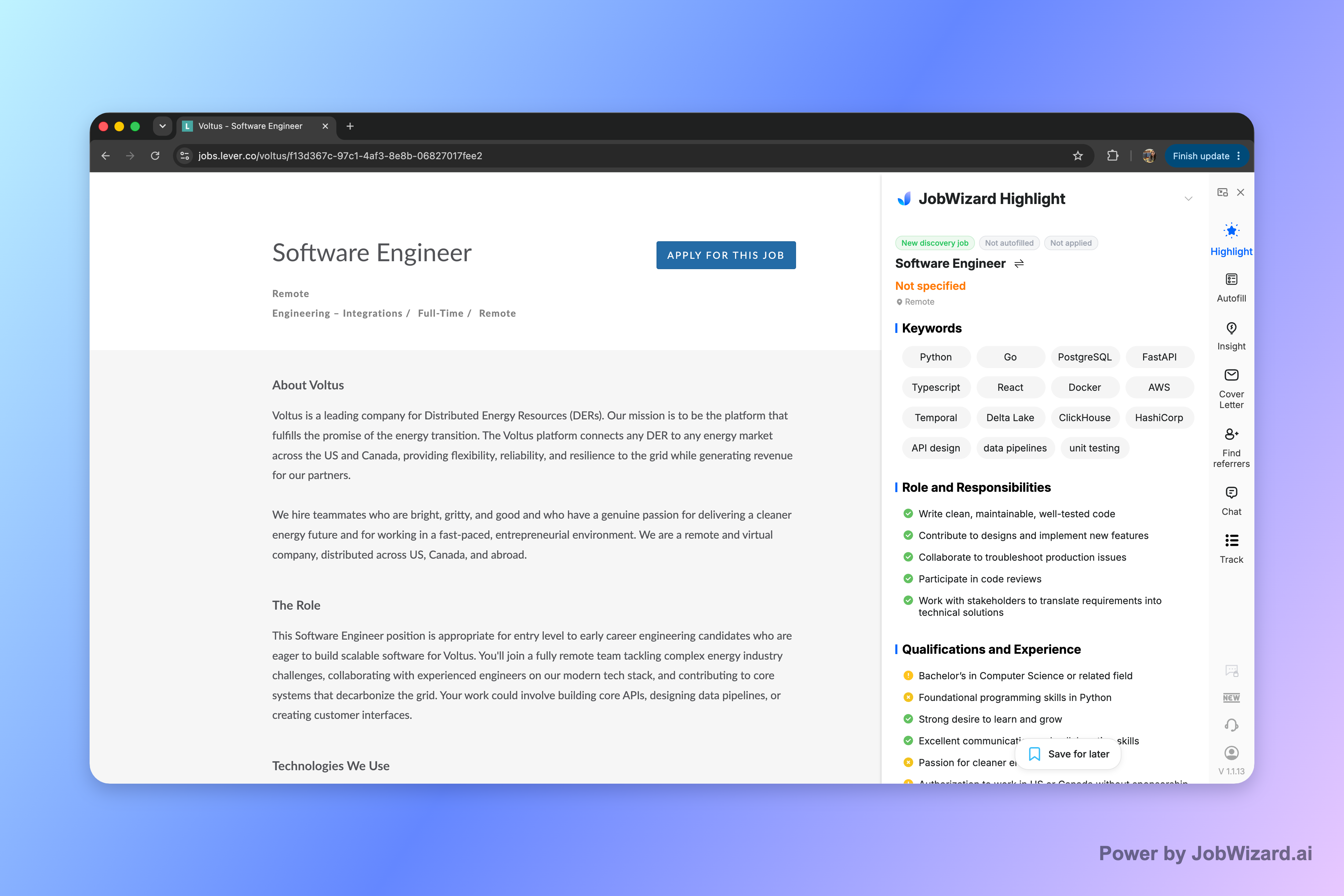
JobWizard helps you organize a long job description into keywords, role responsibilities, and qualifications—so you can review the requirements more systematically before you tailor your resume.
This article shows you exactly how to choose hr assistant resume keywords that fit HR assistant postings, where to place them on your resume, and how to verify your updates with a structured match-style review (so you’re optimizing for clarity, not copy-paste luck).
How to pull the right hr assistant resume keywords from a job description
The fastest way to identify hr assistant resume keywords is to treat the job description like a checklist. Look for phrases in three places: responsibilities, qualifications, and requirements. That’s where most “ATS keyword” signals come from.
1) Extract keywords from responsibilities (what you’ll actually do)
- Employee support & coordination: onboarding help, answering HR questions, scheduling meetings, coordinating forms.
- HR operations: maintaining employee records, updating HRIS profiles, processing documentation.
- Administrative workflows: document preparation, filing, tracking requests, maintaining confidentiality.
- Recruiting-adjacent tasks (common in HR assistant roles): scheduling interviews, coordinating communications, collecting required documents.
Tip: write down the exact terms that describe the tasks (e.g., “update HRIS,” “coordinate onboarding,” “maintain employee records”). Then match them to your own experience bullets.
2) Extract keywords from qualifications (what you must already be able to do)
- HR-related experience: HR assistant, HR coordinator, people operations support, HR administration.
- Tools & systems: HRIS, HR software, ticketing/work queues, shared calendars, document management.
- Core competencies: confidentiality, attention to detail, process follow-through.
- Communication: professional email/phone support, internal stakeholder coordination.
Tip: if a posting lists a qualification like “experience updating HRIS records,” your goal is not to invent it. It’s to use a truthful, specific equivalent if you have it (or describe related record-management work clearly).
3) Pull “must-have” requirements (the phrases that carry the most signal)
Many job posts include short “required” sections. These tend to contain the highest-signal phrases. Common patterns in HR assistant listings include:
- Confidentiality / handling sensitive information
- Administrative accuracy / attention to detail
- Process adherence / following documented procedures
- Scheduling / coordinating interviews or onboarding steps
Keep a running keyword list as you read. You’ll use it to tailor your resume sections in the next step.
Reality check: Keyword highlighting and match checks are diagnostic tools. They’re not a guarantee of ATS passage or a hiring outcome.
Where to place hr assistant resume keywords (and what to change)
Once you’ve extracted hr assistant resume keywords, you need to place them where ATS-style indexing and human scanning both make it easy to connect your background to the role.
The “3 placement rule” for HR assistant resumes
Use the 3 placement rule: include the right keywords in (1) your summary, (2) your skills, and (3) your bullet points. Don’t overstuff—use each keyword where it genuinely fits.
1) Summary: map your profile to the job’s responsibilities
Your summary should sound like a short HR assistant value statement, using 3–6 core keywords from the posting. Example (edit these to match the job):
- Example summary: “HR assistant with experience supporting onboarding coordination, maintaining employee records, and handling sensitive HR documentation. Skilled in updating HRIS-style systems, scheduling stakeholder meetings, and providing professional internal support with strong attention to detail and confidentiality.”
2) Skills section: list HR assistant skills keywords (not every skill you’ve ever touched)
For the skills section, aim for a tight set that mirrors the job’s qualifications. Common HR assistant keyword categories:
- HR administration: employee records, HR documentation, onboarding support
- Operations: filing, tracking requests, process follow-through
- HRIS / systems: HRIS updates, data maintenance (use your real tools)
- Communication: email/phone support, stakeholder coordination
3) Experience bullets: convert requirements into achievement bullets
Your experience bullets are where you can turn hr assistant resume keywords into credibility. Use a consistent structure: action + what you managed + how + (optional) outcome.
- Example bullet (onboarding coordination): “Coordinated onboarding documentation by collecting required forms, ensuring completeness, and supporting HR with timely updates to employee records.”
- Example bullet (confidential records): “Handled sensitive employee information with strict confidentiality while maintaining accurate filing and record-management processes.”
- Example bullet (interview scheduling): “Scheduled interviews and coordinated communications between candidates and internal stakeholders while tracking required documentation.”
- Example bullet (HRIS updates): “Updated employee profiles in an HRIS-style system, ensuring records were accurate and aligned with internal process requirements.”
If the job post uses a particular phrase (e.g., “maintain employee records” or “update HRIS”), reflect it closely—but only as far as it matches your actual work.
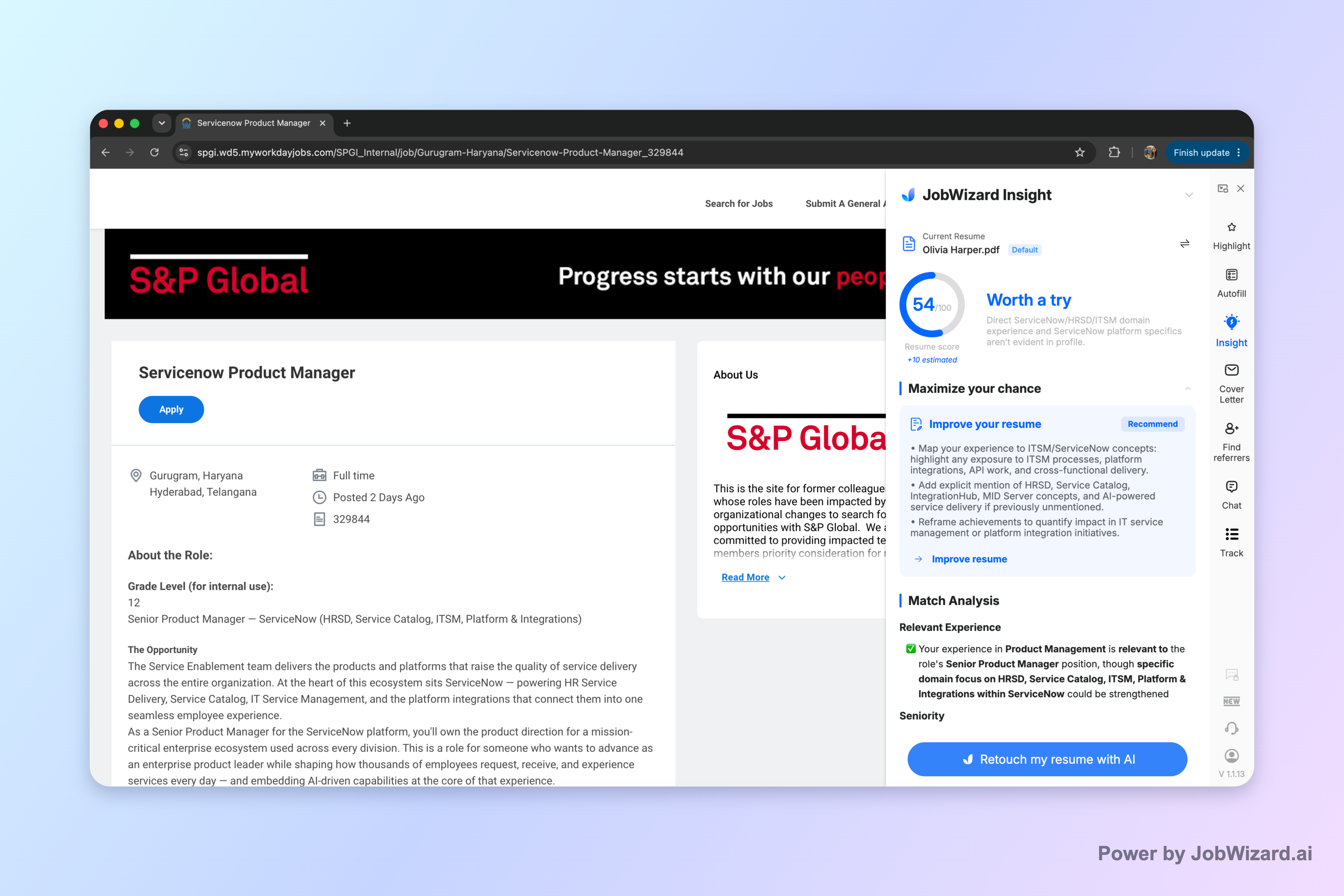
JobWizard Insight compares your resume with the current job description and presents a match score, an overall assessment, and improvement suggestions—then helps turn expression gaps into an editable resume revision draft. Verify every change and keep only accurate experience.
Validate your resume changes with a job-description match review (before you apply)
Keyword tailoring is more effective when you verify that your edits actually align with the same job description. A match-style review focuses on expression gaps and suggests where your resume can be clearer for that specific posting.
How to use a match review without fooling yourself
- Compare resumes to the exact posting: don’t mix keywords from one job with experience requirements from another.
- Check the “why” behind suggestions: a gap might be a missing phrase, a missing context cue, or a bullet that needs to name the process you used.
- Keep your experience truthful: the score is not a hiring probability and does not guarantee ATS passage or an interview. Your updates must reflect what you can defend.
- Revise by editing, not by stuffing: incorporate missing terms only where they fit your real responsibilities and results.
What a good HR assistant keyword strategy looks like
Good hr assistant resume keywords strategy doesn’t mean adding 30 synonyms. It means you can point to relevant bullets for each major requirement.
| Job-post requirement (example) | Where you should show it on your resume | Keyword examples to mirror (edit to fit your tools) | Sanity check |
|---|---|---|---|
| Maintain employee records | Experience bullet(s) | employee records, record management, documentation | Can you describe what systems/files you used? |
| Onboarding coordination | Summary + 1–2 bullets | onboarding support, documentation collection, coordination | Do you have an example of timelines/forms/hand-offs? |
| HRIS updates / HR systems | Skills + bullet(s) | HRIS, data maintenance, profile updates | What specific system(s) did you update? |
| Confidentiality & accuracy | Summary + skills + bullet language | confidentiality, attention to detail, sensitive information | Can you explain how you protected data? |
| Scheduling & coordination | Experience bullet(s) | scheduling, stakeholder coordination, interview coordination | Did you coordinate meetings or interviews end-to-end? |
When you build your resume this way, you’ll naturally include the terms ATS-style systems index—while also making it easier for humans to understand what you’ve done.
Do this automatically with JobWizard
Skip the manual work — JobWizard's Match Score handles this for you.
FAQ: Hr assistant resume keywords (quick answers you can apply today)
What are the most important hr assistant resume keywords to include?
Prioritize keywords that appear in the job description’s responsibilities, qualifications, and required skills—then use the exact terms (or close, accurate equivalents) in your summary, skills section, and bullet points where they match your real experience.
Should I copy the job description word-for-word in my resume?
Don’t paste paragraphs verbatim. Instead, translate requirements into your own bullets: keep key phrases that are accurate to your background, and verify every change so your experience stays truthful.
How do I tailor hr assistant resume keywords for different ATS systems?
Tailor by role requirements, not by brand of ATS. Use the specific job description as your source of truth: extract keywords, map them to your experience, and then validate the wording against that same job description with a match-style review.
What if I don’t have every keyword listed in the job post?
Use a skills-gap approach: identify missing expressions, then adjust only where you can truthfully support the requirement (e.g., related HR tasks, tools, or processes). For items you truly haven’t done, focus on adjacent experience and be ready to explain it.
Does keyword matching guarantee I’ll get an interview?
No. A match score or keyword optimization is not a hiring probability and doesn’t guarantee ATS passage or an interview. Treat it as a diagnostic to improve clarity—then rely on your real qualifications and accurate answers before submitting.
Next step: tailor with confidence using JobWizard
Now that you know how to choose and place hr assistant resume keywords, it’s time to apply the workflow to your next target role. Open the job posting and review its responsibilities, qualifications, and keywords—then compare your resume to that same job description to identify gaps and turn them into an editable draft you can verify.
If you want to strengthen your ATS approach further, start with these practical guides:
- Administrative Assistant Resume Keywords: The Fast Way to Get ATS-Ready
- How to Optimize Resume for ATS: A Practical 2026 Checklist
- ATS Software Keywords: Turn Job Descriptions Into Resume Phrases Hiring Teams Can Parse
- Resume Keywords for Sales Jobs: A Targeted System to Beat ATS Filters (2026)
CTA: Use JobWizard to structure the job description into keywords, responsibilities, and qualifications—then run a resume-vs-JD match check to see where your hr assistant resume keywords need to be clearer before you apply.
Frequently Asked Questions
See your resume's match score for any job
JobWizard compares your resume to each job description and shows the exact keywords to add — free.