keywords for administrative assistant on resumes: the exact terms that match real job descriptions
Learn the most valuable keywords for administrative assistant on resumes—plus how to place them in your skills, experience, and summary so your resume reflects what employers actually list in their job descriptions.

Free Chrome extension
See your resume's match score for any job
JobWizard compares your resume to each job description and shows the exact keywords to add — free.
Why “keywords for administrative assistant on resumes” decide what gets noticed
When you search for jobs, you’re not competing with other applicants in a vacuum—you’re competing with how each employer reads and screens resumes. That’s why the right set of keywords for administrative assistant on resumes matters: hiring teams and Applicant Tracking Systems (ATS) both look for the language that matches the role’s responsibilities, requirements, and tools.
In practice, your resume needs to do two things at once:
- Signal relevance fast (so the reviewer sees you’re the right type of admin support)
- Prove it in context (so your experience bullets show you did the work, not just that you can)
Job listings often contain the exact “admin language” you should mirror. If the posting calls out responsibilities like scheduling, meeting coordination, records management, and confidentiality, your resume should reflect those same themes using clear, resume-ready wording.
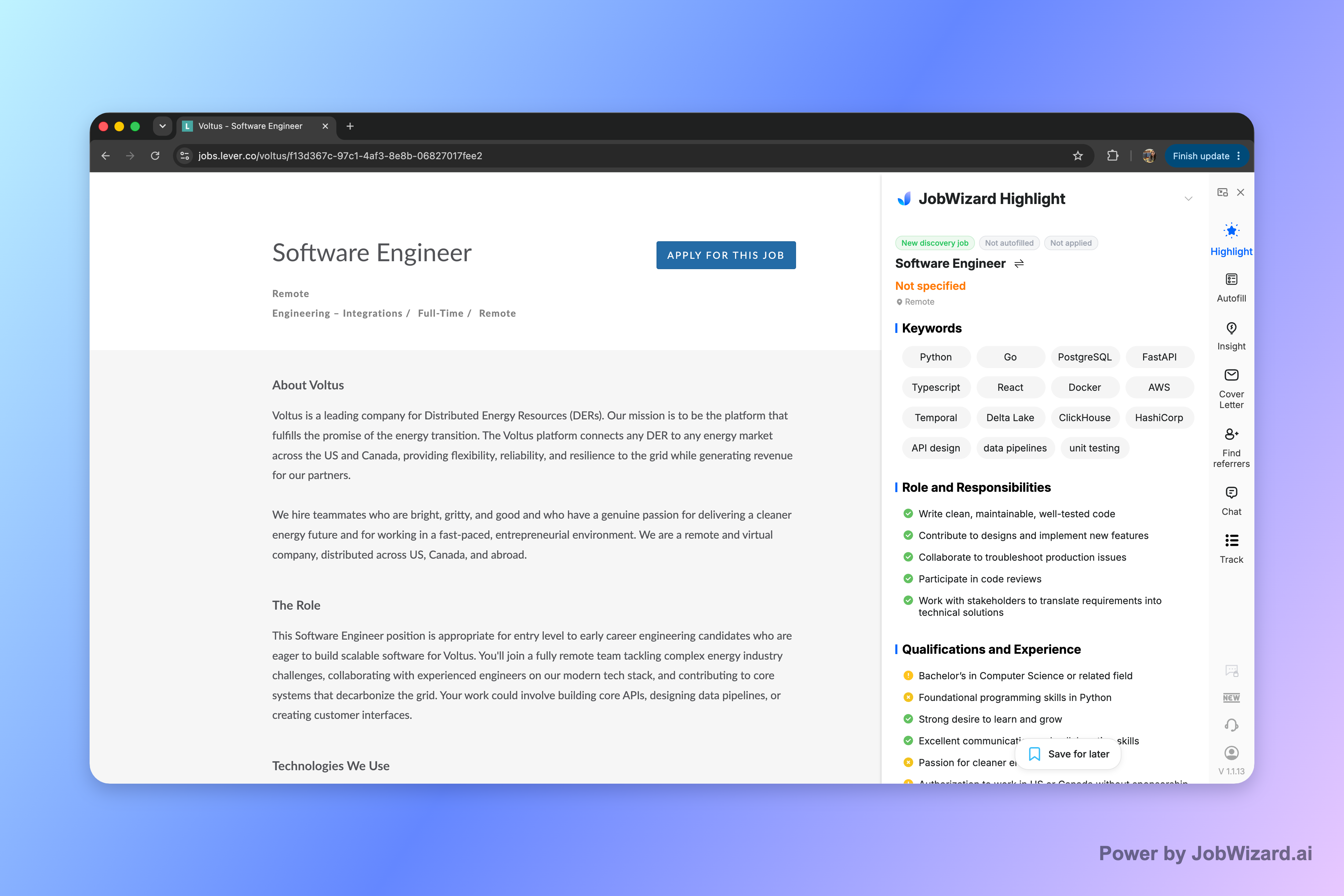
JobWizard can help you systematically turn a job description into keywords, role responsibilities, and qualifications so you can review what’s actually required before you tailor your resume.
The administrative assistant keyword sets that show up most often
Use this as a menu. Don’t paste everything. Pick the words that match your experience and the specific job description you’re applying to. Then place them where they naturally belong.
1) Core responsibilities keywords (the “admin work” terms)
- Calendar management
- Scheduling
- Meeting coordination
- Travel coordination
- Inbox and email management
- Call handling / phone coverage
- Customer service support
- Vendor and stakeholder communication
- Document preparation
- Records management
- Filing (physical and/or digital)
- Data entry
- Report preparation
- Office support / administrative support
- Process coordination
- Confidentiality / data privacy awareness
2) Skills keywords employers interpret as “ready to work”
- Attention to detail
- Organization
- Prioritization
- Time management
- Problem solving
- Follow-through
- Professional communication
- Multitasking (used carefully and honestly)
- Cross-functional coordination
- Customer-focused service
- Quality control
3) Tools and software keywords (include only what you used)
Many administrative assistant roles list software directly. When they do, those terms should appear on your resume—ideally both in your Skills section and in at least one bullet in your experience.
- Microsoft Office (Word, Excel, PowerPoint)
- Outlook (email and calendar)
- SharePoint (document management)
- Teams (internal communication)
- Google Workspace (Docs/Sheets/Calendar)
- Zoom (meeting coordination)
- Work management tools (as listed in the posting)
Tip: Mirror the exact tool names the job description uses. If the posting says “Excel,” don’t substitute “spreadsheets” in that same spot—use the employer’s phrasing (as long as it’s true).
4) Industry-and-setup keywords (when admin roles get specific)
Admin assistants often work inside a function (HR, legal, healthcare, finance, operations). If the job description names a department, department-specific admin vocabulary can help you match the role.
- Onboarding support (HR)
- Benefits administration support (HR)
- Scheduling interviews (HR)
- Document control / confidentiality (legal/compliance)
- Appointment scheduling (healthcare)
- Invoice processing / expense coordination (finance/ops)
- Procurement coordination (operations)
- Compliance-oriented documentation (when listed)
Where to put keywords for administrative assistant on resumes (so they read naturally)
Keywords work best when they’re embedded—not stacked. Here’s a practical layout that keeps your resume ATS-friendly and human-readable.
Summary / headline: place “fit” keywords once
Your top section should summarize what you do and the kind of support you provide. Include 2–4 keywords that match the job’s responsibilities and tools.
- Example themes: scheduling + meeting coordination + records management + confidentiality
- Example tool themes: Outlook/Excel (only if you used them)
Skills section: group keywords by category
Instead of a single long list, organize your skills into categories that match how admin roles are described.
- Administrative support: calendar management, scheduling, meeting coordination, inbox management
- Documentation & records: records management, document preparation, filing, data entry
- Communication: stakeholder communication, customer support, professional email etiquette
- Tools: Microsoft Office/Outlook/Excel/SharePoint (as applicable)
Experience bullets: use the job description’s wording as “evidence”
This is where most applicants accidentally underuse keywords. You can absolutely include the exact keywords, but you should also add the context that proves them.
Use a simple bullet formula:
- Action + admin responsibility keyword + output/context
- Example structure: “Coordinated meeting schedules and calendars…,” “Managed records and filing systems…,” “Prepared documents for…,” “Processed data entry for…”
Important: Only claim what’s accurate. If a job description lists “travel coordination” and you’ve done it, include it. If you haven’t, don’t add it just to match keywords for administrative assistant on resumes.
Education and certifications: include admin-relevant credentials when listed
If you have certifications that relate to admin work (or the posting requests them), include them. Keep the phrasing consistent with the listing.
How to tailor keywords quickly using job-description matching (without guessing)
The fastest path to strong keyword alignment is a repeatable workflow: extract the job’s requirements, then edit your resume to match those requirements with truthful evidence.
Step 1: Pull keywords from the job description (responsibilities + qualifications)
Look for recurring themes and exact phrasing: responsibilities (what you do), qualifications (what you must have), and tools (what you use). If the posting uses a specific term, treat it like a clue.
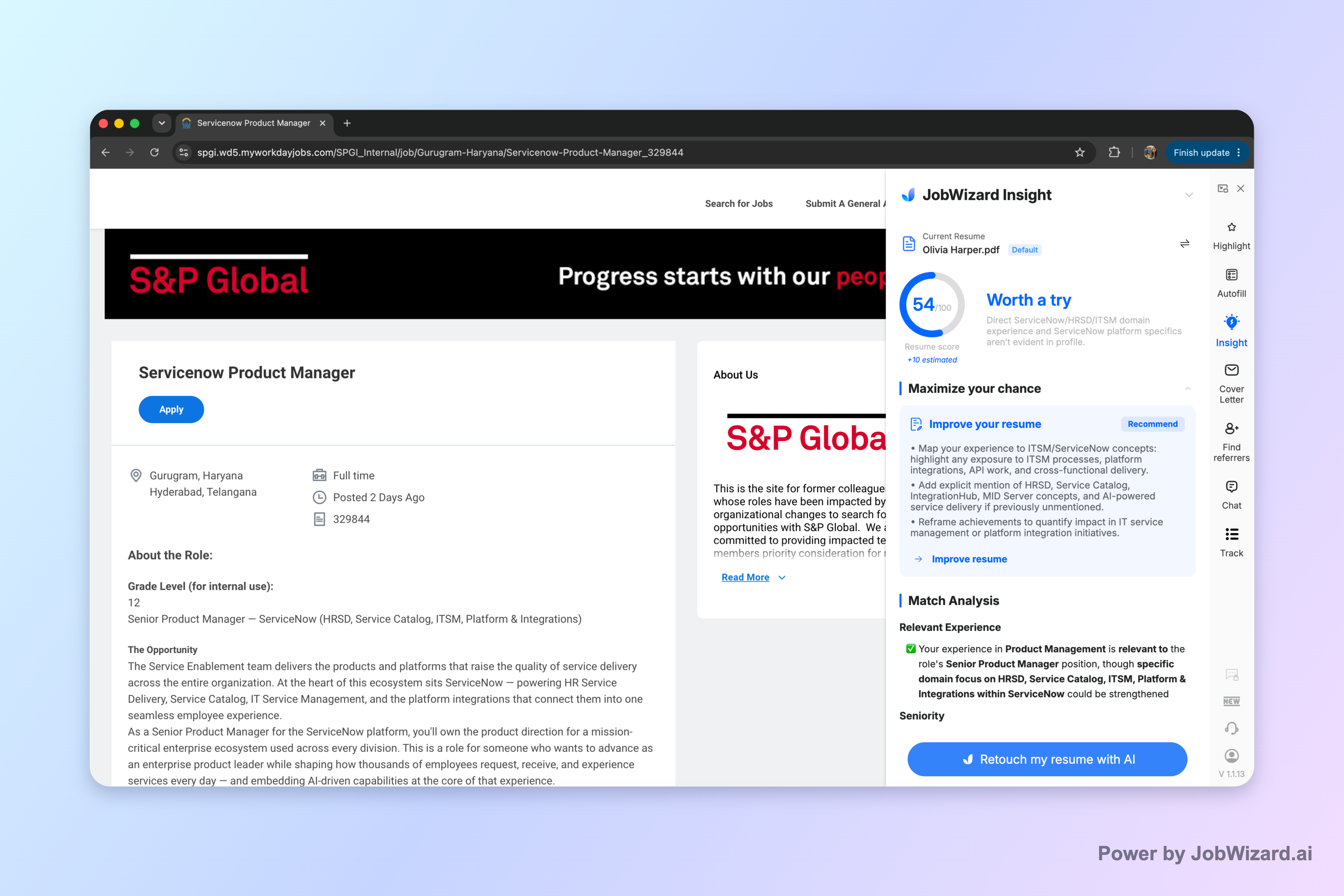
JobWizard Insight compares your selected resume with the current job description and shows a match score, overall assessment, and improvement suggestions—plus a JD-based diagnosis you can turn into an editable resume revision draft. Use the output to find expression gaps, then verify every change before you apply.
Step 2: Translate “job requirements” into resume edits
Common gap patterns administrative assistant candidates run into:
- They have experience but describe it differently than the posting’s wording
- They list tools but don’t show them in a bullet
- They’re missing a category of admin work the role emphasizes (e.g., records management or confidentiality)
Your goal is to close these gaps by updating real resume content. Don’t rely on keyword stuffing—mirror the job description’s language where it truthfully fits your background.
Step 3: Keep your resume accurate and review-before-submit
Tailoring is about alignment, not exaggeration. Even if you use tooling to help generate keyword suggestions or drafts, you should still review everything and keep only accurate experience.
Reminder: In automated screening contexts, keywords can be necessary—but your resume must still reflect your actual work history and qualifications. Don’t change duties you didn’t do just to increase keyword overlap.
JobWizard’s approach supports autofill + review-before-submit workflows for faster form completion and review. It fills many repetitive fields based on what you provide, while leaving sponsorship/salary/EEO/custom questions for you to review. (In our usage, JobWizard autofills an average of ~18 repetitive fields per application.)
Quick-reference: copy-ready keyword phrases for administrative assistant resumes
These phrases are designed to help you match common admin responsibilities and requirements while staying readable. Choose the ones that align with your experience and the job posting.
| Resume section | Keyword phrases to include (select what’s true) | Example bullet start |
|---|---|---|
| Summary | Administrative support, scheduling, meeting coordination, records management, confidentiality | “Administrative assistant with experience in…” |
| Skills | Calendar management, inbox management, data entry, filing, document preparation | “Skills include: calendar management, data entry, and…” |
| Experience | Coordinated schedules, prepared documents, managed records, maintained confidentiality | “Coordinated scheduling and meeting logistics…” |
| Tools | Outlook, Excel, SharePoint, Teams, (tools named in the job description) | “Used Outlook/Excel to manage…” |
If you want a simple checklist for writing bullets, use this sequence:
- Pick the job’s top responsibilities.
- Write one bullet per responsibility with a clear action verb.
- Include the relevant keyword phrase in the bullet.
- Verify it matches what you actually did.
Do this automatically with JobWizard
Skip the manual work — JobWizard's Match Score handles this for you.
FAQ about keywords for administrative assistant on resumes
What keywords for administrative assistant on resumes get past ATS without keyword stuffing?
Use keywords that mirror your real experience and the job description phrasing—especially in your Summary/Headline, Skills section, and bullet points. Focus on job-responsibility terms (e.g., scheduling, meeting coordination, document control) and tools mentioned in the posting, then edit your bullets to reflect how you performed them.
Should I list software keywords like Excel, Outlook, or SharePoint on my administrative assistant resume?
Yes—if you actually used them. Put the specific tools the employer names (for example, Outlook for calendars/email, Excel for spreadsheets, SharePoint for document sharing, or any others referenced in the job description). Then back up those keywords with one or two bullets showing the task you completed using each tool.
How do I tailor administrative assistant resume keywords for different job postings?
Start by extracting the job description’s responsibilities, requirements, and tools, then map each one to a resume location: Summary (for your overall fit), Skills (for your tool/ability list), and Experience bullets (for evidence). Keep changes accurate—don’t replace real duties with exaggerated ones just to add keywords.
What are the best administrative assistant keywords to include for office support and documentation?
Common high-value terms include calendar and scheduling, meeting coordination, travel coordination, document preparation, records management, data entry, filing (physical or digital), maintaining confidentiality, and support for onboarding or customer/vendor communications—using the same phrasing you see in the posting.
Is it enough to add keywords to my resume, or do I need to edit my job bullets too?
You typically need both. Adding keywords helps, but the strongest ATS signal comes from seeing those terms in context—especially in your experience bullets. Rewrite a few bullets to reflect the posting’s responsibilities (and the tools mentioned) while staying truthful to your actual work.
Take action now: Open your target job posting and extract its responsibilities, qualifications, and keywords. Then use JobWizard to compare your resume against the job description and identify expression gaps—so your next version of keywords for administrative assistant on resumes reflects what the employer is actually asking for (and stays accurate for you).
Frequently Asked Questions
See your resume's match score for any job
JobWizard compares your resume to each job description and shows the exact keywords to add — free.