HR Keywords That Actually Help: Build a Smarter Match for Job Descriptions
Learn how to use hr keywords from real job descriptions to tighten your resume, tailor your answers, and apply with confidence. Includes a practical HR-keywords workflow using JD Highlights.

Free Chrome extension
See your resume's match score for any job
JobWizard compares your resume to each job description and shows the exact keywords to add — free.
HR Keywords: The Fastest Way to Match What the Job Description Actually Wants
If you’ve ever searched for “hr keywords” and felt stuck, you’re not alone. Many job seekers understand the idea—use keywords from the posting—but struggle with the execution: Which keywords matter, how to find them quickly, and how to use them without forcing your resume. The truth is that hr keywords are just the job’s language for its requirements. Your job is to translate that language into your own evidence.
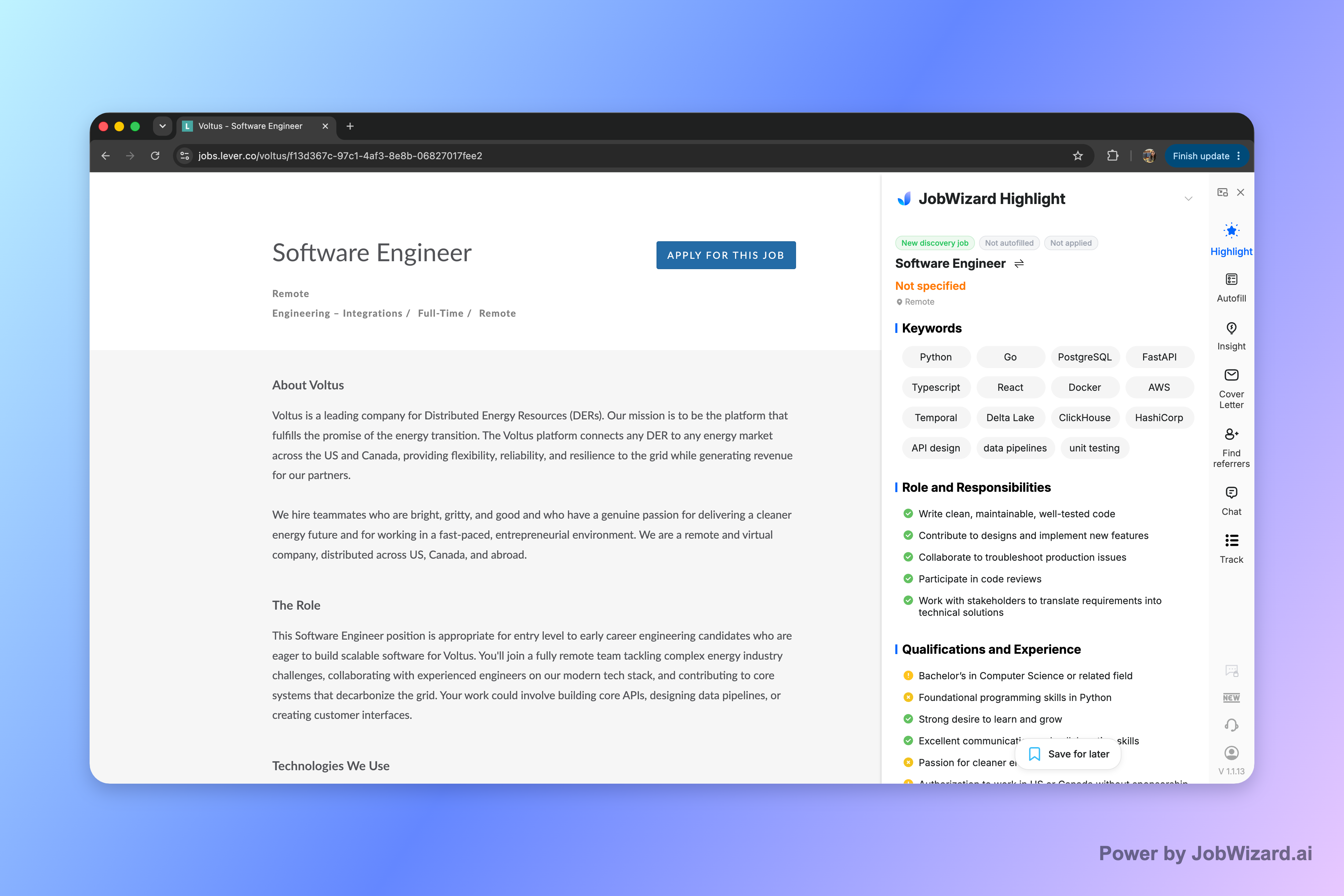
JobWizard can help you do that with JD Highlights, which organizes a job description into keywords, role responsibilities, and qualifications—so you can review what’s being asked more systematically before you apply.
What “hr keywords” usually look like in real HR job ads
HR postings are rarely about one narrow skill. They typically blend compliance, systems, stakeholder management, and execution. As a result, hr keywords commonly show up in categories like:
- HR functions and processes: recruiting operations, onboarding, benefits administration, performance management, employee relations, HR policy, compliance
- Systems and tools: HRIS, ATS, payroll coordination, ticketing tools, document management
- Stakeholder work: managers, employees, cross-functional partners, internal clients, executives
- Data and reporting: HR metrics, headcount reporting, dashboards, audit readiness
- Work style and collaboration: project management, process improvement, confidentiality, continuous improvement
- Requirements language: “required,” “preferred,” “must have,” “years of experience,” certifications
Key point: The best hr keywords are the ones that correspond to requirements the posting actually repeats, emphasizes, or treats as “required.”
How to Extract hr keywords From a Job Description (Without Overstuffing)
The biggest mistake job seekers make is treating keywords like a scavenger hunt—copying a long list, sprinkling it everywhere, and hoping it “counts.” Instead, use a workflow that turns the posting into a checklist you can genuinely support.
Step 1: Turn the posting into a requirements checklist
Read the job description once for the overall role, then do a second pass specifically for requirements. You’re looking for three buckets:
- Keywords (the terms the posting uses to label skills/tools/domains)
- Role responsibilities (what you’d actually be doing day to day)
- Qualifications (what you must or should already have)
This is exactly what JD Highlights is designed to help with: it organizes the job description into those elements so you can review requirements more systematically.
Step 2: Map keywords to evidence from your experience
For each major requirement, ask: “What’s my proof?” Your proof can be your resume bullet, a project, metrics you can defend, a process you built, or even a specific system you used.
For example, if you see keywords like:
- “employee relations”
- “case management”
- “policy interpretation”
Then your resume should include bullets that demonstrate you handled related work, such as:
- Supported investigations and documented outcomes using consistent processes
- Partnered with managers on policy-aligned responses
- Maintained records and ensured confidentiality
Don’t add keywords you can’t support. If your experience is adjacent, align your resume to the responsibility and show the connection.
Step 3: Use exact wording only when it matches your background
It’s okay to mirror wording when it reflects what you truly did. But overstuffing comes from copying terms that don’t fit your history. A better rule is:
- Exact match when you’ve used the tool or performed the responsibility
- Meaning match when you’ve done a similar activity under different wording
- Honest gap handling when a “required” skill isn’t in your background (use transferable skills and be clear)
Where to Put hr keywords in Your Resume and Application
Once you have a clean checklist of hr keywords, the next question is: where do they go? Don’t bury them randomly. Place them where readers (and automated systems) tend to look first.
Resume placement that usually makes sense
- Professional summary: 3–5 lines that reflect your core HR domain and tools
- Experience bullets: responsibilities tied to the posting’s keywords (not just duties)
- Skills section: HRIS/ATS, compliance areas, reporting, and any commonly named toolsets
- Certifications & training: especially if the posting lists them as required or preferred
When you do this well, you’re not “stuffing.” You’re writing a resume that reads like a match to the role’s responsibilities and qualifications.
Application answers: keep keywords relevant, but review yourself
Many application forms have repetitive fields. If you use automation to speed up repetitive entries, the critical part is that you still review and complete what requires your judgment (like sponsorship, salary, EEO, and custom questions). The goal is to save time on the repetitive parts—not to replace your decision-making.
Tip: When an HR-related question asks about a policy, a process, or a tool, use the relevant hr keyword you identified from the job description, but pair it with your actual example or approach.
Quick examples: translating common hr keywords into bullet language
| HR keyword from posting | What to write instead (example) | What it proves |
|---|---|---|
| Employee relations | Advised managers on policy-aligned responses and helped document case timelines with confidentiality | You can handle ER work and documentation |
| HRIS | Maintained accurate employee records in HRIS and ensured data consistency across onboarding and lifecycle changes | You understand systems and data hygiene |
| Recruiting operations | Coordinated scheduling and candidate communications, ensuring timely follow-up from screen to interview | You support hiring workflow execution |
| Compliance | Supported audits by organizing HR documentation and tracking required policy updates | You can contribute to compliance readiness |
How JobWizard Helps You Work With hr keywords (Systematically)
Using hr keywords isn’t just about collecting terms—it’s about using them to understand the role. JD Highlights is built for that review step: it organizes a job description into keywords, role responsibilities, and qualifications so you can review the requirements more systematically.
That systematic review matters because HR roles often include layered requirements. A single line in the posting can hide an entire skill set—like “process improvement,” “confidentiality,” or “stakeholder management.” When you break the posting into categories, you’re more likely to match the structure of the role, not just the vocabulary.
What JobWizard does (and what it does not)
JobWizard can help you organize and review job description requirements so you can tailor your materials before applying.
Limitation: Do not claim that highlighted keywords predict an ATS decision or hiring outcome.
So the right mindset is: use hr keywords to improve relevance and clarity, then let your experience and judgment do the rest.
Turn the review into action before you submit
After you review the structured requirements (keywords, responsibilities, qualifications), do one final pass:
- Update your resume bullets to reflect the responsibilities you can truly support
- Adjust your summary/skills section to match the qualifications you meet
- Prepare short examples you can reuse in application questions
- Review any autofilled or copied information yourself
This is also where you stay in control of the parts that must be accurate for you—especially items like salary and EEO responses, plus any custom questions.
Do this automatically with JobWizard
Skip the manual work — JobWizard's Smart Autofill handles this for you.
Hr keywords FAQ: Answers for Common HR Keyword Strategy Questions
What are hr keywords, and why do recruiters pay attention to them?
Hr keywords are specific terms a job posting uses to describe the skills, responsibilities, and qualifications for the role (for example: “stakeholder management,” “compensation,” “HRIS,” or “employee relations”). Recruiters and hiring teams scan for them to quickly confirm you understand the requirements and can perform the job.
How do I find the right hr keywords in a job posting without overstuffing my resume?
Start by pulling the job’s repeated requirements into a short checklist—responsibilities, qualifications, and any explicitly listed “required” or “preferred” items. Then mirror the meaning in your resume and application where it’s truthful (e.g., in your experience bullets, projects, or summary). Use exact wording when it matches your background, but prioritize accurate alignment over keyword stuffing.
Does using hr keywords guarantee an ATS or recruiter will choose me?
No. Using hr keywords can improve relevance, but it does not guarantee an ATS decision or a hiring outcome. The goal is to help your resume and answers map to the job’s stated needs while you still provide genuine, complete information.
What should I do with keywords I don’t have experience with?
If you see a requirement you don’t meet, don’t try to pretend you do. Instead, look for closely related skills you can support with examples, and address gaps honestly by highlighting transferable experience, adjacent tools/processes, or willingness to learn—especially if the job lists “preferred” qualifications.
How can JobWizard help with hr keywords during application prep?
JobWizard’s JD Highlights can organize a job description into keywords, role responsibilities, and qualifications so you can review the requirements more systematically. You then apply your own experience to those items and review sponsorship, salary, EEO, and custom questions before submitting.
Ready to Use hr keywords the Right Way?
Stop guessing which hr keywords matter. Instead, extract them from the job description, map them to your real experience, and tailor your resume and answers with intent.
Try JD Highlights in JobWizard: open the target role, review its responsibilities, qualifications, and keywords in a structured view, and then apply with confidence—making sure you review and submit the application yourself.
Frequently Asked Questions
See your resume's match score for any job
JobWizard compares your resume to each job description and shows the exact keywords to add — free.