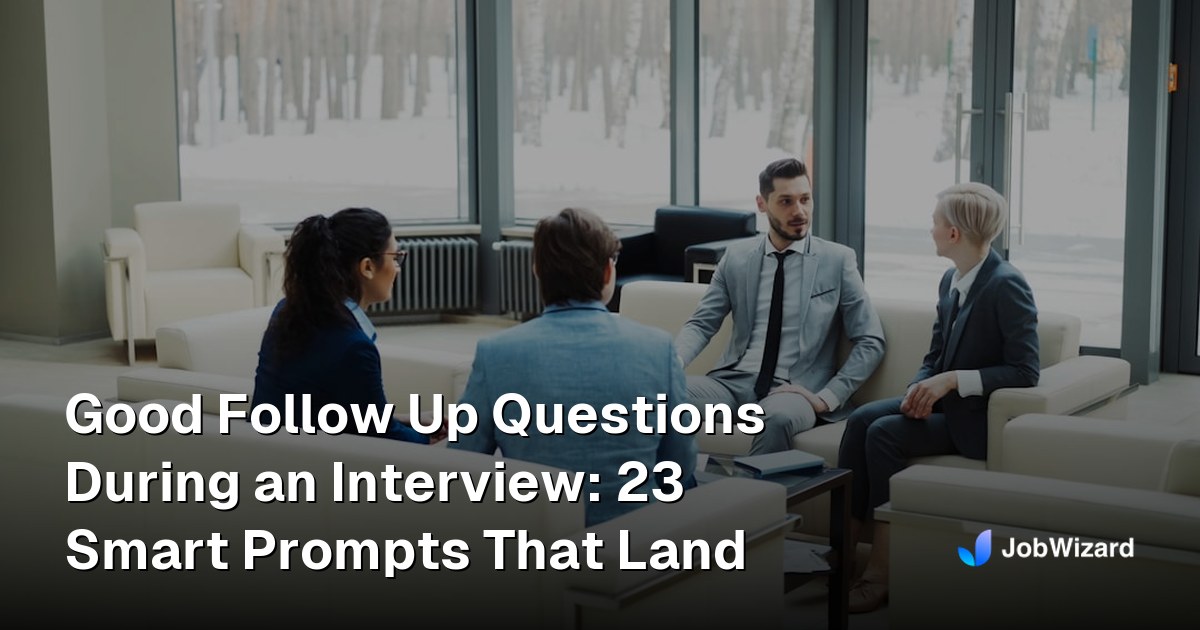
Good Follow Up Questions During an Interview: 23 Smart Prompts That Land
Learn good follow up questions during an interview that help you clarify next steps, understand priorities, and show real ownership. Use these prompts to sound confident—not scripted.
Free Chrome extension
Autofill your next job application
JobWizard is a free Chrome extension that fills applications, tracks statuses, and optimizes your resume.
Good follow up questions during an interview: ask to clarify priorities and next steps
If you’re looking for good follow up questions during an interview, your goal isn’t to “win” with trivia—it’s to understand what matters most to the team and make the next steps easy for the hiring manager. The best questions help you (1) confirm what the role really needs, and (2) show you think like a teammate who delivers.
In practice, you want to ask questions that are specific, not generic. When the interviewer answers, you’re listening for the hidden map: how decisions get made, what success looks like, and where your experience can plug in.
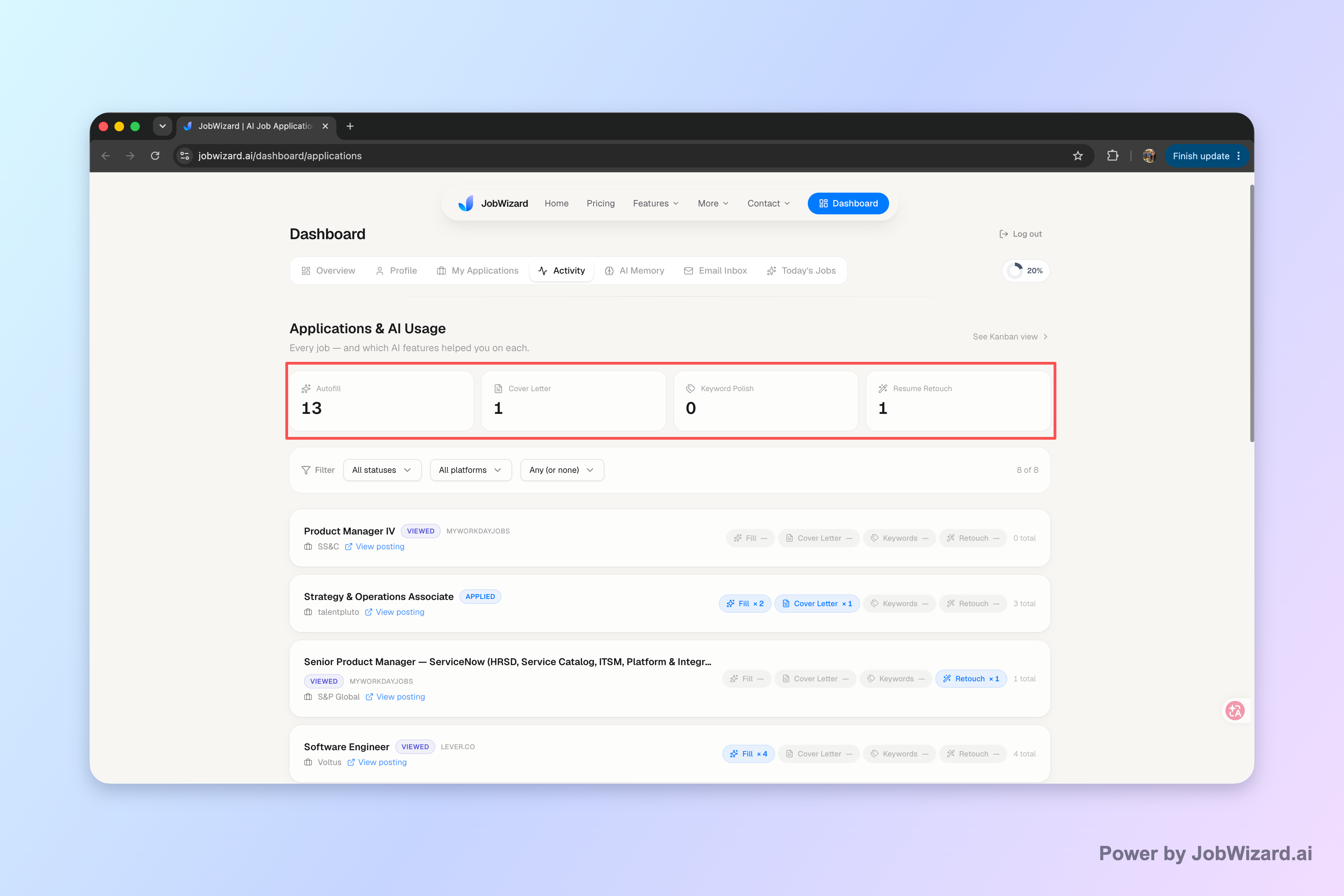
As you plan what to ask and what to do after, it also helps to keep your interview and application process organized in one place—especially when you’re juggling multiple roles.
JobWizard’s Activity view shows application status and which JobWizard tools were used for each role, so you can keep your next-step follow-up aligned with where each application stands.
Why “good” follow-up questions change the interview outcome
Most candidates ask, “What’s the company culture like?” Good follow-up questions go one level deeper. They show you understand the job’s constraints and want to deliver measurable results.
Good questions also buy you clarity. Even if you don’t get an offer, you’ll leave with better information than you arrived with—so your next conversation is stronger.
Quick rule: ask questions that start with what, why, how, or when
- What does success look like?
- Why is this role needed now?
- How does the team make decisions and measure impact?
- When will you move to the next stage?
23 good follow up questions during an interview you can use word-for-word
Use these good follow up questions during an interview as a menu, then select the 3–5 that match what they just explained. If you try to ask all of them, you’ll sound less natural—choose the ones that fit the moment.
Role clarity (signals you understand the job)
- “What does success look like in the first 30/60/90 days for this role?”
- “What are the top priorities for this role in the next quarter?”
- “What’s the biggest challenge the person in this seat is expected to handle early?”
- “How would you describe the ideal working style for this role—how do you like people to collaborate?”
- “What skills are most important for someone to ramp up quickly here?”
Team and collaboration (signals you can work across people)
- “How does this team typically work with other teams or departments?”
- “What does a strong partnership look like between this role and, say, product/engineering/operations?”
- “How are decisions made when priorities conflict?”
- “What’s one process the team has that helps prevent misunderstandings or rework?”
Performance and measurement (turns answers into proof)
- “How do you measure impact for this role?”
- “What metrics or outcomes matter most for the team right now?”
- “Can you share an example of work that was considered ‘high impact’ here?”
- “What do you wish more candidates understood about how success is evaluated?”
Process and next steps (helps you follow up correctly)
- “What are the next steps in the hiring process from here?”
- “What timeline are you working toward for decisions?”
- “Is there anything specific you need from me to move forward?”
- “How will you evaluate candidates at each stage?”
- “Will there be a chance to meet the team again before the decision?”
Motivation and fit (keeps it human)
- “What do you enjoy most about working on this team?”
- “What’s something the team is excited about for the next few months?”
- “What would make you say, ‘This person is a great fit’ after they join?”
Make any question sound natural: the 2-part connect tactic
When you ask, don’t just list questions. Connect them to a detail they mentioned.
- Connect: “Based on what you said about X…”
- Ask: “…how do you usually measure Y?”
When to ask follow up questions during an interview (and how many is enough)
The best time to ask good follow up questions during an interview is when your questions naturally match the interviewer’s last answer, and the safest timing is near the end.
Most interviews give you 2–3 minutes at the end for your questions, but you can also insert one thoughtful follow-up during a topic discussion. Aim for 3–5 strong questions total; that’s enough to demonstrate depth without taking over the conversation.
Best moments to ask
- When they mention a priority or challenge: ask one question that clarifies what “success” means.
- When they discuss collaboration: ask how decisions get made or how the role interfaces with others.
- When they describe process: ask about next steps and timing.
Good vs. risky timing (quick examples)
- Good: After they say, “This role will own onboarding,” ask about how ramp-up is measured.
- Risky: Jumping into long logistical questions before you fully understand the role’s priorities.
Turn “end of interview” into momentum
If you’re worried you’ll run out of time, group your questions by theme: one for success, one for measurement, and one for next steps. You’ll leave with the clarity you need and a clean path for follow-up.
Then close with a simple line that ties it back to your value: “Thanks—those answers confirm where I can contribute quickly.”
Follow-up after the interview: pair your questions with a clear next message
Your interview questions shouldn’t end when the call ends—turn them into a focused follow-up that reinforces fit. That’s how you convert good conversations into good outcomes.
For your after-interview message, keep it short: thank them, reference one specific part of what they said, and include one sentence that connects your experience to the role’s priorities.
Use these follow-up message ideas (based on common question categories)
- If you asked about first 30/60/90 days: mention one way you’d approach early wins.
- If you asked about measurement: restate what you think you’d optimize for.
- If you asked about next steps: confirm you’re excited and ask whether anything else is needed.
Follow-up timing matters—match real hiring pace
If you want a practical cadence, use a timing plan that fits real hiring cycles. Start with a consistent expectation, then adjust based on what they told you during the interview.
- Read: How Long After an Interview Should You Follow Up? A Timing Plan That Fits Real Hiring Cycles
- Or see: How Long to Hear Back After Interview? A Follow-Up Timeline That Matches Real Hiring Pace
Keep your application activity and interview steps aligned
If you’re applying broadly, it’s easy to lose track of where each process stands. A simple system helps you avoid “random check-ins” and reduces mental load.
JobWizard’s Activity view is designed to show application status and which tools were used for each role—so you can follow your own plan consistently rather than guessing.
- Use the pillar approach: How to Track Job Applications: A Practical System (JobWizard + Beyond)
Do this automatically with JobWizard
Skip the manual work — JobWizard's Application Tracker handles this for you.
FAQ: good follow up questions during an interview
What are the best good follow up questions during an interview if I’m not sure what the team needs?
Ask questions that uncover priorities without guessing. For example: “What does success look like in the first 30/60/90 days for this role?” and “What are the biggest challenges the person in this seat is expected to handle early on?”
When should I ask my good follow up questions during an interview—early or at the end?
End-of-interview is usually safest, but you can also work one or two into the relevant topic while you’re discussing projects or responsibilities. Keep it tight: usually 3–5 follow-up questions total.
What should I avoid asking as follow up questions during an interview?
Avoid anything that sounds like you’re trying to negotiate too soon or that suggests you’re not flexible, like focusing only on salary/benefits on the first pass or asking overly personal questions. If a topic matters, tie it to role success (for example, “How does the team measure impact?”).
How do I sound confident with follow up questions instead of sounding rehearsed?
Use short, specific questions that connect to what they just said. A good formula is: “Based on what you said about X, how do you see Y working?” Then ask one concrete next-step question like timing, process, or what they’re evaluating.
Should I send another follow-up message after the interview, and what should it include?
Yes—send a brief thank-you follow-up that references something specific from the conversation and includes one sentence that reinforces your fit. If you’re using tools to keep track of status and next steps, log the date and stage so your follow-up timing stays consistent.
Ready to run your interviews and follow-ups with less chaos? Keep your application status and next-step plan in one place with JobWizard’s Activity view, then send follow-up messages that match what you learned. Start organizing your job search today.
Follow Up Thank You Email After Interview: The Message That Keeps You in the Loop
Frequently Asked Questions
Autofill your next job application
JobWizard is a free Chrome extension that fills applications, tracks statuses, and optimizes your resume.