How Long to Hear Back After Interview? A Follow-Up Timeline That Matches Real Hiring Pace
Wondering how long to hear back after interview? Use a practical follow-up timeline, plus a job tracker activity view, to manage interview status and next steps without guessing.
Free Chrome extension
Autofill your next job application
JobWizard is a free Chrome extension that fills applications, tracks statuses, and optimizes your resume.
How long to hear back after interview? Aim for a first check-in window, not a guess
If you’re searching for how long to hear back after interview, the most useful answer is: “long enough for their process to move,” then “soon enough to stay top of mind.” Recruiters often juggle multiple candidates, approvals, and internal scheduling—so the real timeline depends on where the hiring team is in their workflow.
In practice, the best move is to follow a simple timing plan: wait for any stated timeline (if they gave one), then send a short, professional message. After that, track what happened so you don’t spiral or accidentally over-message.
Use a job tracker to organize “where are they now?” So you follow up on purpose
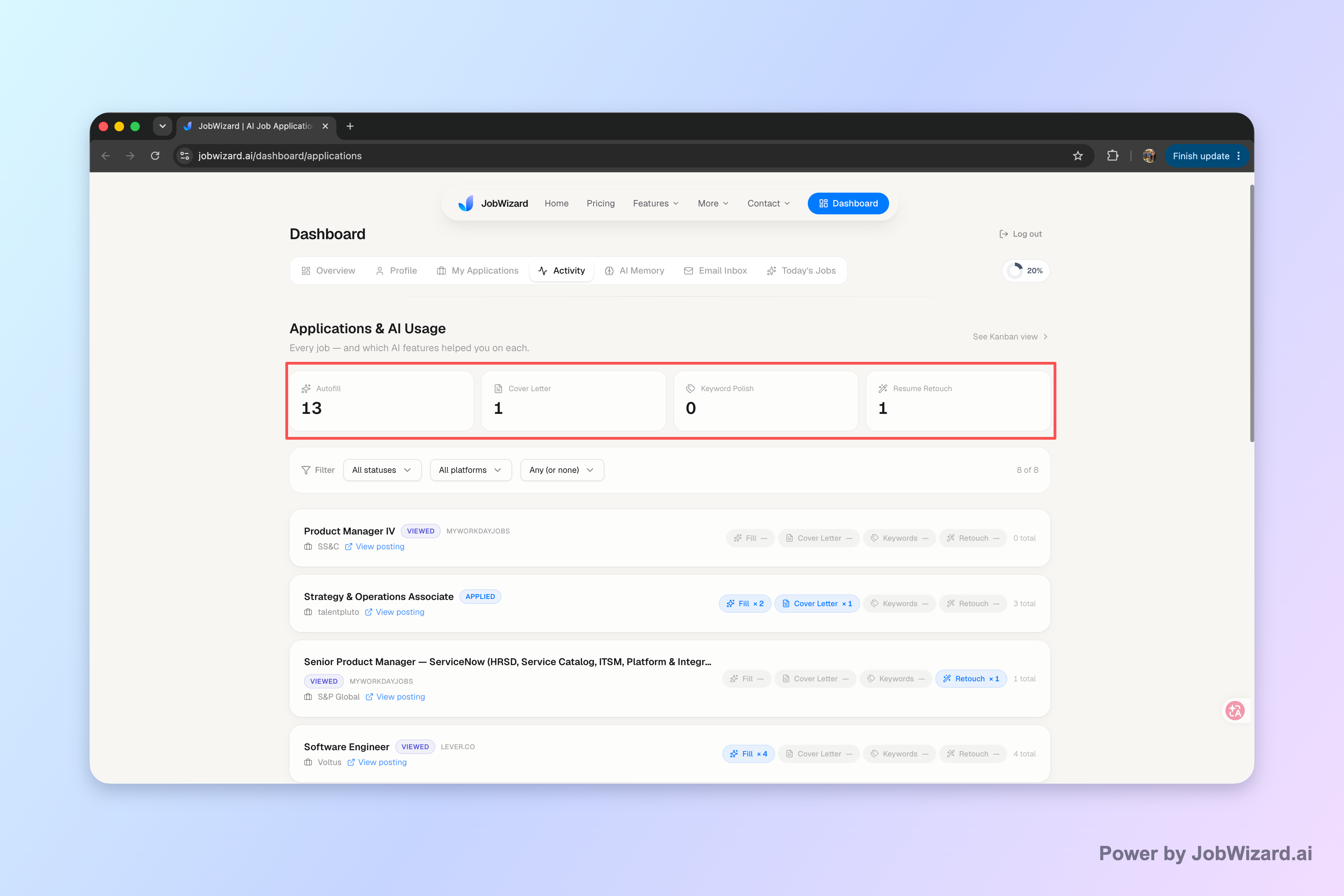
A common reason interview follow-ups feel stressful is that people don’t have a consistent record of what they’ve already done. A job tracker turns “I think I should email again” into “I’m following my plan for this role.”
JobWizard’s Activity view is built for exactly this kind of follow-up organization. It shows application status and which JobWizard tools were used for each role—so you can quickly see what stage you’re waiting on and what you’ve already tried. The Activity view helps you keep each application and its next step in one place, rather than scattered email threads and spreadsheets.
Keep in mind: a tracker can’t guarantee every update will appear instantly, and tracking doesn’t ensure hiring outcomes. Still, it gives you a reliable “source of truth” for your own next message and timeline.
A quick way to log interview status (without overthinking)
- Date of interview: write it down immediately.
- Any promise or timeline: copy their words (e.g., “we’ll decide next week”).
- Your follow-up dates: add your first message and any second check-in.
- What you’re waiting for: decision, references, hiring panel feedback, or “we’ll email if selected.”
Follow-up timeline: when to check in after your interview A step-by-step plan
To answer how long to hear back after interview in a way you can actually use, build a timeline around business days—not calendar days. That makes your follow-ups feel timely and avoids weekend messaging.
Use this structure as your baseline. Adjust forward or backward based on how responsive the company already has been (for example, if they moved quickly between steps, you can tighten the window a bit).
- Step 1: Wait for their stated timeline (if any) If they said “we’ll get back to you by Friday,” treat that as your starting gate.
- Step 2: First check-in 3–5 business days after the stated date If they gave no date, a reasonable first check-in is about a week after the interview.
- Step 3: Second follow-up (only if appropriate) 3–5 business days later Keep it short and neutral—no heavy pressure language.
- Step 4: Move on, but stay ready If there’s still no signal after your planned follow-up schedule, continue applying while you wait.
What “silence” usually means (and what it doesn’t)
Silence isn’t proof you’re rejected. Hiring teams may still be collecting interviewer feedback, comparing candidates, running internal approvals, or waiting for a decision meeting. On the other hand, silence without any response to reasonable check-ins can also mean the role is stalled—so your job is to balance persistence with momentum.
Where your follow-up message fits
- Thank-you email: send it soon after the interview (often within 24 hours).
- Follow-up check-in: send it after the timeline window opens.
- Optional second check-in: only if you still have no update and the process seems active.
If you need wording support, start with a strong thank-you, then move into a follow-up check-in. For templates and examples, see Follow Up Thank You Email After Interview: The Message That Keeps You in the Loop.
What to say when you follow up (so you sound confident, not impatient) Use a message that earns a reply
Your goal isn’t to “trap” the recruiter into responding—it’s to make it easy for them to update you. That means a clear subject line, a brief reminder of your interview, and a polite request that fits their workflow.
When you write your message, include the role title and reference the interview date. If you already sent a thank-you email, don’t repeat your entire story—just note that you’re checking in on next steps.
Message structure you can copy
- One-line reminder: “I’m following up regarding the [Role] interview on [Date].”
- Value reinforcement: one short sentence about why you’re a fit (keep it factual).
- Clear question: ask whether they’re still planning to make a decision and whether there’s anything else you can provide.
- Close: thank them for their time and include a professional sign-off.
A note on “busy” signals
If they respond with “we’re still reviewing candidates,” treat that as an update. You can reply once with appreciation and then follow your next check-in date. If they don’t respond to your first follow-up, keep your second note short and spaced out.
For a deeper plan (including when and how to follow up and track), use How Long After an Interview Should You Follow Up? A Timing Plan That Fits Real Hiring Cycles and How to Follow Up After an Interview (Timing, Messages, and a Tracking Plan).
How to manage multiple interviews and avoid follow-up overload Keep your pipeline moving
If you’re interviewing with more than one company, your follow-up schedule can quickly become a second job. The fix is to centralize your activity and decide in advance how many follow-ups you’ll send per role.
Job searching is a pipeline exercise. Even if you’re waiting to hear back, keep applying so you don’t depend on one outcome. Tracking helps because it tells you what you’ve already done and when you planned to nudge again.
Practical “next steps” to do today
- Choose your follow-up dates now Pick the day of your first check-in and a possible second date.
- Log interview details Add the date, interviewer names (if you have them), and any stated timeline.
- Track application status consistently Use your tracker’s application status view so you’re not relying on memory.
If you want a full system for keeping up with submissions, statuses, and follow-ups, use How to Track Job Applications: A Practical System (JobWizard + Beyond). It’s especially helpful when you’re juggling “applied,” “interviewed,” and “still waiting” across multiple roles.
Do this automatically with JobWizard
Skip the manual work — JobWizard's Application Tracker handles this for you.
FAQ: how long to hear back after interview Quick answers you can act on
How long to hear back after interview before I follow up?
A good rule of thumb is to wait until the company’s stated timeline has passed—then follow up about 3–5 business days after that. If they gave no timeline, many candidates start with a first check-in after roughly a week (then adjust based on how fast the interview process moved).
Is it okay to follow up more than once after an interview?
Yes—if you keep it professional and purposeful. Many people send a first follow-up message, then a second short note only if you still don’t hear back (for example, another 3–5 business days later). If the company signals a decision, stop and move on.
What should I say in a follow-up message when I don’t have an update?
Keep it brief and reference the role and your interview. You can ask whether they’re still evaluating candidates and offer to provide anything else (availability, work samples, references, or clarification). Avoid sounding impatient—aim for “checking in” rather than “demanding an update.”
How can I track application status after an interview?
Use a job tracker to log each role and keep notes on where your application stands (e.g., submitted, under review, in process) and which step you’re waiting on. JobWizard’s Activity view also shows application status and which JobWizard tools were used for each role, so you can follow your own timeline consistently.
When should I move on and keep applying?
If you’ve reached your planned follow-up schedule and you still have no signal, continue applying. Following up is about staying visible, not pausing your search. Treat silence as “not yet decided,” and keep your pipeline active until you receive an explicit update.
Ready to stop guessing and follow your plan? Use JobWizard to keep each application’s next step in one place with its Activity view—so you can track application status and send follow-ups at the right times.
Frequently Asked Questions
Autofill your next job application
JobWizard is a free Chrome extension that fills applications, tracks statuses, and optimizes your resume.