Lazyapply Risks: Why “Auto-Apply” Can Backfire (and the Safer Autofill-Then-Review Fix)
Lazyapply-style auto-apply bots can mis-answer screening questions, trigger resume mismatch, and even trip employer spam filters. Here’s the safer alternative: autofill first, then review and submit yourself.
Free Chrome extension
Autofill your next job application
JobWizard is a free Chrome extension that fills applications, tracks statuses, and optimizes your resume.
If you’re using lazyapply-style “auto-apply” tools, you may be trading speed for accuracy—and accuracy is what screening systems (and hiring teams) depend on. When a bot submits on your behalf, it can misread context, answer screening questions incorrectly, and send the wrong resume or profile details. That’s how you end up with “submitted” applications that don’t reflect you.
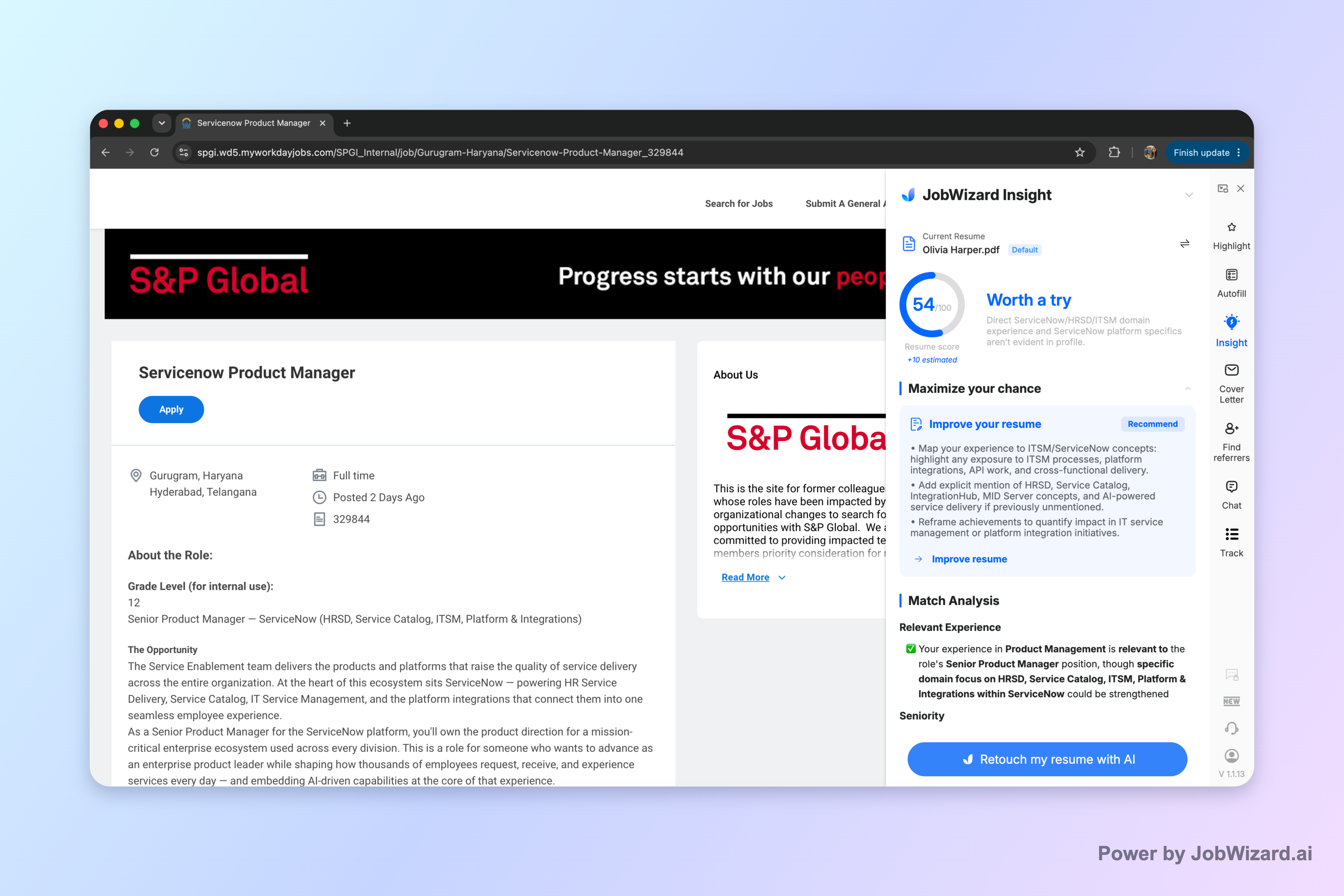
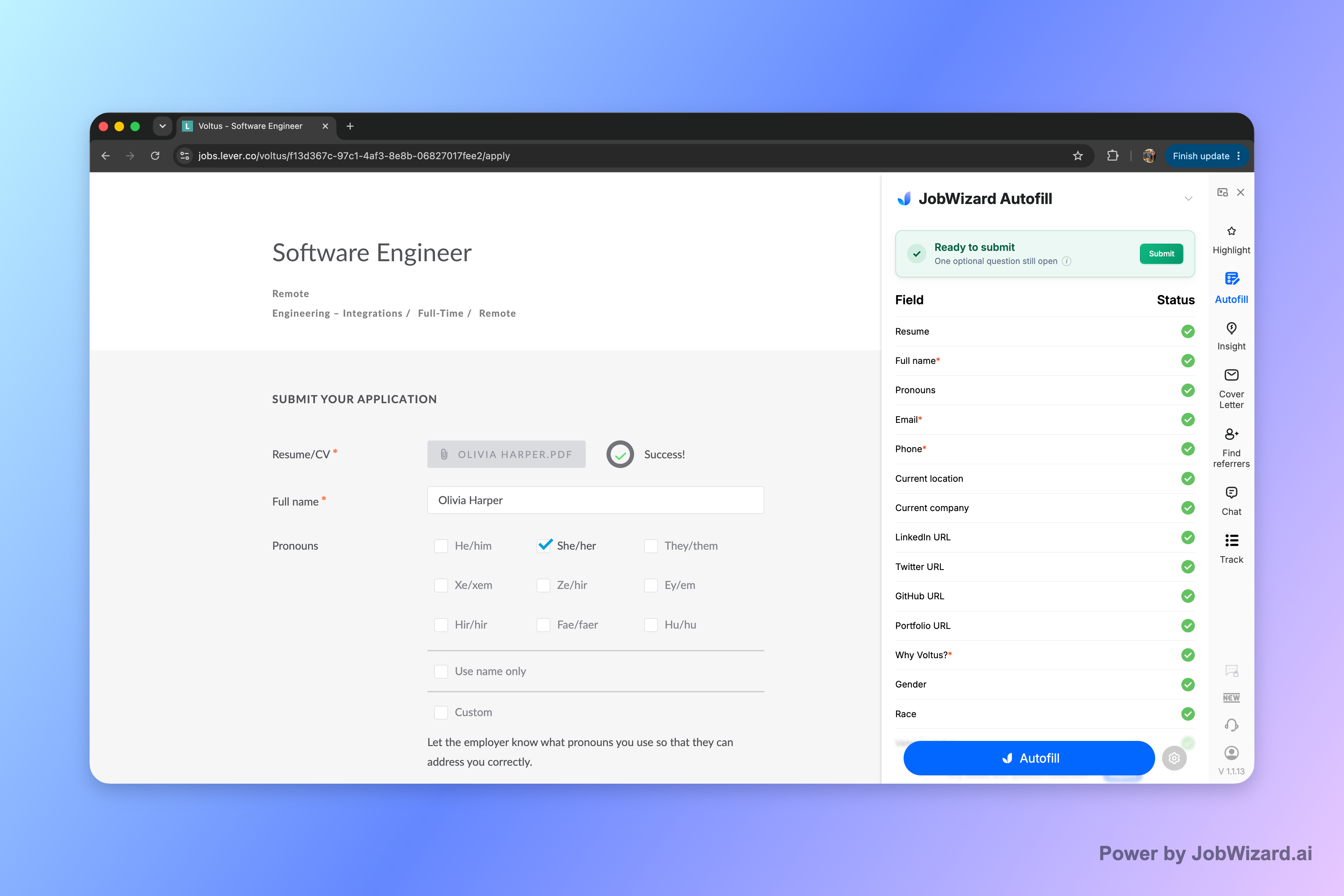
JobWizard’s approach is different: it helps you fill out applications fast on the page you’re already viewing, then you review and submit yourself. Below, we’ll break down what commonly goes wrong with lazyapply automation and what to do instead so your applications stay accurate without taking hours.
What “lazyapply” automation gets wrong—before you ever see the confirmation
Auto-apply breaks down at the exact points that matter most to employers. Many lazyapply workflows try to minimize your involvement, which means the tool is making decisions while you’re not.
Here are the most common failure modes—and why they hurt even if the application “goes through”:
- Wrong answers to screening questions: A single incorrect selection (experience, availability, work authorization, desired salary, location flexibility) can disqualify you automatically.
- Resume/profile mismatch: The bot may choose a document that doesn’t align with the role, or it may fill a field with information from a different job history than the one the employer is asking about.
- Incomplete custom responses: Many job posts include custom prompts (projects, tools used, constraints, reasoning, “tell us about…”) that require real context. Bots often produce generic or partially incorrect answers.
- Overlooked requirements: If you’re applying quickly, it’s easy to miss “must-haves” in the listing, but an auto-apply flow can also miss them because it’s not built around careful reading.
- Employer-side quality filters: Even without anyone “penalizing” you personally, employers often use automated checks to reduce spam. High automation patterns can increase the odds of filtering or manual review.
- Reputation damage at companies you actually want: One botched application can land you in a bad first impression—especially when you’re applying to smaller teams or roles where the hiring manager can see your submission details.
Think of it this way: job applications aren’t just forms. They’re evidence. When a bot submits evidence that doesn’t match reality, the employer can’t “guess” you meant something else.
That doesn’t mean all speed tools are worthless. The trade-off is simply that the more you remove your oversight, the more you rely on the tool to get every detail right—screening and custom questions included.
Why “auto-submit” can backfire: the screening-question and resume-mismatch cycle
The hardest part to automate isn’t the basics—it’s the truth you have to select. Screening questions and document choice are where applicants most often get filtered out.
Here’s a realistic example cycle that happens with lazyapply-style auto-apply:
- The bot picks speed over nuance: It fills fields quickly but can’t interpret every conditional prompt the way you can.
- Screening answers don’t match your situation: Maybe you’re “open to relocation” for one city but not another, or your experience is strong in one area and limited in another. The wrong option can route you into a reject bucket.
- The resume doesn’t fit the role’s priorities: If the application pulls the wrong version of your resume (or a resume that emphasizes a different toolkit), your strongest proof may be buried—or missing.
- You lose the chance to fix it: Once submitted, the “review step” is gone. Even if you apply again later, the first impression might remain.
This is also why lazyapply automation can feel confusing: you might see a confirmation email and assume it’s working. But “submitted” doesn’t mean “considered.” Many employers use automated routing plus human triage, and the screening answers you provided are often decisive.
By contrast, a workflow that supports autofill-then-review keeps the benefits of speed where they’re safe (repetitive fields) while preserving your control where accuracy matters (screening and custom content).
Safer alternative: fill fast, then review-before-you-submit
You can apply faster without letting a bot be the final author of your application. The safest compromise is: automate the repetitive parts, but keep a manual review gate right before submission.
With JobWizard’s workflow, you’re applying on the job page you’re already on, and you control the final submit. The tool helps by filling repetitive fields quickly so you don’t waste time retyping the same information.
In aggregate usage, JobWizard has supported 720,000+ applications submitted and 600,000+ autofill sessions run through it. JobWizard autofills an average of ~18 repetitive fields per application (typically 11–23), and applicants review before submitting.
That review-before-submit step is the difference between “speed” and “automation that sends the wrong truth.” It’s the moment you verify:
- All screening questions are answered as you intend (not what the tool guessed).
- Your resume selection matches the job (and the emphasis aligns with the role).
- Your custom responses are accurate and specific—not generic placeholders.
- Any sponsor/EEO-style details and job-specific prompts are correct for that company.
If you’re worried about losing time, focus your attention only where the risk is highest. Use your speed for what’s tedious (names, contact details, repetitive employment fields), and spend your review time on the “gatekeeper” inputs.
Lazyapply vs JobWizard: a practical autofill-and-review comparison
Choose based on whether you want “help filling” or “help submitting.” That one distinction changes the failure modes.
Below is a fair comparison focused on the part that affects your application quality:
| Tool category | Core idea | What you control before submission | Typical risk you should plan for |
|---|---|---|---|
| Lazyapply-style auto-apply | Automate as much of applying as possible | Often limited oversight at the moment of submission | Wrong screening answers, resume mismatch, incomplete custom responses, and increased chance of spam/quality filtering |
| JobWizard workflow | Autofill repetitive fields while you’re on the application | You review and submit yourself | You still must verify screening questions and custom prompts, but you avoid “bot submitted wrong details” scenarios |
| General “autofill + review” approach (varies by product) | Populate form data to reduce retyping | Varies, but the safer pattern is explicit review before submitting | If review is skipped, the same risks apply regardless of the tool name |
| General “auto-submit” approach (varies by product) | Submit with less or no live review | Varies, but oversight is the deciding factor | More submissions that reflect tool guesses rather than your exact intent |
If you want to decide quickly, ask yourself: Do I want speed that depends on perfect automation? Or do I want speed that depends on my review?
For a deeper, brand-to-brand view, see:
- JobWizard vs LazyApply: A Practical Autofill-and-Review Showdown for Applications
- JobWizard vs LazyApply vs Simplify vs Massive: Autofill vs Auto-Apply
- LazyApply Alternatives Safer Auto-Apply and Autofill Options: What Actually Works
These comparisons focus on how the workflow changes what gets filled, what gets reviewed, and where errors are most likely to appear.
Build a fast, accurate application checklist (so you don’t rely on a bot)
Speed comes from consistent preparation, not from removing your judgment. If you’re applying frequently, the easiest way to avoid lazyapply-style problems is to create a repeatable review gate.
Use this pre-submit checklist every time:
- Match the resume to the role: Confirm the resume version you’re submitting actually emphasizes the job’s keywords and requirements.
- Verify screening questions line-by-line: Especially availability, location flexibility, eligibility/work authorization, and experience level.
- Answer custom prompts with specifics: Mention relevant projects, tools, outcomes, and context you can stand behind in an interview.
- Double-check employer-facing details: EEO/sponsorship-style questions and any custom “required” fields that commonly get mishandled by automation.
- Read the final page once: A 30-second scan catches most “wrong detail” issues before you submit.
If you want the fastest path while staying accurate, combine that checklist with an autofill-then-review workflow.
To learn how to set up a repeatable autofill routine, start here: How to Autofill Job Applications (Step-by-Step with JobWizard). It’s a practical way to reduce typing while keeping your review step intact.
Do this automatically with JobWizard
Skip the manual work — JobWizard's Smart Autofill handles this for you. On these platforms: JobWizard vs LazyApply.
FAQ about lazyapply and safe autofill-before-submit
Is lazyapply just like autofill tools, or is the difference important?
The difference is critical: “lazyapply” style tools are often built around auto-applying with limited user oversight, while a safer approach autofills fields you’re on and then requires you to review before you submit. That review step is what prevents wrong screening answers and resume/profile mismatches.
What’s the most common way an auto-apply bot gets rejected (or hurts your chances)?
Most often, the bot answers screening questions incorrectly or only partially matches the job requirements. Even when it submits successfully, mismatched details (like experience level, location, work authorization, desired salary, or resume selection) can lead to fast rejections or allow your application to be flagged in quality checks.
How does submitting “your” application after reviewing reduce risk?
It reduces risk because you catch the items that AI or bots usually get wrong: screening answers, custom questions, sponsorship or EEO details, and the exact resume/cover letter combo. You can still move fast by autofilling repetitive fields, then spend your attention on what actually matters.
Can employer-side spam filters block auto-apply traffic?
Yes, automated submission behavior can increase the chance of employer-side filtering—especially if many applications appear similar or incomplete. A review-before-submit workflow helps ensure each application is tailored enough to avoid obvious bot-like patterns.
What’s the best workflow if I want to apply faster without using auto-apply?
Use an autofill-then-review workflow: prepare your resume and answers, let the tool populate repetitive fields quickly, then read every screening/custom question and confirm the correct documents before you submit. This keeps speed benefits while avoiding the “bot submitted for me” problems that lazyapply-style automation can cause.
Ready to apply faster—without handing over the submission to a bot? Try JobWizard to autofill the repetitive parts of applications and then review and submit yourself with confidence.
Frequently Asked Questions
Autofill your next job application
JobWizard is a free Chrome extension that fills applications, tracks statuses, and optimizes your resume.