How to Write a Follow Up Letter That Moves Your Job Search Forward
Learn how to write a follow up letter after applying or interviewing, with timing guidance, a clear structure, and examples that make your next step easy to understand.
Free Chrome extension
Autofill your next job application
JobWizard is a free Chrome extension that fills applications, tracks statuses, and optimizes your resume.
How to write a follow up letter that earns a reply
When a job application or interview goes quiet, a brief, considerate follow-up can keep communication open without putting pressure on the hiring team. If you are learning how to write a follow up letter, focus on three things: identify the role, restate your interest, and make one easy-to-answer request.
A follow-up is not a way to demand a decision or make an employer move faster. It is a professional check-in that shows you are still interested and gives the recipient enough context to respond.
First, decide what kind of note you need. A message after applying asks about the application or hiring timeline; a note after an interview can thank the team, reinforce your fit, or politely check in after the stated decision date. For the broader definition and situations where one is useful, see what a follow-up letter is and how it can keep a job search moving.
Choose the right time and channel
Use the employer’s stated timeline as your guide, then choose a channel the hiring contact already uses. The right timing depends on whether you applied, interviewed, or were promised an update.
- After applying: If the posting or a recruiter gave a response window, wait until it has passed. If no timing was provided, about one to two weeks is a reasonable general guideline before a single check-in.
- After an interview: Send a thank-you note promptly. If you are checking on a decision, wait until the date or window the interviewer shared has passed.
- After a conversation or referral: Follow up when you have a useful reason, such as sharing requested information or thanking someone for an introduction.
Email is usually the most practical option because it is easy to receive and reply to. If a recruiter has been communicating with you through another channel, continue there unless the employer directs you otherwise.
Before sending, check for a clear recipient, a specific subject line, and a professional tone. If you have already checked in recently, allow time for a response rather than sending another message right away.
How to write a follow up letter after applying
Keep an application follow-up short, specific, and respectful of the employer’s process. Your note should help the reader identify your application quickly, without repeating your résumé or asking for special treatment.
A straightforward structure works well:
- Use a clear subject: Include the role title and, if useful, your name.
- Greet the contact: Use the hiring manager’s or recruiter’s name when you know it.
- Identify your application: Mention the position and when you applied.
- Restate your interest: Add one genuine reason the role appeals to you.
- Ask politely: Request an update on the hiring timeline or next steps.
- Close professionally: Thank the reader and include your name and contact details.
For example, you might write: “I’m checking in on my application for the Marketing Coordinator position, which I submitted on May 6. I remain interested in the opportunity, particularly the chance to support the team’s customer education work. If you’re able to share an update on the hiring timeline, I’d appreciate it. Thank you for your time.”
That wording is a starting point, not a script to send unchanged. Replace the example details with accurate information, and avoid implying you have an offer or deadline if you do not.
If you want a complete sample and guidance on getting the tone right, use this confident follow-up letter sample. For an email-specific walkthrough, read how to write a follow-up email after an application.
Personalize the note for an interview
An interview follow-up should refer to the conversation, not just repeat that you want the job. Thank the interviewer, mention a relevant topic you discussed, and connect it briefly to what you can contribute.
For a thank-you note, a short message could say: “Thank you for speaking with me about the Operations Associate role. I appreciated learning how the team coordinates product launches, and our conversation strengthened my interest in the position. Please let me know if I can provide anything else as you consider next steps.”
If the interviewer gave you a decision date, wait until that date has passed before sending a separate status check. Then keep the request neutral: “I’m following up to see whether there is an update on the hiring timeline for the Operations Associate role. I remain interested and would be glad to provide any additional information.”
When possible, make your message personal with one specific detail from the discussion. Avoid overloading it with new qualifications or asking the interviewer to repeat information they already shared.
Keep track of each follow-up and next step
A simple record helps you follow up consistently without losing track of dates, contacts, or replies. For each role, note when you applied, who you contacted, when you sent a message, and what the next step is.
JobWizard’s Activity view shows application status and which JobWizard tools were used for each role. Use it as one place to review your application activity and keep the next step in view; it does not mean every employer update will be detected automatically.
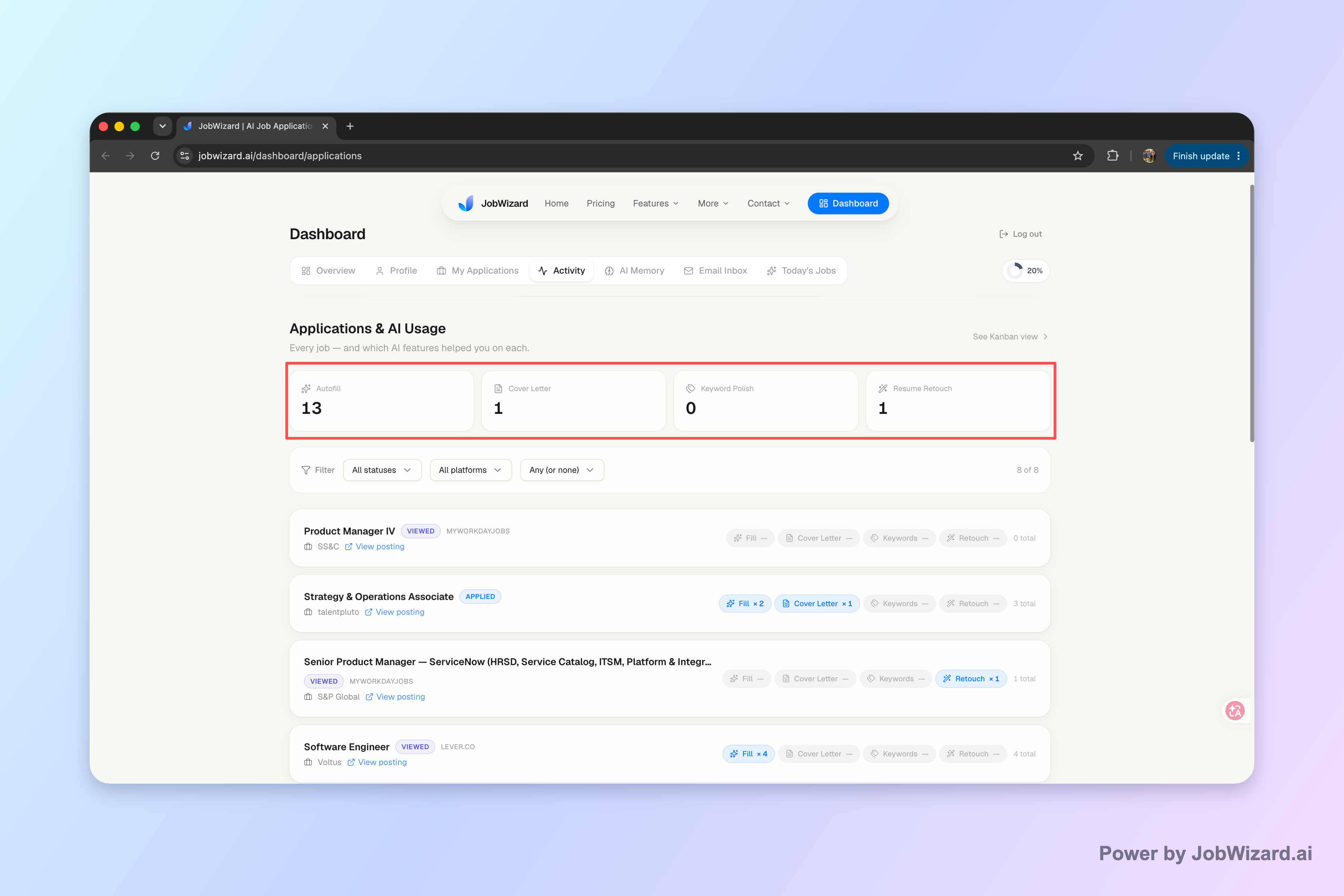
A tracker can also help you see when to wait instead of sending another message. For a broader system, follow this practical guide to tracking job applications, which covers ways to organize applications and follow-up actions.
Do this automatically with JobWizard
Skip the manual work — JobWizard's Application Tracker handles this for you.
Frequently asked questions about how to write a follow up letter
These answers cover common questions about timing, format, and what to include in a job-search follow-up.
How to write a follow up letter after applying for a job?
Write a concise note that identifies the role, briefly restates your interest, and asks politely whether there is an update on the hiring timeline. Include your name and contact information, then close with thanks. If the posting gives a response timeline, wait until it has passed before checking in.
How long should you wait before sending a follow-up letter?
Follow the timeline in the job posting or the one the recruiter shared. If you were given no timeline, waiting about one to two weeks after applying is a reasonable guideline; after an interview, use the timeline the interviewer provided and send a thank-you note promptly.
Should I send a follow-up letter by email or regular mail?
Email is usually the practical choice for a job-search follow-up because it is easy for the hiring contact to receive and respond to. Use another method only if the employer asks for it or you already have an established contact channel.
What should I avoid in a follow-up letter?
Avoid demanding an immediate answer, sending repeated messages close together, or adding claims you cannot support. Keep the note professional, specific to the role, and focused on a polite request for an update.
Make your next check-in easier to manage. Use JobWizard’s Activity view to keep application status, tool activity, and your next step together as you work through your job search.
Frequently Asked Questions
Autofill your next job application
JobWizard is a free Chrome extension that fills applications, tracks statuses, and optimizes your resume.