What Is a Follow-Up Letter? The Small Note That Keeps a Job Search Moving
What is a follow-up letter, and when should you send one during a job search? Learn what it should include, how to choose the right timing, and how to keep your next step organized.
Free Chrome extension
Autofill your next job application
JobWizard is a free Chrome extension that fills applications, tracks statuses, and optimizes your resume.
What Is a Follow-Up Letter? The Short Answer
A follow-up letter is a brief, professional message sent after a job application, interview, or other hiring interaction. It can thank someone for their time, reiterate your interest, ask about the hiring timeline, or check on an application’s status. The right purpose depends on what happened and what you need to do next.
It is not a substitute for your application materials, and it should not pressure a hiring team for an immediate decision. Think of it as a courteous, relevant continuation of a conversation—not a demand for a response.
For the larger process of organizing applications, deadlines, and next steps, start with How to Track Job Applications: A Practical System. A follow-up is easier to write when you know what you sent, when you sent it, and what response or deadline you are waiting for.
What Is a Follow-Up Letter Used For in a Job Search?
A follow-up letter serves a specific purpose: acknowledge an interaction, check on a process, or keep a professional conversation moving. Before drafting, identify the event you are following up on and the action you want the recipient to take—or simply the point you want to convey.
Common situations include:
- After an interview: Thank the interviewer, refer to a specific part of the conversation, and reaffirm your interest. For a message focused on appreciation, see Follow Up Thank You Letter: What to Send After an Interview.
- After applying: Ask politely whether there is an update or a revised timeline, especially if the stated response window has passed.
- After a recruiter conversation: Share a requested detail, confirm an agreed next step, or briefly restate your interest in the role.
- After a promised update does not arrive: Mention the date or timeframe discussed and ask whether there is a new estimate.
Use the message that fits the moment. A thank-you note should lead with appreciation; a status check should make its question clear. If your situation is specifically an interview-status inquiry, this guide to a follow-up letter after an interview to check status covers the timing and wording.
What Is a Follow-Up Letter Supposed to Include?
A strong follow-up letter gives the reader enough context to understand your message and respond without searching for details. Keep it concise, accurate, and courteous; do not add claims or qualifications you cannot support.
- Clear subject or opening: State the role and, when useful, the purpose of the note.
- Helpful context: Identify the position and when you applied, interviewed, or last spoke.
- One main point: Thank the recipient, confirm a detail, reinforce your interest, or ask about the timeline.
- Polite close: Make the next step easy to answer and thank the person for their time.
- Your name and contact information: Include a professional sign-off and the details the recipient needs to identify or reach you.
For example, a status-check message might say: “I’m checking in about the Marketing Coordinator role, which I applied for on May 6. I remain interested and would appreciate any update you can share about the hiring timeline.” Adjust the wording to your circumstances and do not imply that a response is overdue unless the stated timeline has passed.
If you need language for different stages, use these sample follow-up letters for job application status as starting points, then personalize the details.
When Should You Send a Follow-Up Letter?
Follow up when there is a reasonable reason to write, and use any timeline the employer gave you to guide the timing. If a recruiter or interviewer said when they expected to make contact, wait until that window has passed before asking for an update.
If no timeline was shared, avoid sending repeated messages soon after applying or interviewing. Give the hiring team a reasonable interval, then send one concise note that states the role, your relevant date, and your question. If there is still no reply, consider the circumstances before deciding whether another message is warranted.
Keep your own record of the application date, conversations, and promised next steps. JobWizard’s Activity view shows application status and which JobWizard tools were used for each role; it does not mean every application update will be detected automatically.
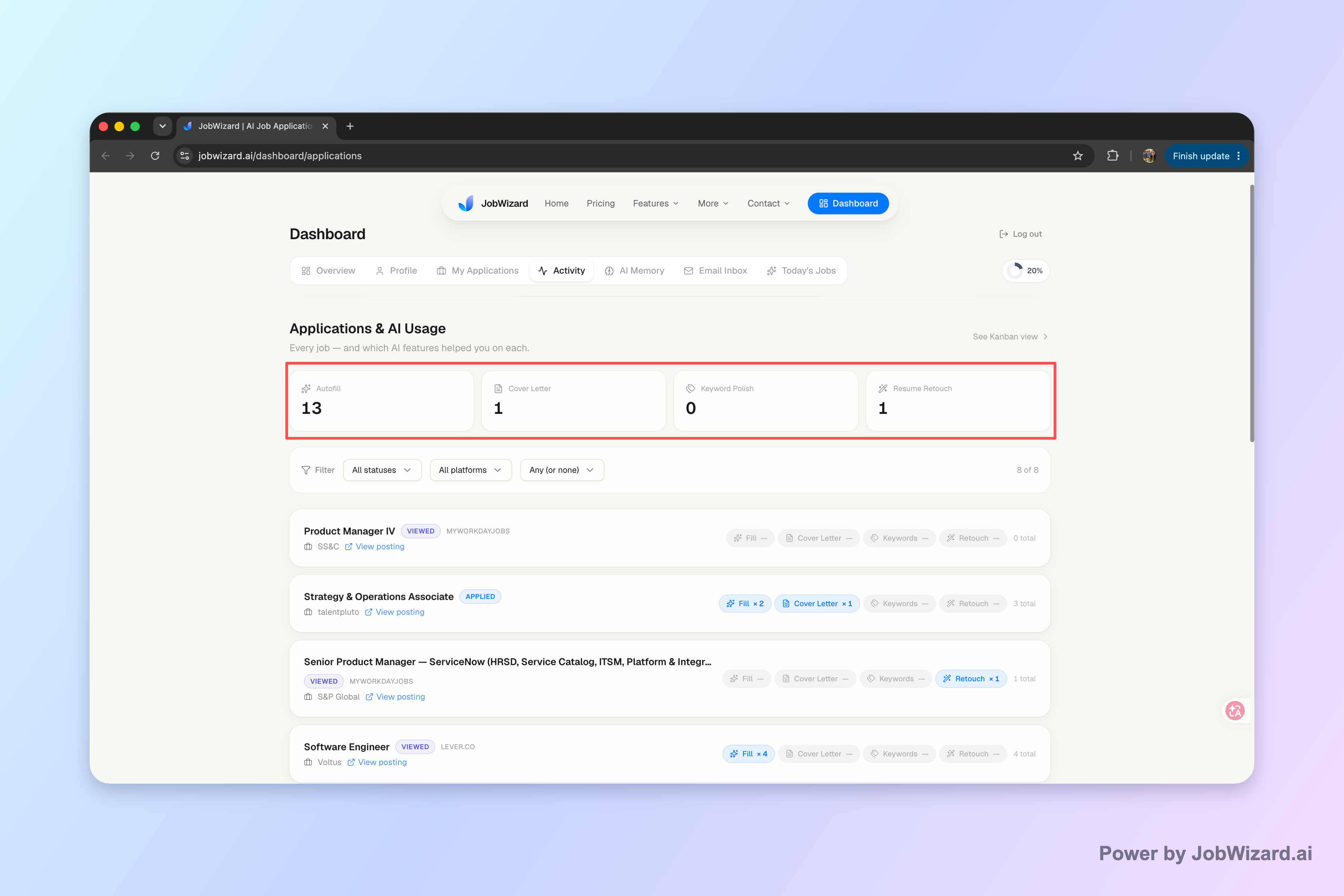
Use the Activity view to keep each application and its next step in one place, then review the details you have before writing. That record can help you avoid duplicate check-ins and make your message specific.
What Is a Follow-Up Letter Not—and How Can You Keep It Professional?
A follow-up letter is not a guarantee of a reply or a way to force a hiring decision. It should not guilt the recipient, demand an answer, or repeat the same request without new context. Its value is in clear, considerate communication.
Before sending, check that the recipient’s name, role title, and dates are correct. Keep the message focused on one purpose, use a professional tone, and proofread it for errors. If you are asking about status, make the question easy to answer without assuming the employer has made a decision.
- Do: Refer to a real application, conversation, or timeline.
- Do: Keep the note brief and express interest honestly.
- Don’t: Send repeated messages just because you have not received an immediate reply.
- Don’t: Treat silence as confirmation of a particular outcome.
Do this automatically with JobWizard
Skip the manual work — JobWizard's Application Tracker handles this for you.
Follow-Up Letter FAQs
The best follow-up letter is brief, relevant to the hiring stage, and considerate of the recipient’s time. These answers cover the questions job seekers commonly ask before sending one.
What is a follow-up letter?
A follow-up letter is a brief, professional message sent after an application, interview, or other hiring interaction. It thanks the recipient or politely asks about the next step while reinforcing your interest.
Is a follow-up letter the same as a thank-you letter?
Not exactly. A thank-you letter expresses appreciation after an interaction, while a follow-up letter can also ask about timing or application status. A message can do both when it is appropriate to thank the recipient and check in.
When should I send a follow-up letter after applying?
If the posting or recruiter gave you a timeline, wait until that timeline has passed before asking for an update. If no timeline was given, allow a reasonable interval before sending one concise, courteous check-in.
What should I include in a follow-up letter?
Include a clear subject or purpose, the role and date of your application or interview, a brief expression of interest or thanks, and a polite question or next step. Keep it accurate, specific, and easy to answer.
Keep your next step visible. Use JobWizard’s Activity view to see application status and which JobWizard tools were used for each role, and keep each application’s next step organized in one activity view.
Frequently Asked Questions
Autofill your next job application
JobWizard is a free Chrome extension that fills applications, tracks statuses, and optimizes your resume.