How to Answer Pay Expectations on Application: A Recruiter-Ready Script You Can Reuse
Learn how to answer pay expectations on application with a flexible script that protects your range and helps you move forward. Includes examples for job applications and follow-up questions.
Free Chrome extension
Let AI answer these questions for you
JobWizard fills sponsorship, work-auth, and availability answers correctly on every application — free.
How to answer pay expectations on application: give a range, protect your minimum, and move the conversation forward
When you’re wondering how to answer pay expectations on application, the goal isn’t to “guess the exact salary”—it’s to sound prepared, stay flexible, and avoid pricing yourself out of a role you want.
Most application pay questions fall into two buckets: (1) a field that asks for a number or range, and (2) a free-text prompt that asks for “expectations” or “salary requirements.” In both cases, your best strategy is to tie your expectation to role scope, level, and total compensation—then explicitly invite discussion.
Choose the right response format: number vs range vs “fit first”
The right wording depends on what the application actually allows, so how to answer pay expectations on application starts with reading the field carefully.
- If it asks for a specific number: use a number that represents your minimum acceptable compensation (not your ideal), and keep it open to discussion on total compensation and responsibilities.
- If it asks for a range: give a realistic range that matches your target level, and add a line that signals flexibility based on role scope.
- If it’s free text: use a “fit first” approach—anchor your expectations to responsibilities and ask for their target range.
Application-ready scripts (copy/paste)
Pick one script and customize the brackets.
- Range (best when available): “My pay expectations are in the range of $[X]–$[Y], depending on the scope and level of the role. I’m open to discussing total compensation.”
- Number (when forced): “I’m targeting $[X] as a base, depending on responsibilities and total compensation. If the role is at a different level, I’m open to discussing the appropriate fit.”
- Fit-first (when unsure): “Compensation should align with responsibilities and level. I’m open to discussing based on the scope of this role—what range are you targeting?”
Example answers you can adapt
- Senior-ish scope, flexible on level: “I’m targeting $120,000–$135,000 depending on responsibilities and team scope. I’m open to discussing total compensation and growth opportunities.”
- Entry-to-mid range, protecting a minimum: “My base expectation is $75,000, depending on the level and responsibilities. I’m open to reviewing the full compensation package.”
- Career change or unclear level: “I’m open to discussing compensation based on the scope and level required for this role. Are you able to share the target range for this position?”
Tip: avoid writing a long paragraph in the pay field. Short, recruiter-friendly lines tend to work better and are easier to interpret quickly.
Set your numbers before you apply (so your answer stays confident)
To answer with clarity, you need a simple way to decide your range—so how to answer pay expectations on application doesn’t become guesswork every time.
Start by separating three numbers in your head: (1) your minimum acceptable base, (2) your target base, and (3) your “stretch” base if the role has clear upside (higher scope, better growth, more ownership).
A quick 10-minute method
- Define your minimum: pick the base pay number you cannot go below (even if you like the job).
- Pick your target: estimate what you’d feel good about if you’re hired at the right level.
- Decide your range width: a realistic range is often narrow enough to sound credible, but wide enough to show flexibility.
- Adjust for total compensation: if benefits, bonus, equity, or travel materially change value, note flexibility in your wording.
What to say when the job posting lists a range
If the posting includes a compensation band, you’ll look most polished when your answer aligns with it. If your target sits inside the band, use a range that overlaps. If your target is above the band, you’ll usually be better off using a “fit first” line and emphasizing responsibilities—rather than forcing a number that doesn’t match what they’re budgeting.
Keep this boundary: you can be flexible, but don’t undercut your minimum. If you do, you may end up negotiating from a weaker position later.
Use follow-up questions to tighten the “fit” (without sounding difficult)
One of the fastest ways to improve outcomes after you submit is to ask smart follow-ups—so how to answer pay expectations on application becomes part of a broader conversation about scope.
Two follow-up questions that work in email or interviews
- Ask for the target band: “Thanks—what range are you targeting for this role based on level and responsibilities?”
- Connect compensation to scope: “To make sure I’m aligned, could you share how success is measured and what scope you’re planning for the first 3–6 months?”
When you should adjust your application answer
If you gave a range on the application and later learn the role is broader/narrower than you expected, update your messaging in your next interaction.
For example: “Based on what you shared about the scope around X, I’d be more aligned with the upper end of the range I listed.” This sounds collaborative, not defensive.
Career Chat as a prep tool (for better pay-fit questions)
If you’re preparing for a role and want to sharpen your follow-up questions, Career Chat keeps the current role in context so you can ask targeted questions about fit and application strategy without re-pasting the entire job description each time.
Just remember: it’s a tool for planning questions—not a guarantee about qualification. Use what you learn to refine your application and interview approach.
Example “best practice” answers by common scenario
Use these scenario-based templates to match how recruiters actually read pay expectations—so how to answer pay expectations on application looks consistent even when the question changes between forms.
| Scenario | Best response style | Example answer (adapt) |
|---|---|---|
| Application asks for a range | Give a realistic range + flexibility line | “$85,000–$95,000 depending on scope and level. Open to discussing total compensation.” |
| Application forces a single number | Use your minimum acceptable base + openness | “$90,000 base, depending on responsibilities and total compensation.” |
| You’re unsure of the level | Fit-first + ask their target range | “Open to discussing based on responsibilities. What range are you targeting for this role?” |
| The job posting shows a band | Overlap your answer with the band | “Aligned with the posted band—expectations would fall within $X–$Y depending on level.” |
| You want to avoid locking in too early | Range with a justification | “My expectations are $X–$Y; I’d refine based on scope and performance expectations for the first 3–6 months.” |
| You’re balancing competing roles | Minimum + collaborative tone | “My minimum base is $X. If responsibilities match, I’m flexible within that alignment for total compensation.” |
Want deeper scripts for adjacent questions? Check these related guides: How to Answer Job Application Questions: A Field-Tested Method for Confident, Consistent Responses, How to Answer "What Are Your Salary Expectations" on a Job Application, How to Answer “Minimum Salary” on an Application Without Closing Doors, and How to Answer Availability for Job Applications: Recruiter-Ready Scripts That Stay Flexible.
Do this automatically with JobWizard
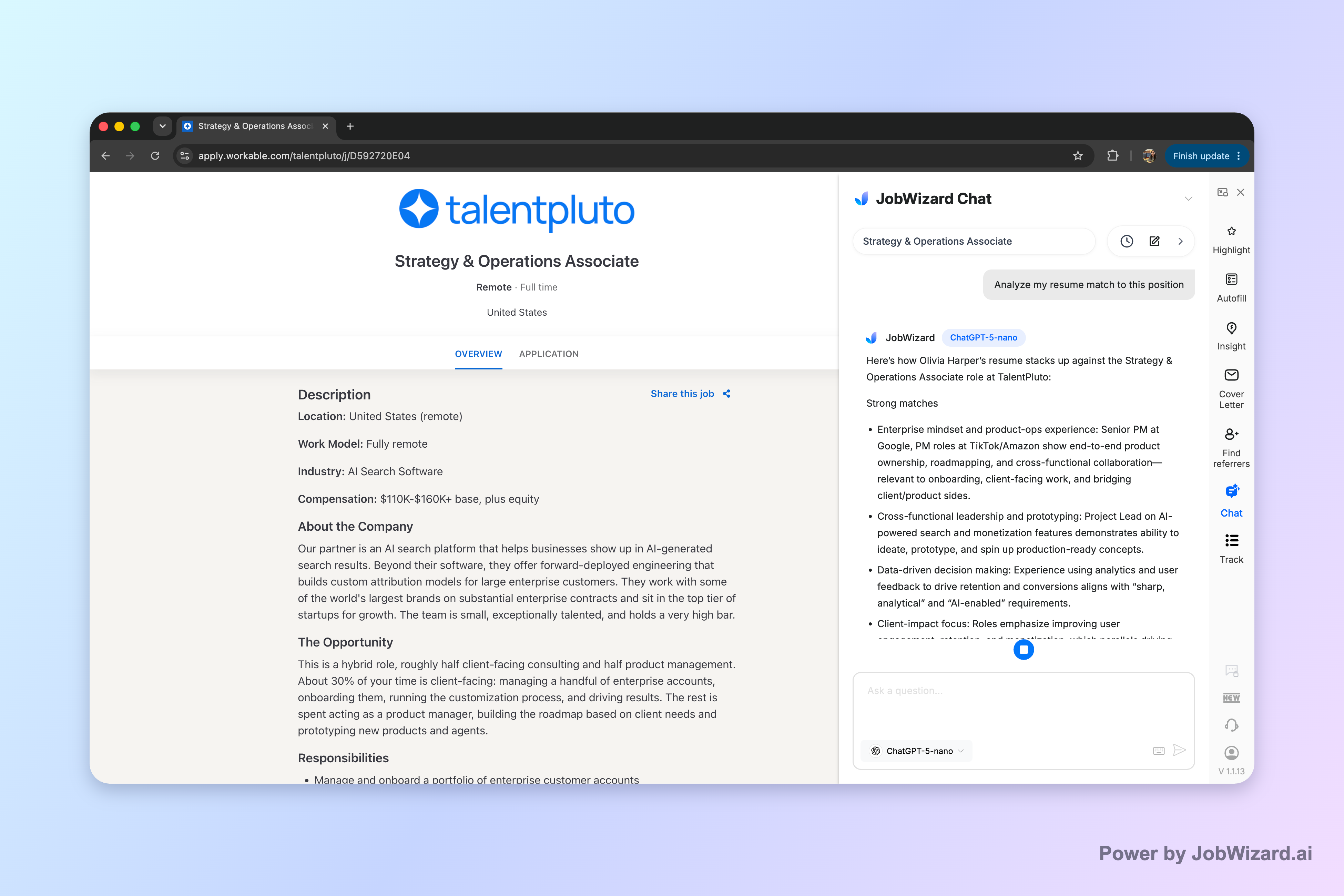
Skip the manual work — JobWizard's Smart Autofill handles this for you.
FAQ: quick answers to common pay-expectation form questions
Should I give a number or a range for pay expectations on an application?
If the form forces a number, pick the lowest end of your target range (or a number that still meets your minimum) and note you’re open to discussion based on scope and responsibilities. If it allows a range, give a realistic range and add a one-line flexibility statement like “negotiable based on total compensation and role scope.”
What if I’m not sure yet what the job pays?
Use a “fit first” response: explain you’re basing expectations on responsibilities and level, then invite them to share the budget or compensation band. For example: “I’m open to discussing compensation based on the scope of this role. What range are you targeting for this position?”
How do I answer pay expectations when the question comes up again in an interview?
Repeat your range, but anchor it to market value and the role’s impact. If you shared a range on the application, you can say: “I’m still aligned with the range we discussed—especially given the responsibilities around X and Y.” Then ask what success looks like and whether compensation is flexible within the band.
Is it a mistake to say “negotiable” or “depends” on the application?
Not necessarily—“depends” can be helpful if you immediately give a direction. Pair it with a boundary (your minimum or a range) and a justification tied to role scope. For example: “Negotiable within a target range of $X–$Y depending on responsibilities and total compensation.”
Ready to apply with pay expectations that don’t derail you? Use JobWizard to review and refine your application details before you submit, and start strong by drafting your pay-expectation response with your minimum + range in mind—then verify it aligns with the role’s scope.
Frequently Asked Questions
Let AI answer these questions for you
JobWizard fills sponsorship, work-auth, and availability answers correctly on every application — free.