Follow Up Email After Interview Status: What to Send for “Pending,” “In Review,” and More
A great follow up email after interview status depends on what the hiring portal shows. Use this status-to-action guide and copy templates to sound timely and confident.
Free Chrome extension
Track all your applications in one place
JobWizard auto-tracks status changes across Workday, Greenhouse, and every major job site — free.
How do I write a follow up email after interview status—when the portal still looks stuck?
You don’t want to sound pushy—but you also don’t want to disappear after a great interview. Here’s a real scenario: you interviewed last week, the role page shows a status like “In Review” or “Pending,” and you’re wondering whether a follow up email after interview status will help or hurt.
The key is to match your message to the status label, your timing, and the one question you want answered: next steps. In this guide, you’ll get a status meaning table, action rules, and copy-paste templates you can send today.
Key takeaway: A follow up email after interview status should be a concise “next steps” check-in, not a demand for an exact timeline.
What does “In Review” mean after an interview?
“In Review” usually means your application is still being evaluated and the team hasn’t moved to scheduling decisions or offers yet. After an interview, it commonly indicates the hiring panel is reviewing notes, comparing candidates, or completing internal steps.
Your email should acknowledge the interview, reinforce one or two relevant strengths, and ask about the process moving forward. Keep it friendly and specific—avoid repeating your entire resume.
Key takeaway: If the portal says “In Review,” ask for next steps and what to expect, not for a final decision date.
What does “Pending” mean after an interview?
“Pending” typically means an action is waiting to be processed—for example, review assignment, internal approvals, or a decision checkpoint. It can also mean the role is still active but not yet in the “decision” phase.
Send a polite follow-up that restates interest and offers anything that could unblock review (availability, portfolio links, or short clarifications). Avoid sounding like you’re waiting on a personal favor; frame it as staying aligned with their process.
Key takeaway: With “Pending,” your follow up email after interview status should be a soft check-in that helps them move forward.
What does “Awaiting Review” mean after an interview?
“Awaiting Review” generally indicates your file hasn’t been looked at yet in the current stage—or it’s queued for review by the next person/team. Even if you interviewed, sometimes the portal is tied to the original application workflow and updates with delays.
Write your follow-up to bridge the gap: reference the interview and ask whether they can share what happens next (even a general step is useful). Keep it short and professional.
Key takeaway: “Awaiting Review” is a good reason for a concise note that connects your interview to the next step.
What does “In Process” mean and should I email?
“In Process” usually means your application is actively moving through stages—for example, review completion, internal alignment, or final evaluation steps. It’s not a no; it’s “work is underway.”
Send a follow-up if it’s been several business days since the interview and your last message. Your goal is to confirm next steps and whether anything else is needed from you.
Key takeaway: For “In Process,” your follow up email after interview status should ask for next steps, not push for urgency.
What does “Finalist,” “Shortlisted,” or “Under Consideration” mean?
If the portal says you’re a finalist or shortlisted, it’s a strong signal your candidacy is actively in play. In that case, you can be slightly more direct while staying tactful.
Use your email to confirm continued interest and ask about what the next step looks like—final interviews, references, or an offer stage. If you’ve already sent references, mention that and offer to provide anything else quickly if needed.
Key takeaway: For “finalist/shortlisted” statuses, ask about the next step and timeline in a gentle way.
What if my portal status says “Interview Scheduled” or “Scheduled” after I already interviewed?
This is common when the system lags behind reality. Sometimes the portal reflects the workflow from when the interview was created, not the current “post-interview evaluation” reality.
In your follow-up, don’t argue with the label. Instead, reference the interview you completed and ask for next steps. A status mismatch shouldn’t derail your message.
Key takeaway: Ignore the system label mismatch—your email should focus on the interview you just completed.
What does “No Longer Under Consideration” or “Rejected” mean?
These statuses generally indicate the process is over for that role. A follow-up email here usually won’t “reverse” the decision, but it can still serve a networking purpose—especially if you want to stay on good terms.
If you genuinely want to stay connected, send a brief note thanking them for their time and asking if they’d consider you for future roles. Keep it very short and avoid debating the outcome.
Key takeaway: When the portal shows rejection/closed, switch from “status follow-up” to “graceful networking” outreach.
What if the status never changes after my interview?
A static status doesn’t mean nothing is happening. Many applicant tracking systems update slowly or not at all, and some teams communicate by email rather than through the portal.
Use timing as your guide. If it’s been several business days since the interview and you haven’t received a response, a follow up email after interview status is still appropriate—just don’t treat the portal as the only source of truth.
- Use time since interview: follow up after a few business days if there’s no reply.
- Keep it one question: ask what the next step is (and whether there’s an estimated timeline).
- Don’t spam your story: avoid re-sending your full resume or long recap.
Key takeaway: When status never changes, you can still follow up based on elapsed time and your interview reference.
How do I track my interview timeline so my follow up email after interview status is timed right?
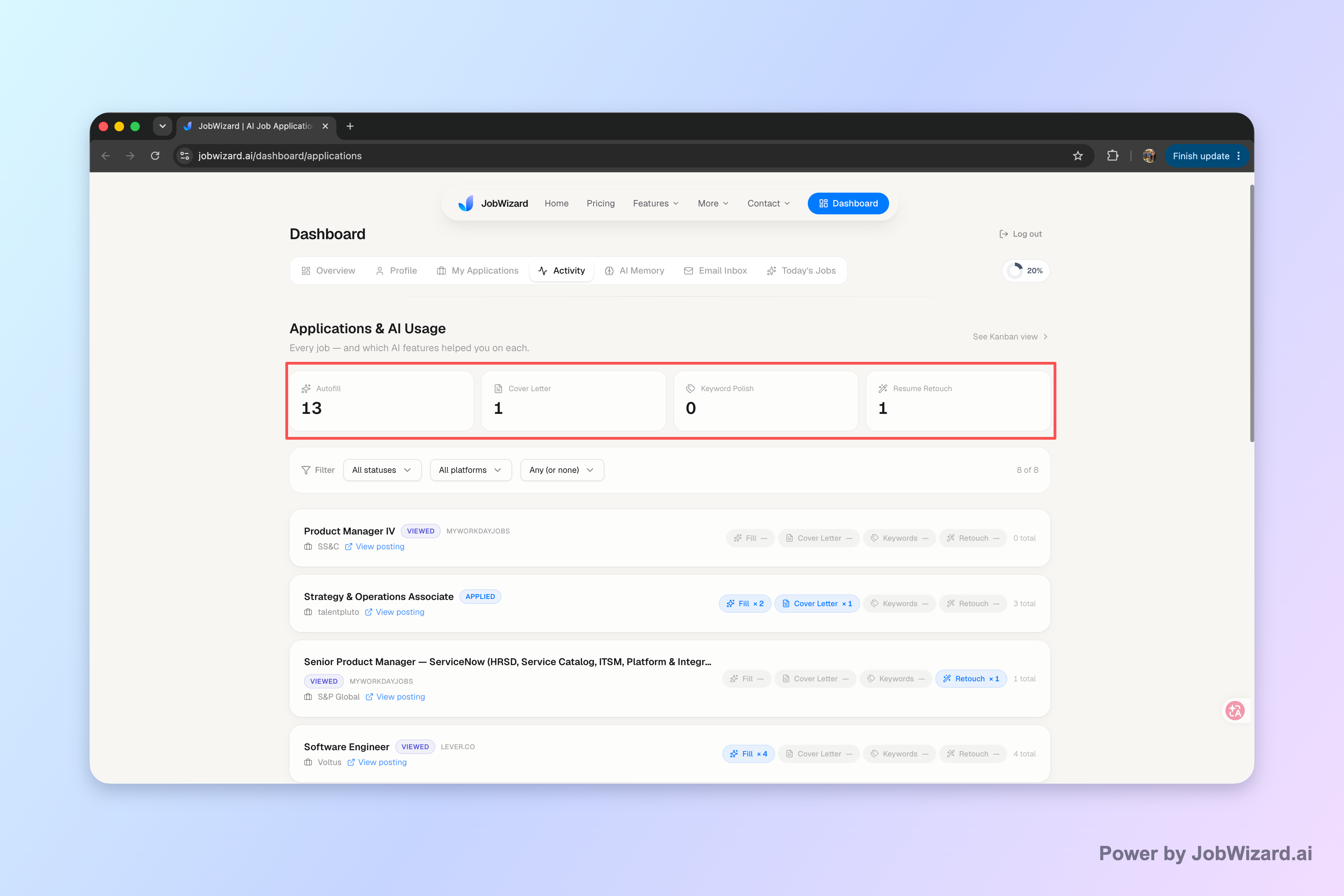
You’ll write better follow-ups when you track your process—and you’ll avoid sending duplicates or forgetting what you already asked. JobWizard’s Application Activity / Job Track shows application status and which JobWizard tools were used for each role, helping you keep your next action clear.
With consistent tracking, you can line up your outreach with the stage you’re in—so your follow up email after interview status reads intentional, not random.
Key takeaway: Track each role’s next step so your follow-up matches the stage—then let the user review before any submission.
What’s the fastest status-to-action mapping for a follow up email?
Use this table to decide what to send based on the exact portal label. The goal isn’t to “hack” the process—it’s to ask the right question for the stage you’re in.
| Interview/Portal Status You See | Most Likely Meaning | Recommended Follow-Up Tone | What to Ask | When to Send (Rule of Thumb) |
|---|---|---|---|---|
| In Review | Application is being evaluated | Confident, concise | Next steps and expected process | After a few business days with no response |
| Pending | Waiting on internal processing/next action | Polite check-in | What the next stage looks like | Several business days after interview |
| Awaiting Review | Queued for review or delayed stage update | Bridge your interview to the workflow | Whether anything else is needed | When it’s been long enough to be reasonable |
| In Process | Actively moving through stages | Supportive, not urgent | Next steps if any | After a few business days; only one follow-up |
| Shortlisted / Finalist / Under Consideration | You’re still in the active candidate set | Warm, direct | Final step and any timeline estimate | Send a check-in if you haven’t heard back |
| Interview Scheduled / Scheduled | Status label may lag behind reality | Neutral, reference the interview you completed | Next steps after your completed interview | Use time since interview; don’t argue status |
| No Longer Under Consideration / Rejected | Role decision reached | Thank-you + future openness | Whether to stay in mind for future roles | At your discretion; keep it short |
| No Change / Still “Received” | System may update slowly or communication moved elsewhere | Time-based check-in | Next steps and timing estimate if available | After several business days |
Key takeaway: Match your question to the stage: “next steps” is safe across most statuses.
Copy-paste follow up email after interview status (template that works across most labels)
Use this template as your baseline, then swap in the status label and one specific detail you discussed.
Subject: Next steps after our interview ( [Role Title] )
Hi [Interviewer Name],
Thank you again for taking the time to speak with me about the [Role Title] position on [Interview Date]. I enjoyed our conversation—especially [specific topic you discussed].
I noticed the application status is currently listed as “[Status Label].” I wanted to follow up and ask if there are any next steps or additional information that would be helpful from me.
Thanks again, and I look forward to hearing about the timeline when you’re able.
Best regards,[Your Name][Phone] | [LinkedIn or Portfolio link]
Key takeaway: In your follow up email after interview status, confirm interest, reference the interview, and ask about next steps.
How does JobWizard help with the “what should I do next?” part of follow-ups?
Tracking helps you write better follow-ups by keeping your details straight. JobWizard’s Application Activity / Job Track includes an Activity view showing application status and which JobWizard tools were used for each role.
That means you can check where a role stands and what you already did—so you don’t ask the same question twice or lose track of which interviews correspond to which applications.
Key takeaway: Use job tracking so your follow-up is consistent with the stage you’re actually in—then review everything before you send.
How often should I send a follow up email after interview status updates?
Status changes are an opportunity, not a reason to spam. If the portal changes to “In Review” after you interviewed, that can be a cue that your file is moving, but you still need a reasonable window for the team to act.
As a general rule: send one thoughtful follow-up when you’re due (time-based), and only send again if there’s no response and you have a new reason to reach out (e.g., you clarified something they might need, or you’re sharing a relevant update).
Key takeaway: One high-quality follow-up beats multiple “just checking” emails.
Do this automatically with JobWizard
Skip the manual work — JobWizard's Application Tracker handles this for you.
FAQ about follow up email after interview status
What should I write in a follow up email after interview status shows “In Review”?
Confirm you enjoyed the interview, restate your fit briefly, and ask about next steps—without sounding impatient. Use a short subject line like “Next steps after our interview” and close with availability for any additional info.
If the status is “Pending” or “Awaiting Review,” should I follow up anyway?
Yes—if it’s been several business days, send a polite check-in that reiterates interest and asks whether there’s anything else you can provide. Avoid demanding a timeline; instead, ask what the next step looks like.
How long should I wait before sending a follow up email after interview status changes?
Use the status change as a cue, then send after a few business days so the team has time to move the file forward. If you only saw the update recently, wait long enough to avoid repeating the same question immediately.
Should I follow up more than once if there’s no response to my email?
Keep follow-ups minimal: one check-in, then one additional note later if appropriate. Every message should add value (availability, a relevant update, or a concise reminder), and you should stop if they respond or if the role is clearly closed.
What if my application status never changes after the interview?
Follow up based on time, not only on the portal. If you interviewed and have heard nothing, send a courteous email referencing the interview and asking about next steps—even if the status remains the same.
Can a job tracking tool help me time my follow up email after interview status?
Yes. A job tracker can show what stage each application is in and help you remember when you last heard from the process, so you can time your follow-ups consistently and avoid accidental duplicates.
Is it okay to ask for an update on hiring timeline in the follow up email?
It’s okay to ask gently. Frame it as “if there’s an estimated timeline for next steps” rather than pressing for an exact date, and keep the rest of the email short.
What subject line works best for a follow up email after interview status?
Choose a clear, neutral subject like “Next steps after our interview” or “Checking in on interview follow-up.” If the portal has a status label you want to reference, you can mirror it lightly (e.g., “In review—next steps?”) but keep it optional.
Key takeaway: Your follow up email after interview status should be short, status-aware, and focused on next steps.
Ready to write your next follow-up with confidence?
Start by tracking what stage you’re in and when you last reached out. If you want a practical system for that, use the pillar guide: How to Track Job Applications: A Practical System (JobWizard + Beyond).
Then choose a template to match your exact situation: short and sweet follow-up email after interview sample: 7 ready-to-send notes or Follow Up Email After Applying: The 3-Step Timing + Copy Framework That Gets Replies and How to Write a Follow Up Email After Application (and Get a Real Reply).
Next step with JobWizard: Keep each role’s status and your next action in one place using Application Activity / Job Track, then tailor and review your follow-up before you send.
Frequently Asked Questions
Track all your applications in one place
JobWizard auto-tracks status changes across Workday, Greenhouse, and every major job site — free.