What to Write to Follow Up on a Job Interview When You Need a Clear Next Step
Not sure what to write to follow up on a job interview? Use these concise, professional templates to thank the interviewer, check on timing, and follow up after no response.
Free Chrome extension
Autofill your next job application
JobWizard is a free Chrome extension that fills applications, tracks statuses, and optimizes your resume.
What to Write to Follow Up on a Job Interview: Start With the Right Message
What to write to follow up on a job interview depends on when you’re writing: thank the interviewer soon after the conversation, and ask about timing only when it makes sense. A useful follow-up is brief, specific, and easy to answer—not a second cover letter or a demand for a decision.
Before you send anything, check what the interviewer said about next steps and when they expected to be in touch. If you want a practical system for recording each role and deciding what to do next, start with this complete guide to tracking job applications.
- Same day or within 24 hours: Send a thank-you note that refers to something you discussed.
- After the stated timeline passes: Ask politely whether there is an update.
- No timeline provided: Give the team about a week before sending a status check.
Use the templates below as starting points, then replace the bracketed details with your own. One specific detail—such as a project, team priority, or challenge mentioned in the interview—makes a note feel personal without making it long.
What to Write to Follow Up on a Job Interview With a Thank-You Email
A same-day or next-day thank-you should acknowledge the conversation, mention one relevant detail, and restate your interest. Send it to the people who interviewed you, using the contact information or communication channel they provided.
Keep the message direct and professional. This version works after a first-round or later-stage conversation:
Subject: Thank you — [Job Title] interviewHi [Name],Thank you for speaking with me today about the [Job Title] role. I enjoyed learning more about [specific topic or team priority], especially [brief detail from the conversation].Our discussion strengthened my interest in the position. My experience with [relevant skill or example] could help me contribute to [team goal or responsibility].Please let me know if I can share anything else. Thanks again for your time.Best,[Your Name]
Keep the reference concrete: “I enjoyed hearing about the team’s onboarding project” is more memorable than “I enjoyed learning about the company.” Don’t add claims or qualifications you didn’t discuss or can’t support.
When the interview included a concern or open question
If you realized afterward that you could have answered something more clearly, add a short clarification rather than sending a lengthy explanation. For example: “I also wanted to clarify that my experience with [skill] includes [relevant example].”
Use this sparingly and only if the clarification is genuinely useful. A thank-you note is not a second interview; make the point and move on.
What to Write to Follow Up on a Job Interview About Timing
If the employer’s expected decision date has passed, send a brief check-in that asks about the hiring timeline. If the date has not passed, wait; an early status request may create unnecessary pressure.
Here is a neutral template you can adapt:
Subject: Checking in — [Job Title] interviewHi [Name],I hope you’re doing well. I’m following up on my interview for the [Job Title] position on [date]. I remain interested in the opportunity and wanted to ask whether there’s an update on the hiring timeline or next steps.I understand plans can change, and I appreciate your time. Please let me know if I can provide any additional information.Best,[Your Name]
Give the recipient an easy way to respond. Asking about an update or next steps leaves room for a brief reply, even if the process is still underway.
If you need a more detailed status-check script, see this recruiter-ready follow-up letter for checking interview status. For other stages of the search, these job follow-up message templates and timing tips can help you choose an appropriate next message.
What to Write After No Response—and How to Keep Track
If a reasonable check-in gets no reply, send at most one more concise note and then keep moving with your search. A delay or silence does not tell you exactly what is happening, so avoid treating it as a confirmed decision.
If you have already followed up once, wait about another week before sending a final message:
Subject: Final check-in — [Job Title]Hi [Name],I wanted to make one final check-in about the [Job Title] role after our interview on [date]. I’m still interested, and I’d appreciate any update you’re able to share about the process.If the team has moved forward with another candidate or the timeline has changed, I understand. Thank you again for your time and consideration.Best,[Your Name]
Keep applying while you wait. If you notice the role has been reposted, don’t assume you know what that means; review the situation and decide whether a measured check-in is useful. This guide explains how to interpret a job reposted after an interview.
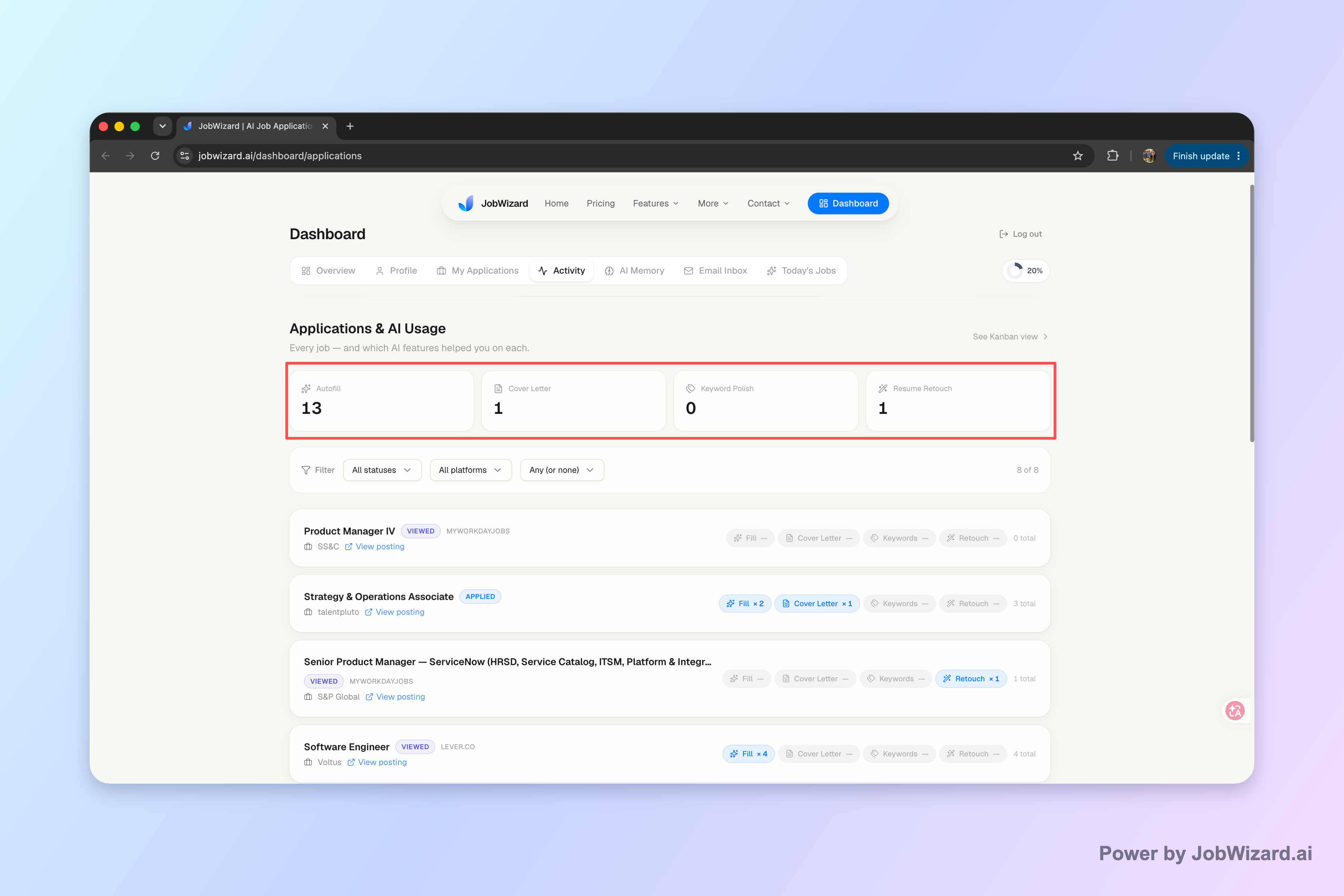
To avoid losing track of dates and next steps, JobWizard’s Activity view shows application status and which JobWizard tools were used for each role. You can use it to keep applications and their next steps in one activity view.
Interview Follow-Up Mistakes to Avoid
The strongest follow-up is timely, courteous, and focused on one clear purpose. Before sending, check the recipient, role title, interview date, and any details you’ve personalized.
- Don’t send repeated messages in quick succession. Allow time for the employer to respond, especially if they shared a hiring timeline.
- Don’t ask for an immediate decision. Ask whether there is an update instead of demanding an answer.
- Don’t make the note overly long. A few short paragraphs are enough for a thank-you or status check.
- Don’t interpret silence as a definite rejection. Continue your search while you wait for reliable information.
- Don’t use a generic message without checking it. Confirm names, dates, role details, and any claims before sending.
Make the message sound like you. Templates help with structure, but the most credible note reflects what actually happened in your interview.
Do this automatically with JobWizard
Skip the manual work — JobWizard's Application Tracker handles this for you.
Interview Follow-Up FAQs
These quick answers cover common questions about timing, wording, and how many times to check in.
What to write to follow up on a job interview the same day?
Send a brief thank-you that day or within 24 hours. Mention a specific part of the conversation, confirm your interest, and thank the interviewer for their time.
How long should I wait before following up after an interview?
If the interviewer gave you a timeline, wait until it passes, then follow up after one or two business days. If you were given no timeline, a polite check-in after about a week is reasonable.
What should I write if I have not heard back after my interview?
Keep it courteous and concise: refer to the role and interview date, reaffirm your interest, and ask whether there is an update on the hiring timeline. Avoid implying that the employer owes you an immediate decision.
Should I follow up more than once after a job interview?
One follow-up after the expected decision date is appropriate. If you still receive no response, you may send one final brief check-in after another week or so, then continue your search rather than relying on a reply.
Keep your next step visible. Use JobWizard’s Activity view to see application status and the tools used for each role, then keep track of what you plan to do next.
Frequently Asked Questions
Autofill your next job application
JobWizard is a free Chrome extension that fills applications, tracks statuses, and optimizes your resume.