Teal Resume Builder Reviews: A Real-World Checklist to Tailor Your Resume Faster (Without Blind Changes)
Searching for teal resume builder reviews? Use this JD-to-resume workflow to compare your resume against the job description, identify expression gaps, and revise with confidence.
Free Chrome extension
See your resume's match score for any job
JobWizard compares your resume to each job description and shows the exact keywords to add — free.
When people search teal resume builder reviews, they’re usually trying to answer one question: “Will this help me tailor my resume to a specific job description without accidentally changing something important?”
In this guide, we’ll focus on the practical part of evaluating any resume tool: how you diagnose gaps between your resume and the JD, and how you revise safely. You’ll also see how a JD-based matcher workflow helps you decide what to change—and what to leave alone—before you submit.
What teal resume builder reviews should clarify before you try any builder
Good teal resume builder reviews don’t just say whether something is “good”—they explain what it actually compares, what outputs you can trust, and what you still have to review yourself.
Here’s what to look for in any “resume builder + AI” workflow (including teal-like resume builders and JD matchers). Focus on evidence you can verify:
- What the tool compares: A useful workflow compares your selected resume with the current job description (JD) rather than writing generic content.
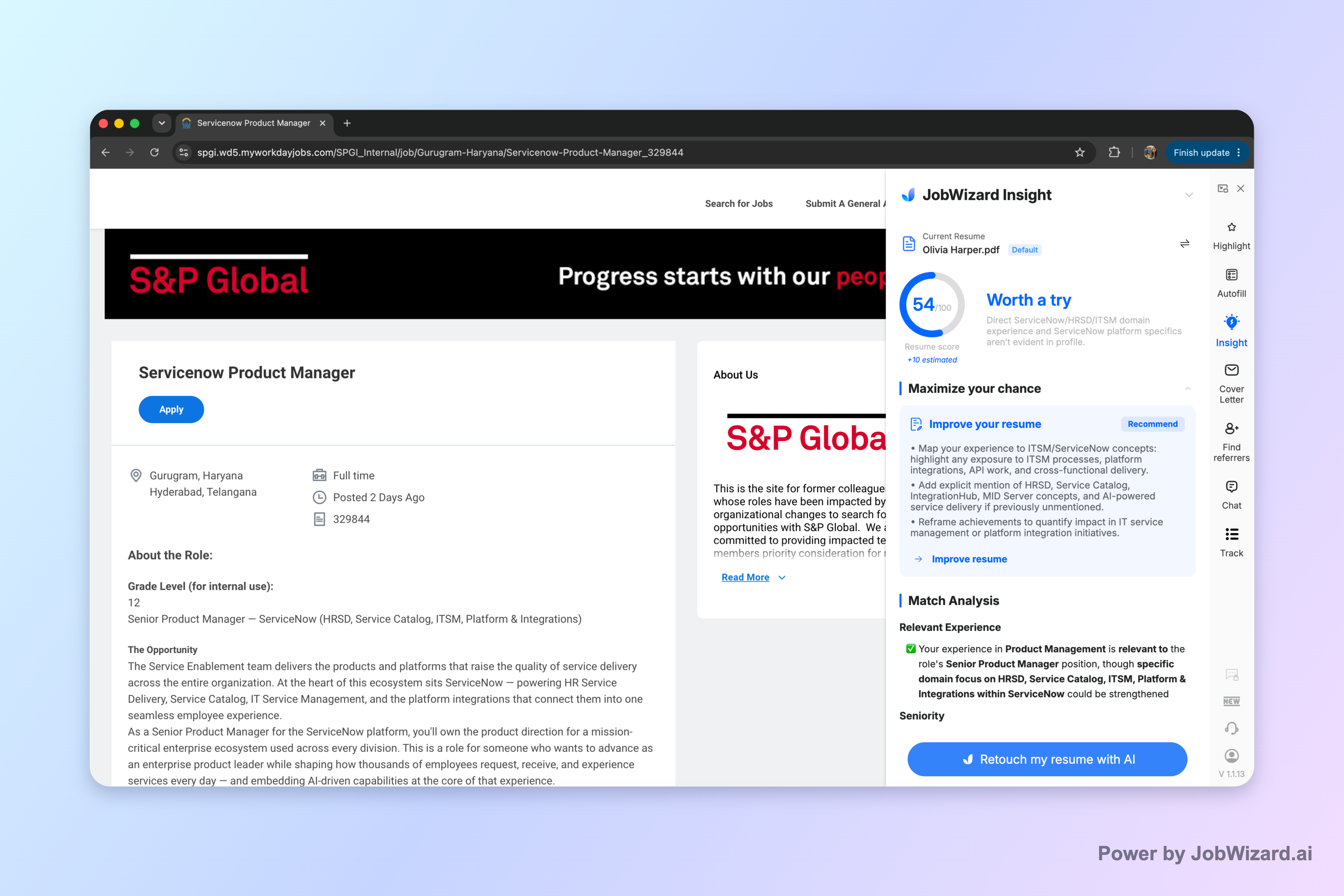
- What it produces: Look for a match score, an overall assessment, and improvement suggestions tied to the JD.
- How it turns gaps into action: The best workflows convert identified gaps into an editable resume revision draft you can review.
- What it doesn’t guarantee: You should see clear limitations that the score isn’t a hiring probability and doesn’t guarantee ATS passage or interviews.
In other words: a credible “review” should help you build a safe process—not just recommend a tool.
The JD-to-resume match score workflow (the part reviews often skip)
The fastest way to evaluate resume tooling is to run it in a way that shows you exactly where your resume falls short of the JD—then you decide what’s accurate to you. That’s the core of a match score-style workflow.
With Insight/Match Score, the selected resume is compared against the current job description to produce an overall assessment, a match score, and improvement suggestions. The JD-based diagnosis can identify resume expression gaps and turn them into an editable resume revision draft.
Use this workflow like a checklist:
- Pick the exact job: Use the same JD you plan to apply to, because “tailoring” only matters when it’s job-specific.
- Run the comparison: Generate the match score and read the overall assessment and improvement suggestions.
- Review the identified gaps: Treat them as “expression gaps” (how your resume talks about experience/skills) rather than as instant truth.
- Accept only accurate changes: Verify every suggested resume change and keep only what reflects your actual experience.
- Update your draft and re-check: Use the editable revision draft as a starting point, then refine wording to match the JD without inventing anything.
Key limitation: The match score is not a hiring probability and does not guarantee ATS passage or an interview.
This is also where many teal resume builder reviews can be misleading if they emphasize “automation” over accuracy. A good workflow still requires review-before-submit.
How to spot resume expression gaps (and fix them without overediting)
When your resume and the JD don’t align, it often shows up as resume expression gaps: the same underlying experience, but phrased differently than the job expects.
Here’s what to focus on while you review improvement suggestions:
- Skills coverage: Compare the skills and responsibilities described in the JD to the skills you clearly state on your resume.
- Keyword alignment (without keyword stuffing): Update phrasing so it reflects your real work, not just isolated ATS keywords.
- Specificity of impact: If the JD emphasizes outcomes, ensure your resume wording supports that with accurate examples.
- Consistency across sections: Make sure your summary, experience bullets, and relevant skills section don’t contradict each other.
The goal isn’t to “game” the system—it’s to make your resume readable to both humans and ATS-style parsing, using truthful language you can stand behind.
Just remember: the tool can help diagnose and draft revisions, but you must verify everything. The workflow exists to help you tailor—not to replace your judgment.
Is it worth paying attention to teal resume builder reviews? Use this decision rubric
If you’re comparing tools based on teal resume builder reviews, the best approach is to evaluate how safely the tool helps you tailor to a job description—not whether it sounds impressive.
Use this rubric the next time you read a review:
| Review claim you might see | What you should verify in the workflow |
|---|---|
| “It matches your resume to the job.” | Does it compare your selected resume with the current job description and show a match score + overall assessment? |
| “It fixes your resume automatically.” | Does it generate an editable revision draft based on JD diagnosis, so you can verify accuracy before using it? |
| “It guarantees ATS results.” | Be cautious: the match score doesn’t guarantee ATS passage or interviews, so you still must review and validate changes. |
| “It’s all about speed.” | Speed is useful only if the output is correct—confirm that you can review every suggested change and keep only what’s accurate. |
If a review can’t explain those specifics, treat it as marketing—not evaluation. A reliable tool still depends on you reading and verifying the draft before you submit applications.
Do this automatically with JobWizard
Skip the manual work — JobWizard's Smart Autofill handles this for you. On these platforms: JobWizard vs Teal.
FAQ about teal resume builder reviews and JD-based tailoring
Is a “match score” the same as guaranteed ATS approval or a hiring probability?
No. The Insight/Match Score output is not a hiring probability, and it doesn’t guarantee ATS passage or an interview. Treat it as a diagnostic signal, then verify every suggested change is accurate to your experience.
What should I do with the improvement suggestions from a resume matcher?
Use them as a starting draft, not a final resume. The JD-based diagnosis can identify resume expression gaps and turn them into an editable resume revision draft—then you should verify each change, keep only what’s true, and remove anything that doesn’t reflect your actual experience or skills.
Does using a resume builder mean you should “auto-submit” without reviewing?
No. Even when tools fill or draft content quickly, you should review-before-submit. The score and suggested edits are only helpful if you confirm they’re correct and aligned with the specific job description and your background.
How do I tailor my resume to a specific job description using the match-score approach?
Compare your selected resume to the current job description to get an overall assessment, a match score, and improvement suggestions. Then use the identified expression gaps to update wording and skills coverage—reviewing everything for accuracy before you apply.
Ready to turn “teal resume builder reviews” into a process you trust? Compare your resume against the exact job description, review the identified gaps, and use the draft as a starting point—so you tailor faster without losing control. Try JobWizard’s JD-based Insight/Match Score workflow and review-before-submit with confidence.
Frequently Asked Questions
See your resume's match score for any job
JobWizard compares your resume to each job description and shows the exact keywords to add — free.