LazyApply pricing lifetime: what people miss before they pay (and a safer alternative)
Searching for “lazyapply pricing lifetime”? Here’s the real trade-off: bots can misfire on screening questions and resumes. Use autofill + review-before-submit instead.

Free Chrome extension
Autofill your next job application
JobWizard is a free Chrome extension that fills applications, tracks statuses, and optimizes your resume.
Looking up lazyapply pricing lifetime usually means you want speed, but the fastest “auto-submit” workflows can quietly create problems that cost you more than time—wrong screening answers, resume mismatches, and even employer-side spam/duplicate friction.
In this guide, we’ll be honest about what bot-style auto-apply tools risk (and why “lifetime” pricing doesn’t automatically fix those downsides). Then we’ll show a safer alternative: a reviewed, autofill-first workflow where you fill in seconds, check carefully, and submit yourself.
What “lazyapply pricing lifetime” can’t tell you: the real trade-off
Lifetime auto-apply pricing is often sold as convenience, but auto-submission changes who’s responsible for accuracy: the tool fills or guesses, and you’re the one whose applications are on the line.
Here’s the key distinction. Many “lazyapply” style tools are designed to reduce your hands-on time per application. When those tools submit for you (or behave like they do), mistakes become easier to repeat across many roles—especially when job postings include screening questions that demand role-specific truth.
- Wrong answers to screening questions: Even small misreads (date ranges, location preferences, work authorization, notice periods, or experience phrasing) can cause an automatic disqualifier.
- Resume mismatches: A tool might select or reuse a resume that doesn’t actually match the job’s exact requirements (e.g., a different tech stack, different seniority, or a missing domain).
- Employer-side spam/duplicate filters: If many applications look similar, or include repeated patterns, some systems respond by throttling, marking duplicates, or routing you less favorably.
- Reputation risk: If you want companies you’re genuinely excited about, sending a sloppy application can close doors you wouldn’t want to risk.
Bottom line: “Lifetime” can reduce cost-per-effort, but it doesn’t reduce the risk of low-quality submissions when you aren’t personally reviewing every screening response.
Why bot auto-submit hurts (even when the tool feels accurate)
Auto-apply bots fail in the details—and those details are usually exactly what hiring teams use to screen candidates.
Most job seekers aren’t rejected because they “didn’t try.” They’re rejected because an automated gatekeeper system (or a recruiter’s initial filter) sees something inconsistent with the role. Auto-submit tools can create that inconsistency without you realizing it in the moment.
1) Screening questions are not optional in practice
Many postings include questions that sound straightforward but are easy to get subtly wrong. Bot tools may choose a default, infer the intent incorrectly, or reuse an older response.
- Examples of subtle mismatches: “Can you start within 2 weeks?” answered as “yes” when your true timeline is longer; “Are you authorized to work?” answered incorrectly; or experience years rounded inconsistently.
- Why it matters: If the question is used as a hard gate, a wrong answer can be an instant stop—no human review needed.
2) Resume selection can get out of sync with the job
Even if you have multiple resumes (industry-specific, seniority-specific, or tailored for different keywords), automation can reuse the wrong file or the right file with the wrong emphasis.
- Concrete risk: The job asks for a specific tool or domain experience, but the version you sent doesn’t highlight it (or omits it entirely).
- Career impact: You may look “less qualified” in an ATS match, even though you’re qualified—you just didn’t send the right version.
3) Repeated “patterned” applications can trigger friction
Employer systems and processes are increasingly designed to handle high application volumes. When many applications resemble each other too closely, employers may respond by tightening filters.
- What this looks like: duplicate-detection behaviors, throttling, or reduced visibility for applications that appear non-distinct.
- The hidden problem: If you later apply manually with a tailored response, you could still be competing against an earlier “pattern” impression.
4) You can’t fix what you didn’t review
The most painful part of bot auto-submit is not just the chance of errors—it’s the lack of immediate feedback loop. If you don’t review submissions, you don’t catch the issue before it’s sent.
- Result: You troubleshoot later, after the application is already in the system.
- Opportunity cost: A few minutes of review could have prevented the entire rejection pathway.
A safer alternative to bot auto-submit: autofill, then you submit
You can get speed without giving up control by using autofill that populates repetitive fields while you remain responsible for screening answers and submission.
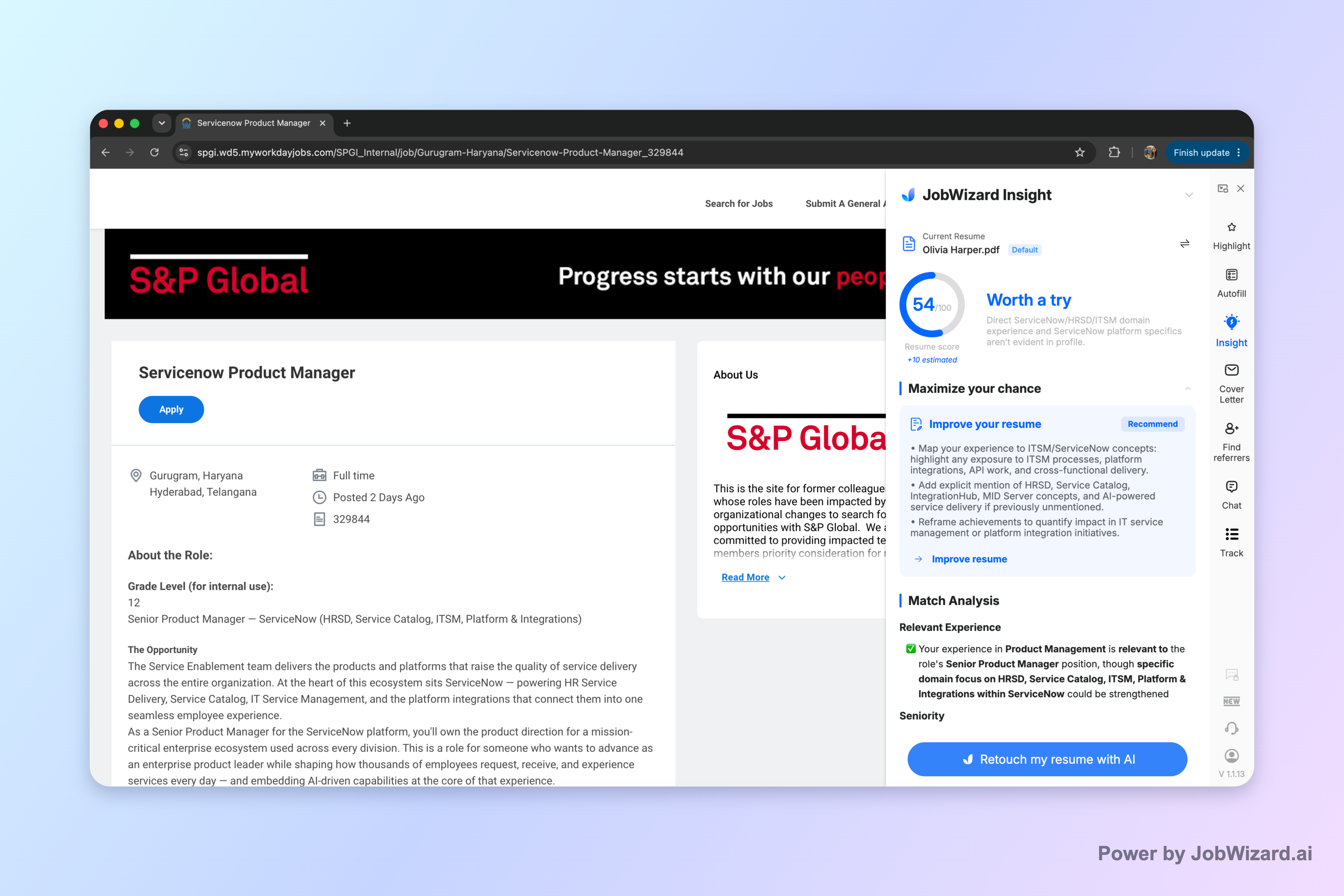
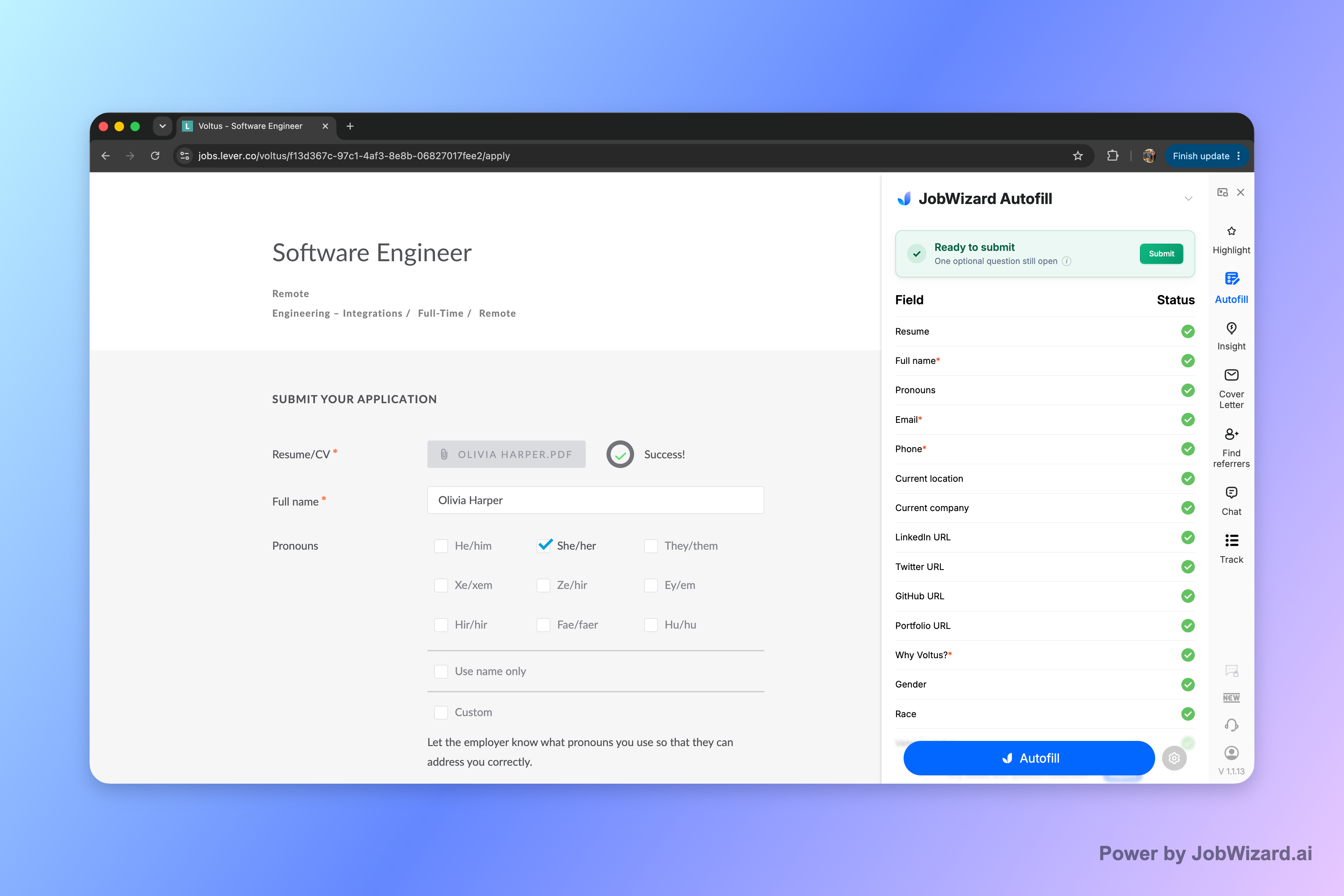
JobWizard takes that approach: it autofills an application you are already on, and then you review before submitting. That workflow is designed specifically for the reality that the most important content in an application isn’t the repetitive bits—it’s the parts you need to verify.
In practice, that means:
- You review before submit: you confirm answers to custom/screening questions, salary/sponsorship/EEO-type prompts, and anything job-specific.
- You control resume fit: you can ensure the resume and details align with the posting you’re applying to.
- You move quickly through repetitive fields: the autofill reduces typing so you can spend your attention where it matters.
Across 2026, JobWizard has supported 720,000+ applications submitted and 600,000+ autofill sessions. Those sessions typically autofill an average of ~18 repetitive fields per application (often 11–23). The intent is “autofill + review-before-submit,” not blind auto-apply.
Also, the platform mix matters because different ATS systems have different field structures; JobWizard usage is concentrated on Workday (~65%), with additional usage on Greenhouse (~19%), Ashby (~12%), and Lever (~4%). Workday is where it saves the most time—again, because the approach is still review-based before submission.
Lazyapply lifetime vs. reviewed autofill: how to choose
Choose based on your tolerance for error and your willingness to review—not just on the “lifetime” pricing promise.
If your goal is high volume with minimal involvement, bot-style auto-submit can look attractive. But the trade-off is that you’re more likely to send incorrect answers or the wrong version of your candidacy, and you may not notice until after the application is already processed.
| What you care about | Bot-style auto-submit tools (typical) | Autofill + review-before-submit (JobWizard approach) |
|---|---|---|
| Accuracy on screening questions | Higher chance of wrong or overly generic responses if you don’t review each field. | You review the content before submitting, so you can correct mismatches. |
| Resume-job alignment | Can reuse the wrong resume version or emphasis more easily. | You can verify the resume choice and role fit right before submission. |
| Employer-side friction | More risk when applications look repetitive or inconsistent across many roles. | Still supports faster completion, but with final human check to reduce “same-answer” issues. |
| Control and accountability | Lower control per submission if the tool is doing the submitting. | Higher accountability because you remain the final submitter. |
If you’re reading lazyapply pricing lifetime content because you want to maximize output, the most practical question isn’t “Is lifetime cheap?” It’s: Will I review every application in a way that prevents screening and resume mismatches?
Do this automatically with JobWizard
Skip the manual work — JobWizard's Smart Autofill handles this for you. On these platforms: JobWizard vs LazyApply.
What to do instead: a fast, reviewed workflow you can repeat
The fastest safe approach is a repeatable review routine: use autofill to save typing, then do a quick-but-critical check right before you submit.
- Open the posting you’re applying to: make sure you’re working inside the exact application form for that role.
- Autofill repetitive fields: let the tool populate the sections where your information is stable.
- Review screening questions last: confirm that each answer is accurate for this job (start date, location preferences, work authorization, and any role-specific requirements).
- Verify resume alignment: confirm you used the right resume version and that the key requirements are covered.
- Only then submit yourself: you’re preventing the “wrong answer” and “wrong file” problems that come with bot auto-submit.
This is also a better fit for job seekers applying to multiple roles at once, because it separates “speed where safe” from “verification where it matters.” You’ll spend less time typing, but you won’t accidentally hand over the job-specific decisions to automation.
If you’re currently evaluating lifetime auto-apply pricing, pause and run a quick personal test: choose one role, fill it out normally once, then time how long you spend on repetitive vs. job-specific questions. If most of your time goes into typing, an autofill + review approach is usually the better compromise than betting your outcome on unattended bot submission.
Ready for that reviewed workflow? Try JobWizard to autofill repetitive fields while you stay in control—then submit yourself after a quick accuracy check.
FAQs about lazyapply pricing lifetime and safer application automation
Is “lazyapply pricing lifetime” worth it if the tool auto-submits my applications?
It can be tempting, but auto-submission increases the chance of wrong answers to screening questions, mismatched resumes, and employer-side friction—so “worth it” depends on your tolerance for errors you might not notice until after the fact.
What goes wrong when bot-based auto-apply tools submit without you reviewing?
Common issues include wrong or overly generic responses to screening questions, using the wrong resume for the role, triggering employer spam/duplicate-detection systems, and damaging your reputation with companies you genuinely want to work for.
How does JobWizard avoid those risks if it also uses autofill?
JobWizard autofills fields for applications you’re actively viewing, then you review and submit yourself—so you can confirm sponsorship, salary/EEO/custom questions, and any resume/job-match details before anything is sent.
Can a lifetime auto-apply plan still be a bad fit even if it seems cost-effective?
Yes. Even if the pricing feels low, the lifetime value doesn’t help if the tool repeatedly submits incorrect or low-quality responses. If you can’t reliably review every application, it’s often better to use autofill that still requires your final check.
If I want speed, what’s the safer workflow to use instead of bot auto-submit?
Open each job listing, use autofill to populate repetitive fields quickly, then do a focused review of screening questions and the resume/job-specific details—submit only after you’re confident the answers are correct and tailored.
Frequently Asked Questions
Autofill your next job application
JobWizard is a free Chrome extension that fills applications, tracks statuses, and optimizes your resume.