LazyApply Pricing: What You Really Pay For When a Bot Applies for You
Lazyapply pricing is only half the story—auto-apply can misread screening questions, mismatch your resume, and trigger employer spam filters. Here’s the safer alternative: fill in seconds, review, then submit yourself.

Free Chrome extension
Autofill your next job application
JobWizard is a free Chrome extension that fills applications, tracks statuses, and optimizes your resume.
Lazyapply pricing isn’t the real decision—bot-submission risk is.
If you’re searching for lazyapply pricing, you’re probably trying to apply faster with less effort. But the biggest question isn’t what the plan costs—it’s what happens when an auto-apply bot submits applications for you instead of you reviewing every answer.
Auto-apply tools often reduce typing by running a workflow in the background. That convenience comes with trade-offs: answers can be incorrect for screening questions, your resume might not match the specific role, and employer-side systems may treat repeated low-quality submissions differently than applications you carefully reviewed.
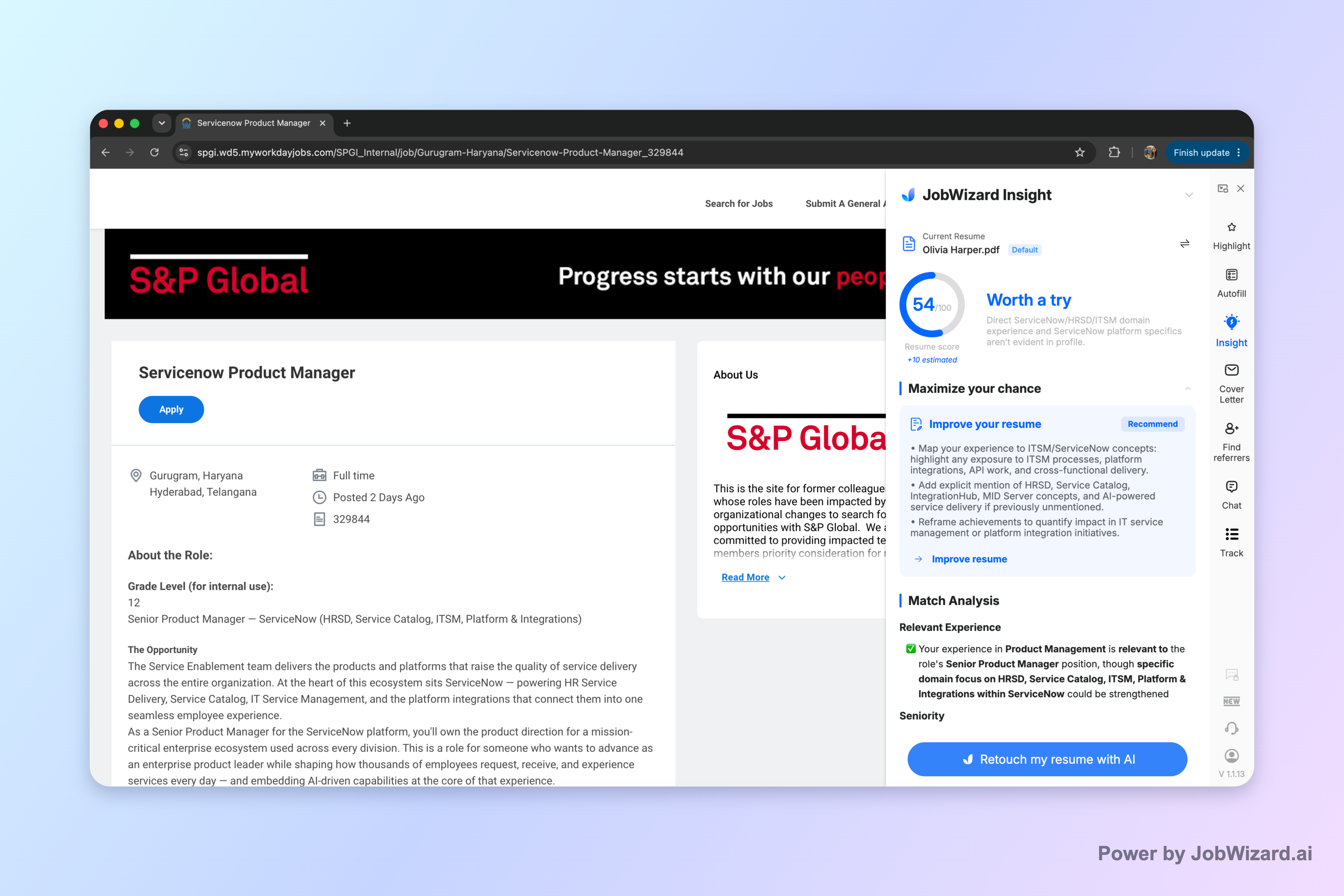
What goes wrong when a bot submits for you (and why it matters).
When an auto-apply tool decides what to submit, it can’t perfectly predict what a specific employer expects in that specific posting. The result is avoidable errors that can harm your application quality—and your brand—with companies you actually want.
Here are the most common failure modes to watch for when evaluating “lazy apply” approaches:
- Wrong answers to screening questions: screening questions may require exact wording, up-to-date details, or context that differs by job. If the bot fills based on a template, you may unknowingly answer incorrectly.
- Resume mismatches: the bot may attach a resume version that doesn’t align with the role’s requirements (or even the wrong document). That can make your experience look less relevant than it is.
- Inconsistent work history details: small variations (dates, titles, location formats, “current” vs “past”) can create inconsistencies that raise review friction.
- Employer-side spam or low-quality filters: some employers and applicant tracking systems react to patterns—especially if submissions appear templated, repeated, or missing critical human-verified information.
- Reputation risk with priority companies: if you’re applying to a company you genuinely care about, sending a bot-submitted application with errors can be harder to “fix” later than one that you review before submitting.
Bottom line: the cost you pay for lazy automation may be less about money and more about the risk of submitting the wrong thing—at scale.
Why “pricing” can be misleading for lazyapply-style tools.
When people compare lazyapply pricing, they often focus on how much the subscription costs and ignore what the workflow actually does. In practice, the biggest difference is not just speed—it’s who verifies the content and when.
A fair way to think about it is to separate three layers of the application:
- Data entry: repetitive fields like contact info, employment dates, education, and basic form answers.
- Role-specific truth: screening questions, custom prompts, eligibility details, and anything that requires judgment.
- Submission behavior: whether the tool submits on your behalf while you’re away, or whether you review before you hit submit.
Many “lazy apply” price comparisons effectively cover layer one and partially cover layer two, but the real risk concentrates in layer two and layer three: if you don’t verify, you’re trusting automation to “know” what’s correct for that job.
Tip for evaluation: Read the product description carefully for the workflow—does it submit automatically, or does it prepare drafts you approve?
The safer alternative: autofill-first + review-before-submit.
If your goal is to apply faster without turning your search into a numbers game, an autofill-first workflow is a better match.
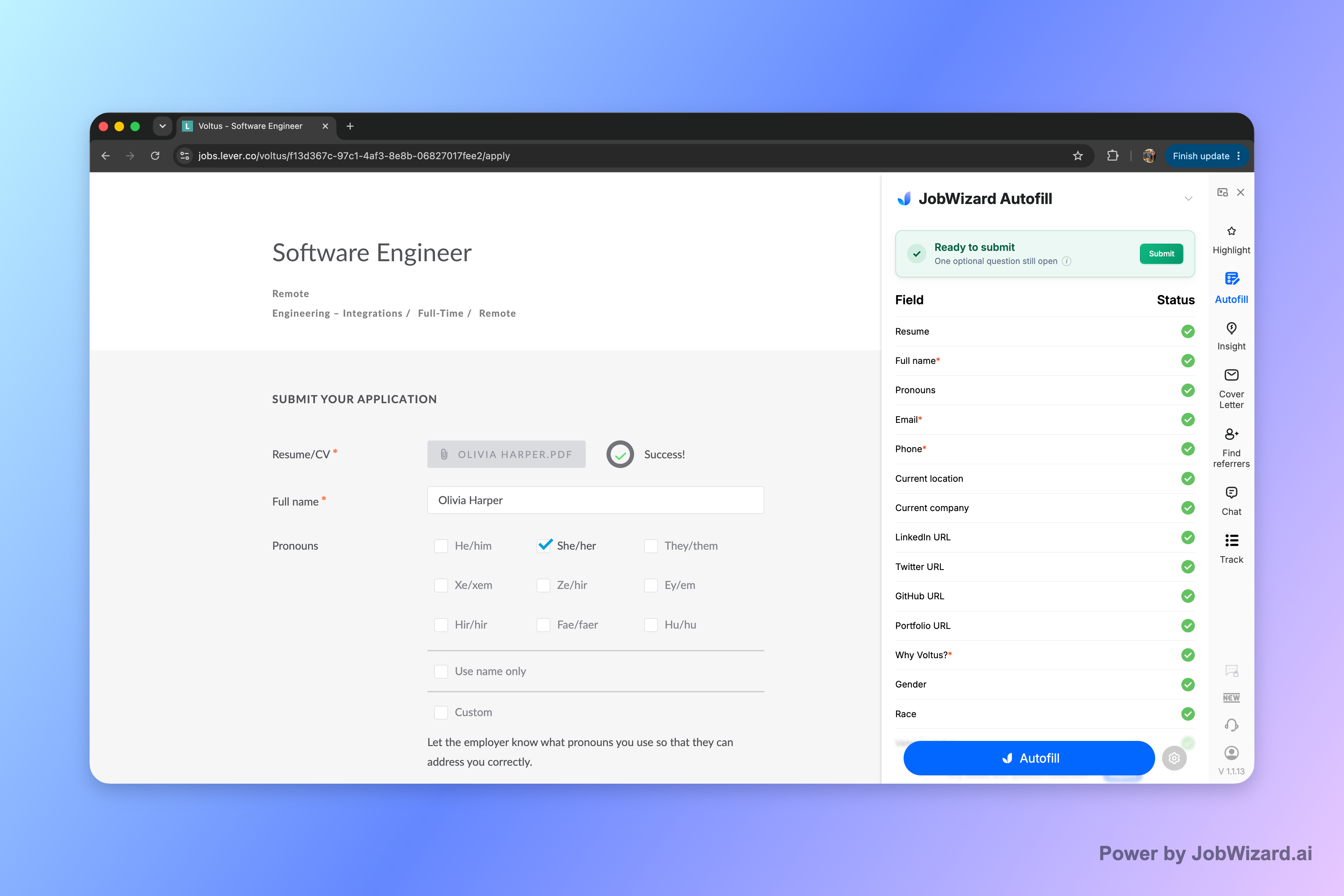
JobWizard is designed around a simple, safer pattern: it autofills the application you’re already on, and then you review and submit. That means the repetitive fields get handled quickly, while the decisions that matter still stay with you—especially the sections where automation commonly gets things wrong.
From a practical standpoint, this approach aims to keep the benefits people want from lazy automation—less typing—without outsourcing quality control. In our data, JobWizard has supported 720,000+ applications submitted and 600,000+ autofill sessions. It also averages about ~18 repetitive fields per application (typically 11–23). The time saved is mostly about form completion—not about skipping your review.
It’s also useful to understand where it makes the most difference. Of applications submitted through it, around ~65% are on Workday, ~19% on Greenhouse, ~12% on Ashby, and ~4% on Lever—Workday is where it tends to save the most time. In other words: this is built for real application form friction in the systems people actually use.
What you should still do (so you don’t repeat the bot mistakes).
Even with an autofill-first tool, your review step is the quality gate. Before you submit, check:
- Screening answers: confirm every question that affects eligibility or fit.
- Resume selection: ensure the attached resume matches the role and the most recent version you want the employer to see.
- Custom prompts: tailor where you can, especially if the question asks for role-specific examples.
- Consistency: verify dates, titles, location format, and “current role” vs past role fields.
This is how you get the “apply faster” payoff without the “bot submitted for me and I didn’t notice” downside.
Lazyapply pricing vs reviewed submissions: how to choose.
The right choice depends on what you’re optimizing for: minimal effort, or reliable accuracy before you submit. Here’s a comparison lens you can use without getting stuck on price-only shopping.
| Evaluation factor | Lazy-automation mindset | Autofill-first + review-before-submit mindset |
|---|---|---|
| Who verifies the tricky parts? | The tool may handle more of the workflow without you noticing every decision. | You review key fields before submitting. |
| Screening question accuracy risk | Higher risk if the bot makes assumptions or uses stale responses. | Lower risk because you confirm the answers right before submission. |
| Resume matching | Risk of attaching a resume that doesn’t align with the specific posting. | You choose and confirm the right resume for the job. |
| Employer-side filtering patterns | More likely to resemble templated submissions if content isn’t verified. | Better chance your submissions look intentional because you check final details. |
| Reputation with priority employers | Higher risk if errors slip through unreviewed. | Lower risk because you’re the final reviewer on what goes out. |
So if you came for lazyapply pricing as a shortcut to job volume, consider reframing the question: how do you maximize the number of high-quality submissions you’re confident in?
Next step: Use JobWizard to reduce repetitive form filling, then keep your review step tight—so you submit accurate applications to the companies you care about.
Do this automatically with JobWizard
Skip the manual work — JobWizard's Smart Autofill handles this for you.
FAQ: lazyapply pricing and what you should worry about.
Is lazyapply pricing mainly about automation features, or something else?
Most “lazy apply” pricing is tied to how the tool automates application tasks. The key trade-off is that automation can fill the wrong details for screening questions or assumptions—so you may pay more for speed while taking on higher correction risk.
What can go wrong if an auto-apply bot submits applications for you?
Wrong answers to screening questions, mismatched resumes, inconsistent contact or work history details, and employer-side spam/low-quality filters can all be risks. Even if the form looks filled, the content you didn’t verify can hurt outcomes with companies you actually want.
How does a review-before-submit workflow reduce the downsides of auto-apply?
A review-before-submit workflow fills repetitive fields quickly, then you verify sponsorship/salary/EEO/custom questions and any tricky details before submitting. That keeps speed while preventing the “bot submitted the wrong thing” problem.
Is there a fair way to compare lazyapply-style tools to a reviewed submission approach?
Yes: compare not just “price,” but whether the tool submits while you’re away and whether you can reliably catch errors. The fairest frame is: automation may reduce effort, while review-before-submit reduces mismatches and quality-control issues.
If I’m trying to apply faster, what’s a practical next step that doesn’t involve auto-submission?
Use an autofill-first approach: gather your core answers once, let the tool pre-fill the application fields you’d otherwise type repeatedly, then do a final human check and submit yourself. That targets the real bottleneck—data entry—without outsourcing judgment.
Ready to apply faster—without bot-submitted mistakes? Try JobWizard. Autofill repetitive fields on the application you’re viewing, then review and submit yourself for accuracy you can stand behind.
Frequently Asked Questions
Autofill your next job application
JobWizard is a free Chrome extension that fills applications, tracks statuses, and optimizes your resume.