Lazy Apply Reviews: What Bots Get Wrong (and What to Do Instead)
Lazy apply reviews can reveal the real problem with submission bots: wrong screening answers, mismatched resumes, and reputational risk. Here’s the safer alternative.
Free Chrome extension
Autofill your next job application
JobWizard is a free Chrome extension that fills applications, tracks statuses, and optimizes your resume.
Lazy apply reviews are popular because auto-apply tools promise speed—but the downside is real: wrong answers to screening questions, mismatched resumes, and submissions that can look like low-quality spam to employers. If you’re considering automation, read this first: the safest strategy is fill in seconds, review before submit, and submit yourself.
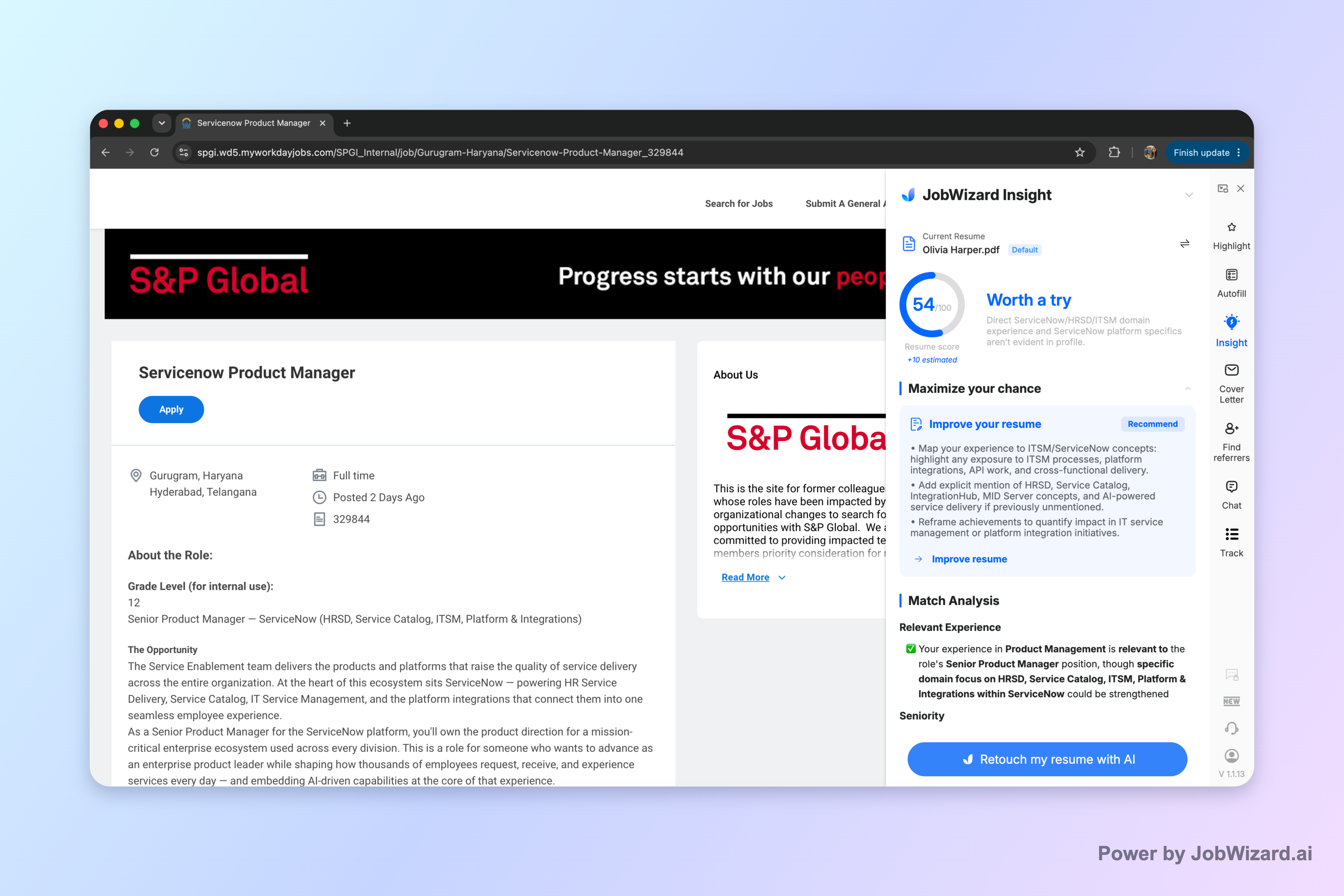
In this guide, we’ll break down what commonly goes wrong with “lazy apply” workflows, what employers are really reacting to, and a better alternative you can use to reduce mistakes without betting your reputation on a bot.
Why “lazy apply” bots get reviewed badly—what can go wrong?
Most “lazy apply reviews” complain about outcomes that look unfair to candidates: applications that don’t get attention, interviews that never happen, or employers that seem to ignore obvious matches. The reason is usually not that you’re unqualified—it’s that the content submitted to screening systems and recruiters can be inaccurate or inconsistent.
Here are the failure modes that show up again and again when an auto-submit workflow runs with insufficient human review.
- Wrong screening-question answers: Bots often map answers incorrectly (e.g., “yes” vs “no,” different eligibility questions, mismatched work authorization, or unclear “years of experience” boundaries).
- Resume/CV mismatches: A tool may attach a generic resume when the job wants a specific skill set, location, or format, or it may carry over a version you didn’t mean to send.
- Low-quality form completion: Even when fields are filled, they may be awkward, outdated, or copied from a previous application that doesn’t align with this specific posting.
- Employer-side quality or spam filters: High volume submissions, repeated templates, and inconsistent details can trigger automated checks that reduce your chances—especially at larger companies.
- Reputation damage with companies you actually want: If a recruiter sees a misaligned or clearly “templated” application, it can reduce trust later—even for future roles.
The key theme: the faster you submit without verifying, the easier it is for small errors to become costly. And with screening questions, small errors can mean “not a match” even if your background is strong.
Lazy apply reviews: the trade-off between speed and credibility
Automation tools are attractive because they reduce the repetitive parts of applying. But credibility doesn’t come from speed alone—it comes from consistency: answers that align with the job, documents that match the role, and details that are clean and specific.
Think of the decision like this:
- Automation fills faster: It can reduce the time spent retyping stable info (contact details, basic background, standard employment blocks).
- Humans validate fit: You confirm the parts that truly determine “can we move forward?”—screening questions and role-relevant claims.
- Submission is the final risk point: Once the employer receives the application, you’re no longer in control of how it’s interpreted by ATS rules, recruiter reviews, and filtering systems.
That’s the trade-off many “lazy apply reviews” are implicitly pointing to: if a tool submits while you’re away or without ensuring you checked each important field, your application can drift away from what the employer asked for.
To be fair, some automation tools can be useful when they are paired with careful review. The risk isn’t “automation” as a concept—it’s automation doing the final step without you verifying the details that decide whether you look like a serious, role-matching candidate.
What recruiters and ATS systems notice (and why bots get flagged)
Recruiting tech is designed to sort. When a submission looks inconsistent, incomplete, or overly generic, it can move you from “maybe” to “not right” quickly. That’s why the same mistakes keep showing up in lazy apply reviews.
Here are the patterns employers tend to notice—patterns that are more likely when someone relies on a fully automated workflow.
| What goes wrong | How it shows up | Why it matters |
|---|---|---|
| Screening answers don’t match | Conflicting eligibility, experience years, or “required skills” selections | ATS and recruiters often treat mismatches as disqualifying or low-trust |
| Wrong document attached | Resume version missing role-specific achievements or using a different target summary | Employers may assume you didn’t tailor, reducing interview likelihood |
| Template-y or stale content | Copied job history blocks that don’t align with the posting | Quality filters and recruiter scanning can penalize “not carefully reviewed” submissions |
| High-volume submission signals | Many similar submissions with minimal personalization | Some employers use heuristics to limit low-quality throughput |
Even if a submission is technically accepted, these signals can still reduce your chances. So “going through” isn’t the same as being competitive.
A safer alternative: fill fast, review, then submit yourself
The practical goal isn’t to “apply less”—it’s to apply more accurately. The best workflow combines speed for repetitive fields with a human checkpoint right before submission.
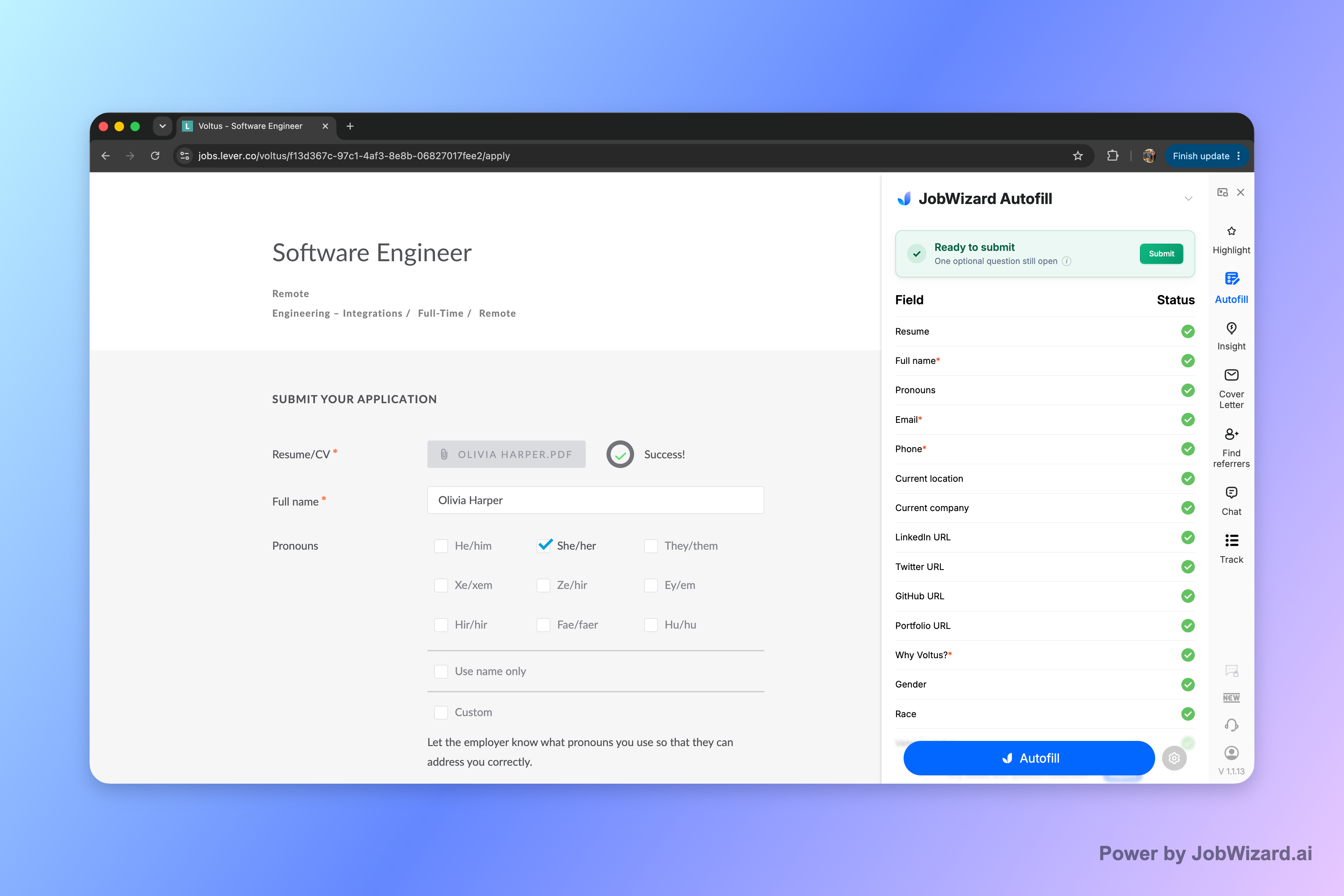
This is where JobWizard fits the intent differently from true “lazy apply” auto-submission tools. JobWizard autofills fields for applications the user is already on, and then you review the filled content and submit yourself. It never submits automatically, never mass-applies, and never applies while you’re away—so you can catch mismatched or risky details before the employer sees them.
Reality check on automation: In total JobWizard usage, 720,000+ applications were submitted and 600,000+ autofill sessions ran through JobWizard. On average, ~18 repetitive fields per application are autofilled (typically 11–23), with Workday being where JobWizard saves the most time (~65% of autofill-backed applications are on Workday).
Used correctly, autofill is about reducing typing—not removing accountability. You still own the accuracy for the parts that determine fit.
Before you submit, do a fast but decisive review. Use this checklist:
- Screening questions: Confirm each answer matches the job requirements and your actual experience/eligibility.
- Resume/CV selection: Make sure the attached document matches the specific role and the experience you want recruiters to see.
- Work details and location: Double-check dates, titles, employment types, and location/availability fields.
- EEO/custom questions: Read everything that could affect eligibility or classification—don’t rely on copies from a prior application.
- Final scan: Look for odd formatting, truncated text, or fields that look “wrong” (those are often the errors bots introduce).
If you want to use “lazy apply reviews” as guidance, treat them as evidence that the weakest link is final submission without verification. Your advantage is simple: fill fast, verify the sensitive fields, submit yourself.
Do this automatically with JobWizard
Skip the manual work — JobWizard's Smart Autofill handles this for you.
Lazy apply reviews FAQ: answers you can use before your next application
What does “lazy apply” usually mean in practice?
It typically refers to auto-apply or automation tools that fill forms with little or no user review, then submit applications automatically. In practice, that can lead to incorrect screening answers, resume mismatches, and other issues recruiters notice.
What are the most common ways a bot can hurt your application?
Common problems include wrong answers to screening questions, sending the wrong resume or version for the specific role, leaving key sections incomplete, and triggering employer-side spam or quality filters. Even if the application “goes through,” it may be less credible to the employer.
Is it safe to use an auto-apply tool if I want to save time?
Time-saving automation can be helpful, but the risk depends on whether you review and tailor what gets submitted. If the tool submits while you’re away or without confirming details, you can easily harm fit and credibility—so the safer approach is fill quickly, review carefully, then submit yourself.
How is JobWizard different from true “lazy apply” auto-submission?
JobWizard autofills fields in an application the user is already on, then the user reviews and submits. It never submits by itself, never mass-applies, and never applies while you are away, which helps you catch mismatched details before the employer receives anything.
What should you check before you hit submit, even with autofill?
Before submitting, confirm screening-question answers match the job and your experience, verify the resume/CV that will be attached is the right version, double-check location, work authorization, and contact info, and scan for any missing or oddly copied fields. Quick review prevents most bot-style mistakes.
Ready to speed up without going bot-mode?
If you’ve read lazy apply reviews and decided you don’t want your candidacy to depend on unverified automation, try a workflow built around autofill + review-before-submit. Start using JobWizard to cut the repetitive form-filling while you keep control of the answers that matter—then submit confidently, with the right resume and the right screening responses.
Frequently Asked Questions
Autofill your next job application
JobWizard is a free Chrome extension that fills applications, tracks statuses, and optimizes your resume.