jobcopilot reviews: What can go wrong with bot-reviewed applications—and what to do instead
jobcopilot reviews often focus on speed, but the real risk is wrong answers on screening questions, mismatched materials, and spam-filter triggers. Review and submit yourself—with autofill to save time.
Free Chrome extension
Autofill your next job application
JobWizard is a free Chrome extension that fills applications, tracks statuses, and optimizes your resume.
When people search jobcopilot reviews, they’re usually trying to move faster—filling applications without drowning in repetitive fields. The catch: bot-style “review and submit for me” workflows can introduce errors that cost more than time, including wrong screening answers, resume mismatch, and employer-side spam-filter friction.
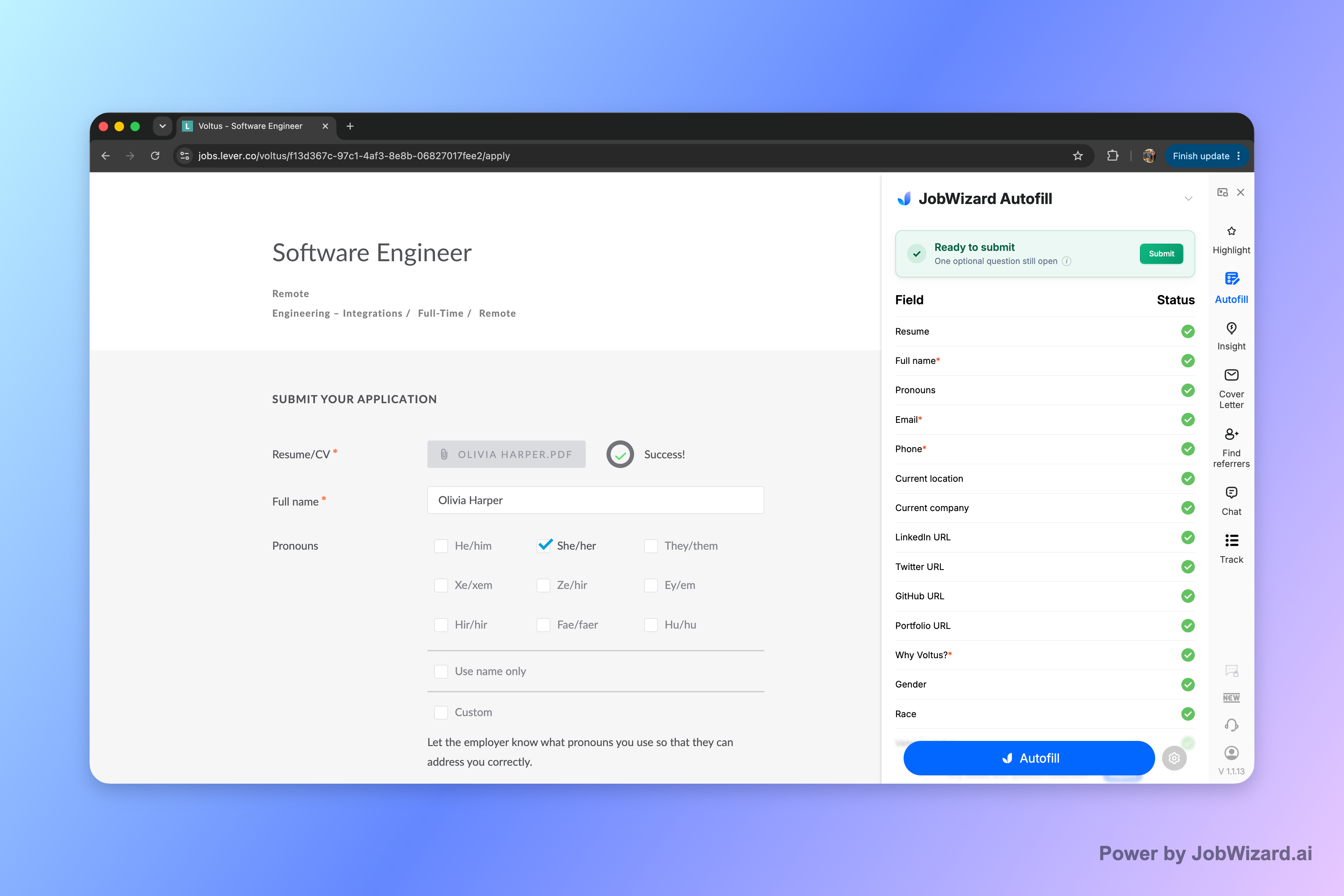
In this guide, we’ll unpack what typically goes wrong with auto-apply tools (fairly, not fearfully), and then show the reviewed-alternative workflow: autofill the boring parts fast, but you review every custom question and submit yourself.
What jobcopilot reviews usually get right—and what they often miss
jobcopilot reviews commonly highlight speed, convenience, and the ability to cut down manual typing. Those benefits are real—especially when the application asks the same contact info and basic background details over and over.
But the most important risk isn’t speed—it’s correctness. Automation that “decides for you” or submits without a close read can send an application that looks polished while being logically wrong.
- Wrong answers on screening questions: Custom questions (eligibility, availability, “required experience,” work authorization details) may be answered with defaults that don’t reflect the specific role.
- Resume mismatch: The “best” resume is often the one most aligned to the job, not the one a tool happens to reuse.
- ATS/Employer friction: Repeated, similar submissions can trigger spam-filter heuristics or simply reduce reviewer trust when responses seem inconsistent.
- Reputation damage: If you apply to a company you truly want, a clearly bot-like or mismatched application can create a negative first impression.
How bot-reviewed applications fail: the most common failure modes
Bot-reviewed applications tend to fail in a few predictable places—usually where the application expects context, nuance, or role-specific truth. Here’s what you should look for in jobcopilot reviews (and what to avoid).
1) Screening questions that require “role context,” not just your profile
Many screening forms include fields that aren’t purely factual—they require mapping your experience to the employer’s criteria. Even good automation can get tripped up by wording differences, required phrasing, or “only if” conditions.
If any of these are answered incorrectly, you may be filtered out immediately:
- Eligibility/authorization confirmations
- Work schedule availability and start date expectations
- Salary or compensation requirements
- Experience level claims tied to specific tools, industries, or responsibilities
2) Resume/cover letter selection that’s “close enough” but not actually aligned
Some job descriptions require a narrow set of experience. A bot-style workflow may upload the same document repeatedly—even when the job needs a different project emphasis, different title mapping, or different keyword alignment.
Resume mismatch can hurt in two ways: it may lead to an ATS score that’s off, and it can create a second problem when the screening responses don’t match what the resume supports.
3) Inconsistent answers that look suspicious to humans and systems
Even if each field is “probably” correct, tiny inconsistencies can stand out. For example, a resume may list one job title while screening asks for a specific responsibility category, or a date range may not align with the automation’s interpretation.
That inconsistency can lead to:
- Automatic rejection by rules-based ATS screening
- Lower human confidence during review
- Higher likelihood that the application gets treated as low-quality or automated
4) Formatting patterns that resemble mass automation
Auto-apply tooling can create application patterns that employers recognize—even if the tool is “helpful,” not malicious. Large volumes of similar submissions, the same document attachments, or repetitive field structures can increase the chance of spam-filter scrutiny.
This isn’t about blaming applicants—it’s about how systems are designed to protect hiring pipelines. If you want to maximize positive outcomes, the goal is to be relevant and consistent, not just fast.
What JobWizard does differently: autofill + review-before-submit (not blind applying)
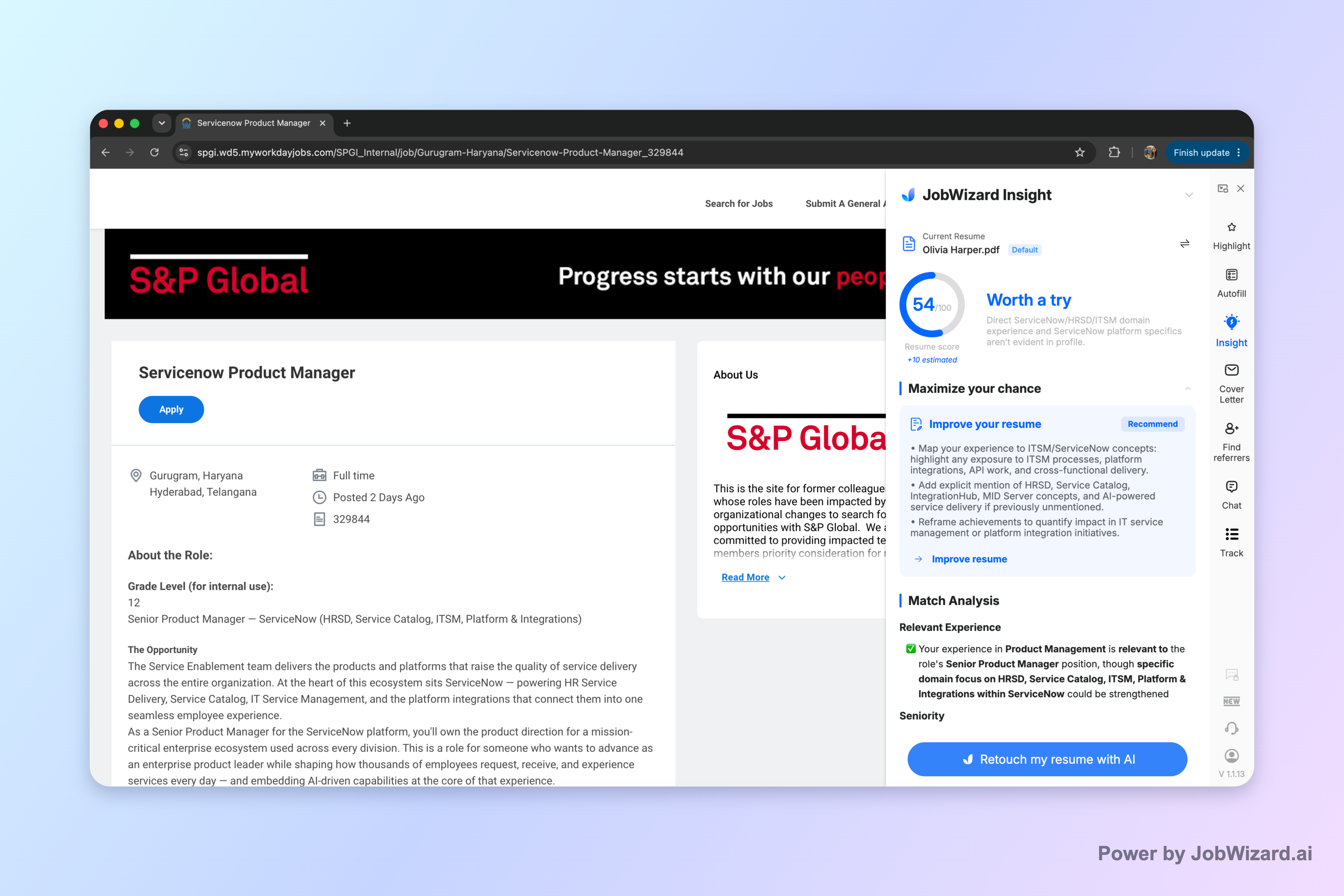
JobWizard is built for autofill and review—you stay in control of the final answers and the actual submission. That matters because the failure modes above typically happen when the “submit” step is automated without careful confirmation.
Here’s the core idea: repetitive fields get filled quickly, but you review and submit yourself—especially for areas that must match the role (sponsorship, salary/comp expectations, EEO-related items, and custom questions).
Across 720,000+ applications submitted and 600,000+ autofill sessions run through JobWizard, the system autofills an average of ~18 repetitive fields per application (typically 11–23), while leaving role-specific details for your review before you submit.
JobWizard also works where time savings are most noticeable in common ATS workflows. In verified usage, ~65% of autofill happens on Workday (where it saves the most time), with ~19% on Greenhouse, ~12% on Ashby, and ~4% on Lever.
So instead of outsourcing correctness to a bot, you get the best of both worlds: speed on the repetitive parts and human verification where mistakes actually cost you.
Why “review-before-submit” matters for your outcomes
When you submit yourself, you can confirm:
- Each screening answer matches your resume and the specific job
- The selected resume is the right version for that role
- Any ambiguous or conditional questions are answered intentionally
- Your responses won’t accidentally conflict across fields
The result is a workflow that reduces the “bot errors” without forcing you to manually type every field from scratch.
A practical alternative to jobcopilot-style automation: fill in seconds, check, submit
Use a fast-but-careful workflow that prevents wrong answers and resume mismatches while keeping you moving.
- Autofill the repetitive fields so you’re not retyping contact info and standard background details.
- Review every screening question as if you’re answering it in an interview—because that’s what it effectively decides.
- Verify resume fit (the most relevant projects and experience should be represented).
- Confirm role-specific constraints like eligibility, availability, compensation/expectations, and custom prompts.
- Submit yourself once the application matches the job and your documentation.
If you’re trying to apply faster, this approach is the realistic middle ground: it preserves momentum, but it doesn’t bet your candidacy on an automation guess.
Quick checklist before you hit submit
- Consistency check: Do the screening answers match your resume language and dates?
- Resume selection: Did you pick the version you’d want a recruiter to see for this exact posting?
- Custom questions: Are any answers conditional (“only if,” “depending on,” “I can with…”) handled truthfully?
- Any eligibility or EEO-related prompts: Are they accurate for you, for this application?
jobcopilot reviews: what to look for before you trust an auto-apply tool
Not all jobcopilot reviews are warning signs—some highlight genuinely useful convenience. But before you rely on any tool that applies on your behalf or “handles submission,” read reviews with a lens for correctness and control.
Evaluate reviews for these signals
- Do reviewers mention incorrect screening answers or mismatched eligibility details?
- Do they report the tool submitting the wrong resume or the wrong experience summary?
- Do they discuss employer-side outcomes like rejections that seem inconsistent with their materials?
- Do they describe confusion or extra steps needed to fix submissions?
Choose the workflow that keeps you responsible for truth
If you want speed, aim for automation that removes typing, not decision-making. The safer standard is: autofill helps you get to “submit-ready” quickly, and you verify every role-specific statement before you send it.
That’s how you avoid the most common bot-reviewed application failures while still making meaningful progress on your job search.
Do this automatically with JobWizard
Skip the manual work — JobWizard's Smart Autofill handles this for you. On these platforms: JobWizard vs JobCopilot.
FAQ
What are the most common problems people report in jobcopilot reviews?
The most common complaints usually come from mismatches and automation mistakes: incorrect or incomplete answers on screening questions, resumes that don’t align with the specific role, and application patterns that can look like spam to employers or ATS systems.
If an auto-apply tool fills everything, why can it still submit the wrong application?
Because “fill” isn’t the same as “fit.” Tools may pull generic details (or outdated ones), mis-handle custom screening fields, and reuse the same resume/experience summary even when the job requires a different keyword set or project focus.
What’s the safer alternative to reduce bot-submission risk?
Use a workflow where repetitive fields are autofilled, but you review every screening question and custom prompt before submitting. That way you keep the time savings while preventing wrong answers, resume mismatches, and avoidable ATS/spam-filter flags.
How can I tell whether my application materials match the job before I hit submit?
Check the resume selection and the top 2–5 experiences you’re claiming. Then re-read each screening question and ensure the wording is consistent with your resume (titles, dates, eligibility, work authorization, salary expectations, and any “must-have” requirements).
Will using an auto-apply tool hurt my reputation with employers?
It can. Even if an application is eventually reviewed, repeated or poorly matched submissions can create friction—especially if screening responses appear inconsistent, or if the volume/format resembles automated spam. A careful review-before-submit approach helps you apply to roles you truly want.
Ready to apply faster without betting your candidacy on bot decisions? Try JobWizard to autofill repetitive application fields, then review everything and submit yourself—so your answers and resume actually match the job.
Frequently Asked Questions
Autofill your next job application
JobWizard is a free Chrome extension that fills applications, tracks statuses, and optimizes your resume.