Is AIapply Worth It? The Real Risk of Bot Submissions vs Autofill-First Tools Like JobWizard
Wondering “is aiapply worth it”? Learn what goes wrong when apply bots submit for you—and why autofill-first tools like JobWizard help you fill repetitive fields, then review before you submit.
Free Chrome extension
Autofill your next job application
JobWizard is a free Chrome extension that fills applications, tracks statuses, and optimizes your resume.
Is aiapply worth it? Here’s the trade-off when bots submit for you.
When you ask is aiapply worth it, the real question is whether you’re comfortable with an “apply bot” style workflow that can send answers and documents you didn’t personally double-check. Many job seekers want speed—but the fastest path can also be the one that accidentally damages first impressions.
Bot-style auto-apply is where things can go wrong: screening questions get filled with the wrong response, your resume/profile content can be a mismatch for the exact job, and employer-side spam or consistency filters can react to repetitive, bot-like submissions. If you’re applying to a role you actually want, those mistakes aren’t just annoying—they can make you look careless.
Instead of full automation, a safer pattern is autofill-first, review-before-submit: fill the repetitive fields quickly, then review every answer yourself right before submitting. That approach still saves time, while keeping you in control of the details that matter most to hiring teams.
What goes wrong with “apply bots” (and why it can cost you the job).
Apply bots typically aim to reduce your workload, but they can’t reliably guarantee that every field the employer asked for is answered the way you intend—especially when applications have nuanced screening questions.
Here are the most common failure points when tools submit for you (even when they’re “AI-assisted” or “smart”):
- Wrong answers to screening questions: automated responses can be close—but not correct for that specific job.
- Resume/profile mismatch: the bot may populate fields with a resume or profile detail that doesn’t align with what the employer requested for this role.
- Employer-side spam or consistency filters: highly repetitive submission patterns and inconsistent form data can trigger automated checks, reducing your odds before a human ever sees you.
- Custom fields get mishandled: eligibility, work authorization, EEO-related prompts, and role-specific questions often need careful, case-by-case confirmation.
The important nuance: these problems aren’t proof that every AI or automation tool is “bad.” It’s that auto-submit removes your last line of defense—your review step—when mistakes are easiest to catch.
Autofill-first instead: what the “review-before-submit” approach protects.
An autofill-first, review-before-submit workflow keeps the speed benefits while restoring your ability to verify the details that affect your application’s credibility.
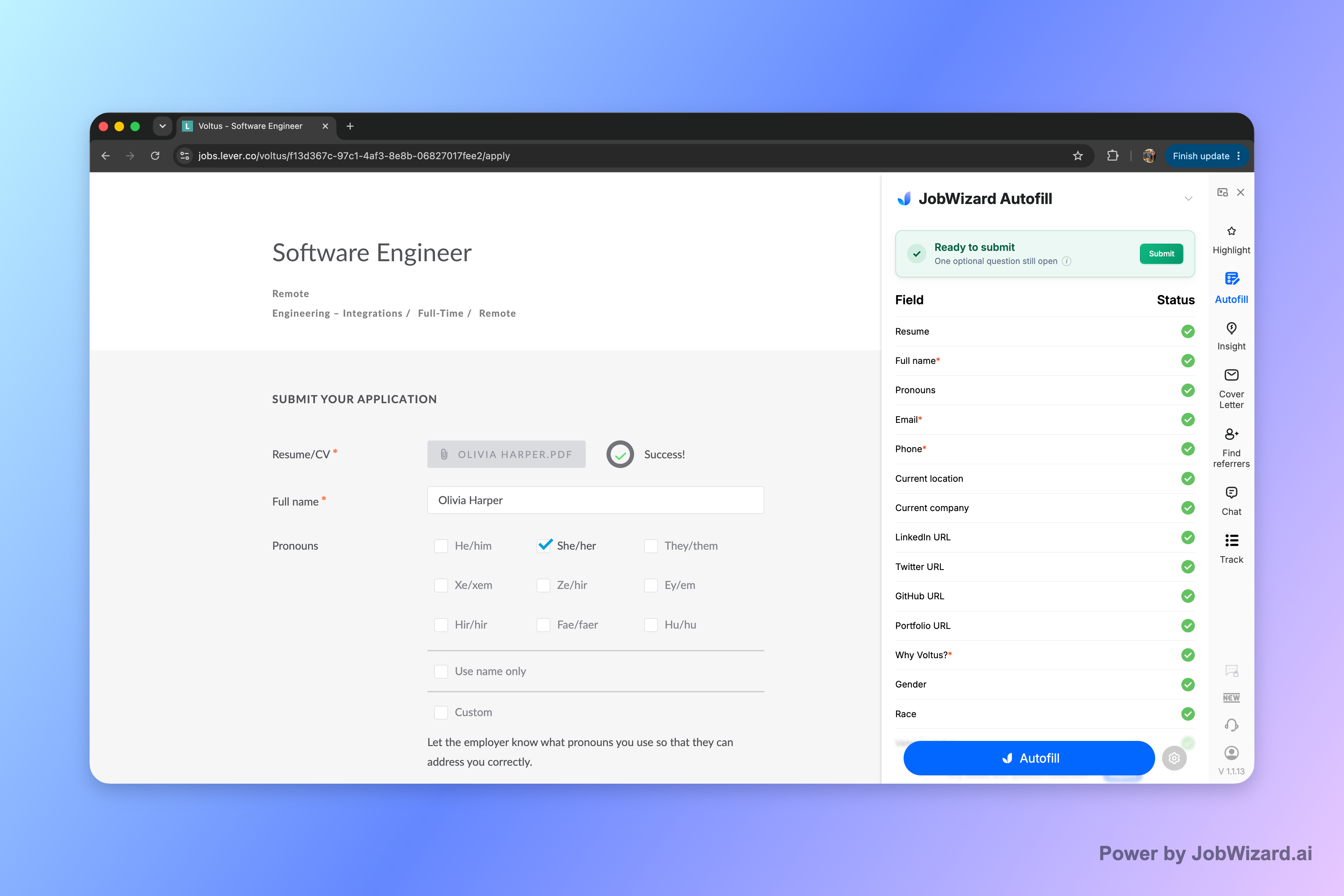
With JobWizard, the model is straightforward: it autofills an application the user is already on, then the user reviews the populated fields and submits. It also supports the “not everything filled perfectly” reality—when a required field needs attention, JobWizard can identify it so you can jump to the matching question.
That matters because it separates two tasks that should be different:
- Fast population of repetitive fields: the tool fills in the detected form fields using your saved profile and resume data.
- Your final verification and submission: you confirm each answer is accurate for this specific job before you send it.
This also aligns with how real applications work on platforms like Workday and similar systems: some fields are predictable, but screening and custom questions still require human judgment.
So—how to decide if aiapply is worth it (use this checklist before you commit).
You can’t judge is aiapply worth it with a single promise like “more applications” or “faster apply.” You need to evaluate whether the workflow keeps you in control of the answers that employers care about.
Use this checklist when comparing aiapply-style auto-submit versus autofill-first tools:
| Decision point | What to look for | Why it matters |
|---|---|---|
| Who submits the application? | Choose a workflow where you submit after reviewing. | Prevents accidental incorrect answers from being sent without your confirmation. |
| How are screening/custom questions handled? | Look for a process that lets you review each question immediately before submission. | Reduces the chance of wrong eligibility/EEO/specific-role responses. |
| Document and profile fit | Confirm the resume/profile details used align with the job posting. | A mismatch can make you look unqualified even if you have the right experience. |
| Required fields & missing items | Prefer tools that help you spot fields that need attention. | Prevents incomplete or incorrect submissions. |
| Risk tolerance | Be realistic about what happens if you don’t review every answer. | Employers may reject applications that appear inconsistent or bot-assisted. |
If you want to go deeper into aiapply specifically, these related reads can help you compare “apply bot” behavior with autofill-first workflows:
- How to Autofill Job Applications (Step-by-Step with JobWizard)
- aiapply reviews: Are “Apply Bots” Worth It—Or Do You Need Autofill-First Checks Instead?
- AIapply cost isn’t the real issue—what bot submissions get wrong (and the autofill cost that helps)
- Is JobHire.ai Worth It? A Review-Before-Submit Checklist for Job Autofill
Bottom line: if the tool submits without your review, “worth it” depends on how much risk you’re willing to take with screening answers, document matching, and employer filter reactions.
Do this automatically with JobWizard
Skip the manual work — JobWizard's Smart Autofill handles this for you. On these platforms: JobWizard vs AIApply.
FAQ: Is aiapply worth it for your job search?
Is aiapply worth it if I’m trying to move faster on job applications?
It can feel faster, but if the tool submits for you without your final review, you risk incorrect answers on screening questions, mismatched documents, or triggering employer anti-spam checks. A safer approach is autofill-first: fill repetitive fields quickly, then review every answer yourself before submitting.
What are the most common problems with apply bots like aiapply?
The usual issues are wrong or incomplete screening answers, a resume or profile mismatch with what the employer asked for, and employer-side spam or consistency filters reacting to “robotic” application patterns. Even when autofilled content is close, you can still end up sending the wrong details to a job you actually want.
How is JobWizard different from an aiapply-style auto-submit tool?
JobWizard autofills applications you’re already on and then you review the populated fields and submit yourself. If a required field still needs attention, JobWizard can identify it and help you jump to the matching question—so you control the final answers.
What should I check before I submit if I use any autofill or AI-assisted tool?
Before submitting, review each screening question and custom field for accuracy, confirm the resume and profile details match the specific role, and make sure any required fields are completed. Then submit only after you’ve verified every answer is what you’d want the employer to see.
Who benefits most from an autofill-first approach rather than full automation?
Job seekers applying to specific roles who want speed without losing control—especially when applications include custom questions, eligibility fields, or role-specific details. Autofill-first helps you fill the repetitive parts quickly, while you remain responsible for the final review and submission.
Ready to apply faster without losing control? Try JobWizard’s autofill on your next application, then review every populated answer yourself before submitting—so you get speed where it’s safe, and accuracy where it counts.
Frequently Asked Questions
Autofill your next job application
JobWizard is a free Chrome extension that fills applications, tracks statuses, and optimizes your resume.