How to Answer When Can You Start When Unemployed: Sound Ready, Not Desperate
Learn how to answer when can you start when unemployed with a clear, honest timeline that reassures employers without making promises you can’t keep. Use practical scripts for application forms, recruiter calls, and interviews.
Free Chrome extension
Let AI answer these questions for you
JobWizard fills sponsorship, work-auth, and availability answers correctly on every application — free.
Answer directly without making unemployment the headline
If you’re unemployed and available now, say so clearly, then leave room to coordinate the start date. When deciding how to answer when can you start when unemployed, focus on your real availability—not on defending the gap between jobs. A concise answer sounds prepared and gives the employer useful information.
You don’t need to present unemployment as a problem or claim that you can start before you actually can. The goal is to make your timeline easy to understand and reliable.
Choose the right answer for your actual availability
Your best response is the earliest date you can genuinely commit to. Being unemployed may make an immediate start possible, but personal commitments, travel, caregiving, or other plans can still affect your timeline.
Use the version that matches your circumstances:
- Ready now: “I’m available to start immediately, and I’d be happy to coordinate a date that works for the team.”
- Available after a short break: “I’m available to start on [date]. I’d like to use the time before then to take care of a prior commitment, and I’m excited to get started.”
- Need to confirm logistics: “I could start within [timeframe]. I’m happy to confirm a specific date once I understand the onboarding schedule.”
- Flexible but not unlimited: “My earliest start date is [date], though I can discuss the timing if you have a particular onboarding schedule in mind.”
Only say “immediately” if you can follow through. A specific, truthful date is stronger than a vague promise to begin whenever the employer asks.
For the broader method behind concise responses to application prompts, read How to Answer Job Application Questions: A Field-Tested Method for Confident, Consistent Responses. It helps you keep answers relevant, consistent, and easy to verify.
Adjust your wording for forms, recruiter calls, and interviews
Match the answer to the format, but keep the same start date everywhere. A form usually calls for a short response; a conversation gives you room to add flexibility or context.
- On an application form: Enter a date if you know it. If the form accepts text, use “Immediately” or “Available starting [date].” If it offers a notes field, you can add that you’re open to coordinating with the employer.
- During a recruiter call: Lead with your availability: “I’m available to start on [date]. Is that in line with your anticipated timeline?”
- In an interview: Give the date, then connect your answer to the next step: “I can start [date]. I’m looking forward to the opportunity and can coordinate with you on onboarding.”
Before submitting an application, check that the date matches what you’d say in an interview. For related guidance on wording this question in an application field, see How To Answer When Can You Start on a Job Application (Best Scripts + Timing Tips).
Handle uncertainty and follow-up questions honestly
If you don’t know the exact date yet, give a truthful timeframe and explain when you can confirm. You can sound flexible without agreeing to a start date you haven’t checked.
For example: “I expect to be available within two weeks, and I can confirm the exact date by Friday.” Or, if the employer needs to start sooner: “My earliest reliable start date is [date]. I can discuss whether there’s any flexibility around that timeline.”
If you’re asked why you’re available now, answer briefly and redirect to your readiness: “My previous role has ended, so I’m available to start [date]. I’m focused on finding a role where I can contribute in [relevant area].” Share only what is accurate and comfortable to discuss.
For a closer look at the related question about starting quickly, read How to Answer “How Soon Can You Start” (Without Sounding Locked In). If a recruiter asks about contacting a current employer, use the separate guidance in How to Answer When May Your Present Employer Be Contacted: A Confident Script + Email-Prep Tips.
Career Chat can keep the current role in context while you ask a focused follow-up about your application strategy or how your experience fits the job, without pasting the job description again. Check its answer against the job description; it isn’t a recruiter decision or a guarantee that you qualify.
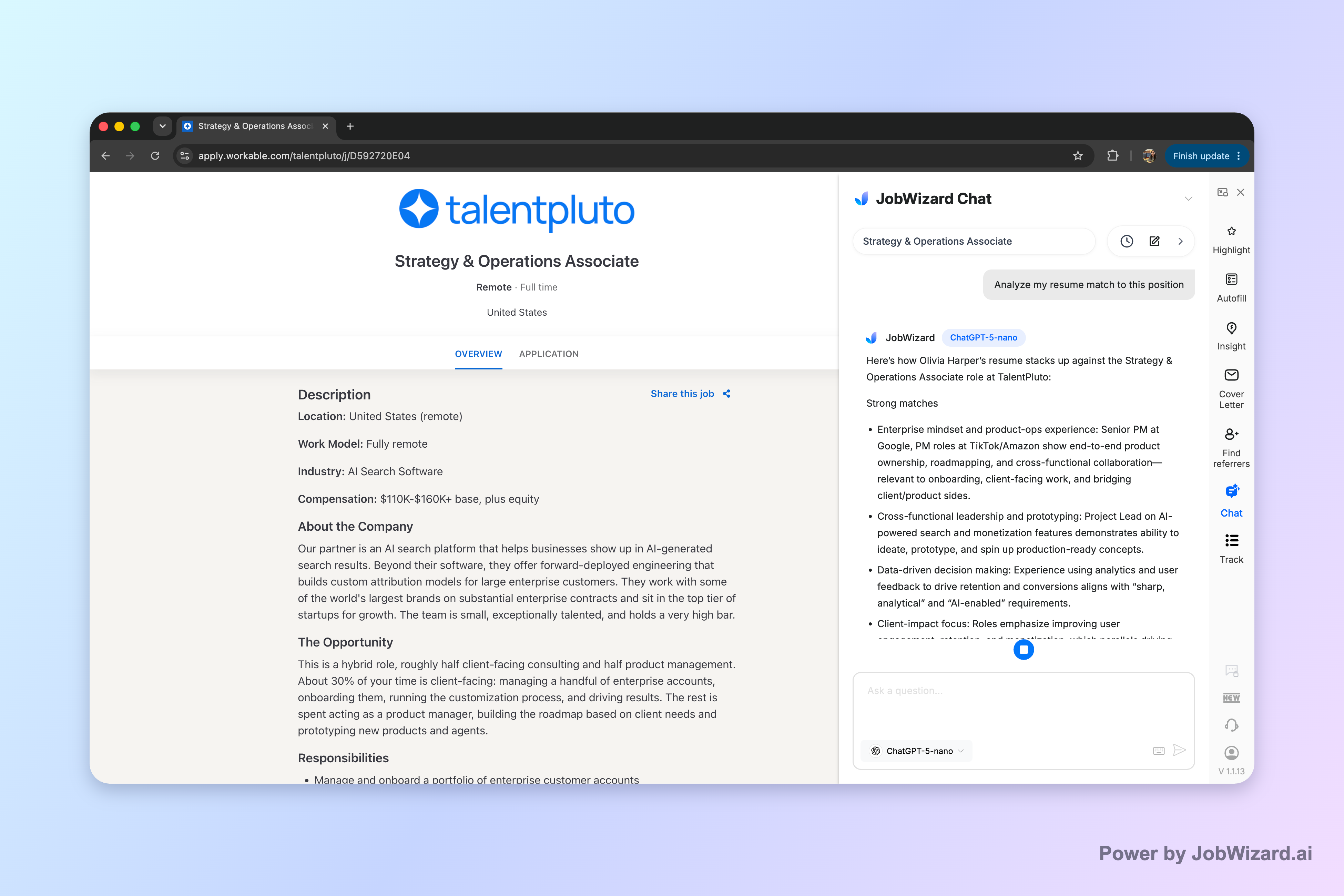
For example, ask: “Based on this role’s listed onboarding needs, how should I explain that my earliest start date is [date]?” Then verify the response against the posting and your actual availability.
Common mistakes that make a simple answer less convincing
Avoid exaggerating your availability or turning a start-date question into a long explanation. Employers need a dependable timeline, not a defense of your employment status.
- Don’t claim immediate availability if it isn’t true. A date you can honor is more useful than an answer meant to please.
- Don’t overexplain why you’re unemployed. Answer the question asked, and share more context only if it’s relevant or requested.
- Don’t give a date you haven’t checked. Account for commitments and any practical arrangements before making a firm promise.
- Don’t sound indifferent. Pair your timing with a brief signal that you’re interested in the opportunity.
A good answer to how to answer when can you start when unemployed is direct, accurate, and calm. You can be ready soon without sounding as if you’ll accept any terms or abandon your boundaries.
Do this automatically with JobWizard
Skip the manual work — JobWizard's Smart Autofill handles this for you.
Frequently asked questions
Use these quick answers to handle common variations of the start-date question. Keep the same principle in each setting: be truthful about your earliest reliable start date.
Should I say I can start immediately if I’m unemployed?
Yes, if you genuinely can start right away. When deciding how to answer when can you start when unemployed, state your actual availability and note that you’re happy to coordinate a start date that works for the employer.
What if I need time before starting a new job?
Give a realistic date or timeframe and, if helpful, briefly explain the practical reason, such as travel or a scheduled commitment. You don’t need to overexplain; be clear about when you can reliably begin.
How do I answer “When can you start?” on an application form?
Enter a specific date if you know it, or a truthful timeframe such as “Immediately” or “Within two weeks.” If the form allows a note, say you’re flexible and can coordinate a mutually convenient start date.
Should I mention that I’m unemployed when asked when I can start?
Usually, answer the availability question directly rather than volunteering your employment status. If it comes up, be truthful, then shift to your start date and enthusiasm for the role.
Want help thinking through your answer for a specific opening? Ask JobWizard Career Chat a focused follow-up question about the current role, then verify its guidance against the job description and your real availability.
Frequently Asked Questions
Let AI answer these questions for you
JobWizard fills sponsorship, work-auth, and availability answers correctly on every application — free.