SuccessFactors Application Status Meanings: What “In Process,” “Under Review,” and More Really Mean
If you’re seeing SuccessFactors application status updates and wondering what they mean, this guide decodes the most common stages and the next best action. Learn how to follow up smarter—and keep every step organized.

Free Chrome extension
Track all your applications in one place
JobWizard auto-tracks status changes across Workday, Greenhouse, and every major job site — free.
Two days after you submit your SuccessFactors application, the status page hasn’t changed. You’re not sure whether “In Process” means you’re one step away from screening or already stuck in a queue.
This guide breaks down successfactors application status meanings in plain English, shows what to do next for each common stage, and helps you track the whole timeline so you can follow up with confidence—without guessing.
What does “In Process” mean on SuccessFactors?
“In Process” on SuccessFactors usually means your application moved into the employer’s internal workflow, after the initial submission was accepted.
In practice, this stage often covers steps like initial validations, basic screening inputs, or route-to-review. It doesn’t automatically guarantee you’re at the “final” review stage—so the right mindset is: you’ve been received and the system has started moving your record.
Key takeaway: “In Process” is progress, but not proof of recruiter review yet—stay ready and verify your materials are complete.
Recommended action checklist
- Re-check your application inputs (resume version, answers, required attachments) against the job posting.
- Prepare follow-up content so you can reference the role and your fit without sounding generic.
- Set expectations for timing: status updates can lag behind real recruiter work.
What does “Under Review” mean on SuccessFactors?
“Under Review” generally means your application is being actively considered by the hiring team (or someone tasked with screening).
This is typically a better signal than early system states. However, “Under Review” can still stay visible while multiple people evaluate candidates, compare qualifications, or coordinate scheduling.
Key takeaway: Treat “Under Review” as active evaluation—keep your availability and messaging tight, and follow up once at a reasonable point.
What to do next (simple, effective)
- Keep your calendar open for potential outreach.
- Refine your pitch for the exact role: one version for recruiter emails, one for interviews.
- Watch for requests like additional questions, assessments, or document prompts—those are clearer signals than a static status.
What does “Application Received” mean on SuccessFactors?
“Application Received” typically confirms your submission was accepted and recorded in the system.
This status is about confirmation more than evaluation. If your application was created successfully, you can usually assume your materials made it past the submission step.
Key takeaway: “Application Received” usually needs no action—focus on readiness and only follow up after an appropriate interval.
Recommended action
- Confirm nothing was missing (required fields completed; attachments uploaded).
- Save your submission details (date/time, role title, any confirmation email).
- Plan a calm follow-up if the role has been open for a while and you haven’t heard back.
What does “Screening” mean on SuccessFactors?
“Screening” usually means your application is passing (or has passed) an early qualification filter—often based on role requirements.
Screening can include keyword checks, experience matching, and elimination of candidates who don’t meet baseline criteria. Sometimes screening is automated; sometimes it’s reviewer-led. Either way, you should treat it as a “still in the game” stage.
Key takeaway: “Screening” is a filter step—your best leverage is making sure your resume and answers strongly match the job’s requirements.
Fast improvements while you wait
- Align your headline and summary with the role’s core function.
- Mirror the language from the job description in your experience bullets (where accurate).
- Keep versions consistent so you can accurately discuss what was submitted.
What does “Shortlisted” or “Selected” mean on SuccessFactors?
“Shortlisted” or “Selected” typically means you’ve moved past initial screening and are more likely to be contacted next.
This stage is often a direct pipeline into recruiter conversations, interviews, or additional screening steps. If your status is here, your time horizon tightens: be ready to respond quickly.
Key takeaway: “Shortlisted/Selected” is a strong signal—prepare for outreach and respond fast.
Next best actions
- Update your availability so you don’t lose momentum on scheduling.
- Rehearse answers for the top requirements in the posting.
- Prepare follow-up questions you can ask in recruiter calls (team, priorities, timeline).
What does “Interview” mean on SuccessFactors?
“Interview” usually indicates the employer has moved from evaluation to scheduling a meeting (phone screen, video, or in-person).
At this point, the status is less about interpretation and more about execution. The goal is to be reachable, prepared, and ready to confirm logistics quickly.
Key takeaway: “Interview” means act decisively—confirm schedules, review the role, and be ready with concrete examples.
Pre-interview checklist
- Review the job description and pick 3–5 proof points that match each key requirement.
- Prepare logistics answers (time zone, availability windows, interview format).
- Plan your “why this role” story in under 60 seconds.
What does “Pending” mean on SuccessFactors?
“Pending” generally means your application is waiting on a decision or next step before moving forward.
Pending can cover a lot of internal timing—recruiter availability, batch review cycles, or completion of a stage checklist. It’s not always negative; it’s often “not yet finalized.”
Key takeaway: “Pending” is a holding pattern—stay patient, but track timing so you can follow up appropriately.
What to do
- Track how long it’s been pending for your own follow-up schedule.
- Keep materials updated so you can share new accomplishments if asked.
- Use one follow-up strategy (not repeated messages) if nothing changes.
What does “Rejected” mean in SuccessFactors?
“Rejected” usually means the employer decided not to continue with your application for that role.
Even if the status feels final, it can be a useful data point. Instead of treating it as a dead end, treat it as feedback you can apply to the next submission.
Key takeaway: “Rejected” means not moving forward—use it to refine your next application and apply to matching roles.
How to respond (and what to change)
- Compare your resume to the job’s top requirements and identify the gaps you can fix.
- Adjust your resume positioning so the most relevant experience is obvious quickly.
- Apply with a tighter match rather than sending the same version to every posting.
What does “No Longer Considered” or “Not Selected” mean?
“No Longer Considered” and “Not Selected” typically indicate the employer stopped considering your application even if it previously advanced.
This can happen when roles are reprioritized, headcount changes, or another candidate is chosen. If you want to continue with that employer, focus on roles where you’re a stronger match.
Key takeaway: These statuses are an end point for that role—reapply strategically to openings that fit better.
Next steps you can control
- Re-check the job requirements against your resume and targets.
- Update your strategy (new resume version, different keyword emphasis, improved summary).
- Monitor for similar openings from the same company.
How can I track SuccessFactors application status meanings across multiple roles?
The fastest way to reduce stress is to track each application’s status and next step in one place, so you’re never re-reading emails or guessing what “Pending” means for you.
Job searching often involves multiple pipelines at once. When you log role, date, current status, and what you already did, your follow-ups become specific instead of emotional.
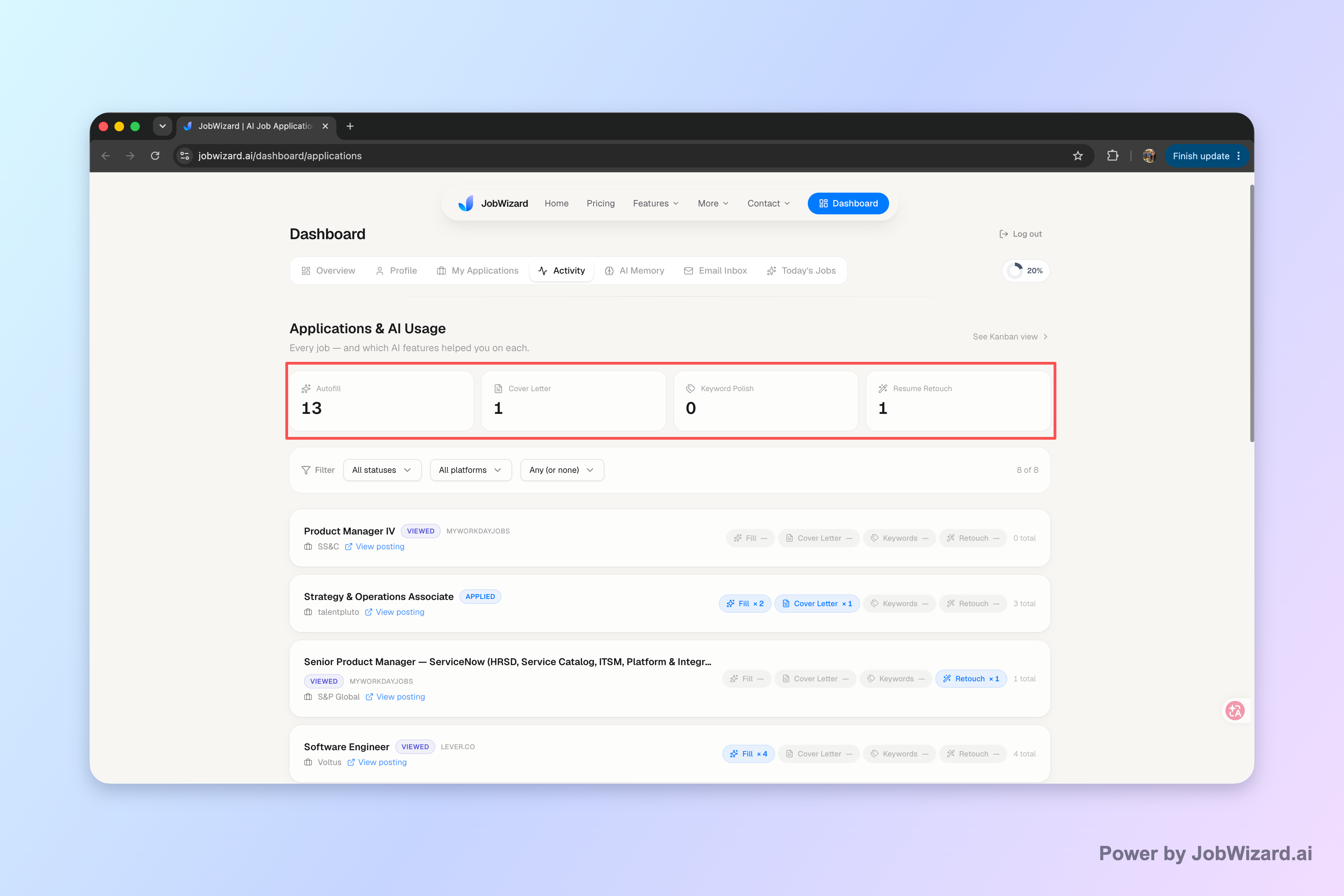
JobWizard’s Activity view is built for this kind of workflow. The Activity view shows application status and which JobWizard tools were used for each role, so you can connect your actions to what the employer is showing you.
You’re still in control of content—any auto-filled details are meant for speed and you review before you submit.
Key takeaway: Track status + actions together—JobWizard Activity helps you follow up with context instead of guessing.
Build a simple tracker (copy this structure)
- Company + role title
- Submission date
- Current SuccessFactors status
- What you already submitted/changed
- Your next follow-up date
Related status guides (so you can compare systems)
- How to Autofill Job Applications (Step-by-Step with JobWizard)
- iCIMS Meaning: Application Stages Decoded (Status Meanings + What To Do Next)
- Greenhouse Application Status Meanings Decoded — What Each Stage Tells You
- iCIMS Application Status Meanings Decoded
What should I do when the status doesn’t change?
If SuccessFactors status meaning looks “stuck,” you should follow a wait-then-check strategy rather than constantly refreshing or sending repeated messages.
Many employers update status at specific milestones (screening batches, recruiter availability, or scheduling). That means a static label can still coexist with real evaluation happening behind the scenes.
Key takeaway: Status stalling isn’t automatically a rejection—use timing + a single thoughtful follow-up to stay on track.
Action plan (practical and low-pressure)
- Wait for a reasonable interval after submission or the last change.
- Check for clearer triggers (new emails, document requests, assessment invites).
- Send one follow-up that references the role and shows continued interest.
- Then stop unless the company initiates new contact or you have a concrete update to share.
Copy-paste follow-up email template
Subject: Follow-up on [Job Title] application
Hi [Recruiter Name/Team],
I hope you’re doing well. I’m following up on my application for the [Job Title] role submitted on [Submission Date]. I remain very interested in the opportunity, and I’d welcome the chance to provide any additional information that would be helpful for your review.
Thank you for your time, and I look forward to hearing about next steps.
Best regards,[Your Name][Phone Number] | [LinkedIn or Portfolio]
How does JobWizard help with application activity and follow-up timing?
JobWizard helps you manage the “application activity” part of the process—so you can see what’s happening now and what you already did for each role.
Across 720,000+ applications submitted, and 600,000+ autofill sessions run through JobWizard, the platform focuses on autofill + review-before-submit: repetitive fields are filled quickly while sponsorship, salary/EEO items, and custom questions are left for you to review before submitting.
That matters for status meanings, because follow-ups work best when they’re tied to the exact application you submitted—date, role, and the current stage you’re seeing.
Key takeaway: Track your actions and current statuses together—JobWizard Activity is designed for that “what did I do, what’s next?” view.
Do this automatically with JobWizard
Skip the manual work — JobWizard's Smart Autofill handles this for you.
FAQ: successfactors application status meanings
What does “In Process” mean on SuccessFactors?
“In Process” usually means your application has moved from the initial submission step into the employer’s internal review/workflow. Next, confirm your materials are complete (resume, any answers, required documents) and watch for a change like “Under Review” or an interview status; if it stays unchanged for a while, send a short, polite follow-up using the template below.
What does “Under Review” mean in SuccessFactors?
“Under Review” generally indicates a recruiter or hiring team is actively considering your application. Keep your profile and availability ready, tailor your responses if the company requests additional info, and avoid spamming follow-ups—one message at a reasonable interval is typically enough.
What does “Application Received” mean—and do I need to do anything?
“Application Received” typically confirms the system accepted your submission and created a record. No action is usually required beyond double-checking that you answered any required questions correctly; if you submitted on a deadline, consider sending a brief follow-up after the first business week to reaffirm interest.
What does “Shortlisted” or “Selected” mean on SuccessFactors?
“Shortlisted/Selected” generally means a subset of applicants passed an initial screening step and are more likely to be contacted next. The best move is to prepare quickly: review the job description, update your talking points, and ensure you’re reachable. If the status doesn’t change after some time, a single follow-up to the recruiter can help.
What does “Rejected” mean in SuccessFactors?
“Rejected” means the employer has concluded your application will not move forward in that hiring cycle. You can still learn from the process—compare your resume to the job’s requirements, tighten keywords, and apply to similar roles. If feedback is possible, a courteous reply asking for guidance can be worthwhile.
What does “No Longer Considered” or “Not Selected” mean?
These statuses typically indicate the employer has decided not to continue with your application for that role, even if it previously advanced. If you still want opportunities there, check whether the company has other openings and reapply to roles that match your background.
How can I track SuccessFactors application status meanings across multiple roles?
Use a simple job tracker that logs each application’s role, date, current status, and what you submitted. JobWizard’s Activity view is designed to show where each application stands and which JobWizard tools were used for each role, so you can follow up with context instead of guessing.
Should I follow up when the status doesn’t change?
Sometimes the status won’t update quickly even when work is happening. If you’ve waited a reasonable period and the role is still active, a short follow-up can reaffirm interest and ask if anything else is needed. If you already followed up once, avoid repeated messages—aim for one additional check-in only if there’s a clear reason (e.g., new accomplishment or new availability).
Conclusion: use the status meaning, then act with a plan
SuccessFactors application status meanings only help if you turn them into next steps.
When you see “In Process,” treat it like progress. When you see “Under Review” or “Shortlisted,” prepare for recruiter outreach. And when nothing changes, follow a calm wait-then-check approach.
If you want less uncertainty while you apply to multiple roles, start using JobWizard’s Activity view to keep each application’s current status and your application actions in one place—then submit with review-before-submit control.
Try JobWizard to track your application activity and make your next follow-up faster and more specific.
Frequently Asked Questions
Track all your applications in one place
JobWizard auto-tracks status changes across Workday, Greenhouse, and every major job site — free.