Resume for Art Teacher That Uses a JD Match Score to Close ATS Gaps Fast
Use this resume for art teacher guide to tailor your skills and classroom impact to the job description—then use a JD match score to close ATS keyword and expression gaps before you submit.

Free Chrome extension
See your resume's match score for any job
JobWizard compares your resume to each job description and shows the exact keywords to add — free.
Build a resume for art teacher roles that matches the job description (not just your experience)
If you’re searching for a resume for art teacher, the real bottleneck is usually not your talent—it’s getting your wording to line up with what the job description and ATS look for.
Art teaching resumes often underperform when they list tasks (“taught drawing,” “managed studio”) without naming the instructional language schools expect (standards alignment, critique routines, differentiation, assessment methods, collaboration, and studio/media specifics). The fix is to tailor the resume to the posting—then verify the result.
In this guide, you’ll get a repeatable structure, bullet templates, and a JD-based workflow you can use for every posting. You’ll also see where match-score feedback fits—so you can correct skills-gap expression before you hit “submit.”
Use a JD-based match score workflow to close ATS and skills-gap wording fast
A JD-based match score compares your resume with the current job description and provides an overall assessment plus improvement suggestions so you can turn gaps into specific resume edits.
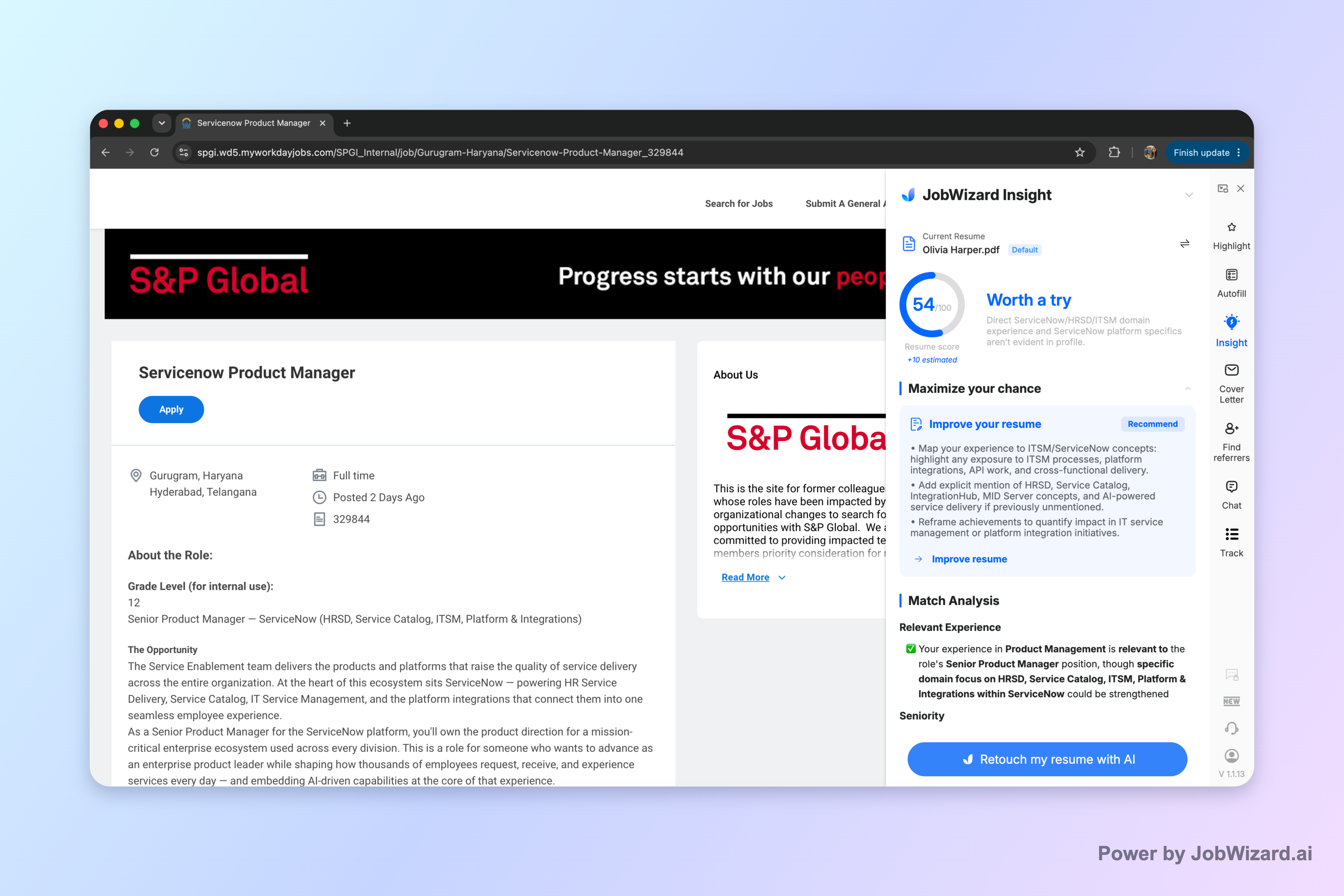
JobWizard Insight does two helpful things: it helps you diagnose resume expression gaps—where you may have the experience but not the same phrasing—and it turns those gaps into an editable revision draft. The goal isn’t blind automation; it’s targeted tailoring you can review.
Key limitation to keep in mind: the score is not a hiring probability and does not guarantee ATS passage or an interview. You still need to verify every change and keep only accurate experience.
Step-by-step: tailor your resume for art teacher, then “match-score” it
- Extract the posting language—copy the job description’s studio/media topics, grade levels, assessment terms, and any required standards or collaboration keywords into your notes.
- Map your real experience—for each keyword/theme, note the closest real example (lesson, unit, portfolio process, rubric, exhibition, parent/community event, or professional learning).
- Rewrite your top bullets—use posting language in your bullet structure, but keep details truthful and specific (timeframe, class format, student outcomes like portfolios or showcases).
- Run a match-score check—look for the places the system flags as mismatched or missing, then revise only what’s accurate.
- Final review before submitting—confirm certifications, course/grade alignment, and that every suggested change reflects what you’ve actually done.
How to interpret match-score feedback for art teacher resumes
When the tool suggests improvements, treat them as a “wiring diagram” for your edits. For example, a posting may require “standards-based instruction,” “differentiation,” and “formative assessment,” while your resume might only say “taught art.”
Your revision should bridge that gap by updating bullet wording. Instead of adding new responsibilities you never had, you’ll simply describe your existing work using the language the school used in the job description.
Pick the right resume structure for an art teacher (and make it skimmable for humans)
A strong resume for art teacher is easy to scan in 30 seconds and easy for an ATS to parse because section names and bullet phrasing stay consistent.
Below is a school-friendly template you can adapt to your background. Keep it in the order that best supports your candidacy—especially if you’re switching grade levels or mediums.
Resume outline that works for most art teacher candidates
- Header + Contact Info (name, city/state, email, phone, links to portfolio/website if applicable)
- Teaching Profile (2–3 lines summarizing your grade levels, instructional approach, and any specialties)
- Licensure/Certifications (state credential and endorsements if required)
- Education (degree(s), major, relevant coursework if early-career)
- Relevant Teaching Experience (school, grades, role, dates; bullets underneath)
- Studio Projects & Student Exhibitions (if you have them: portfolio nights, galleries, showcases, community events)
- Skills (tools/software + pedagogy terms like critique, rubric-based assessment, differentiation)
- Professional Development / Leadership (workshops, curriculum writing, department leadership, committees)
- Awards (optional) (only if they’re relevant to instruction or arts education)
Portfolio link placement: when and how to include it
If you have a portfolio, include a link in your header and make sure your resume bullets point to what the portfolio demonstrates (student work, unit plans, teaching philosophy, or process documentation). If you don’t have a portfolio site yet, you can still include a “Selected Work Samples” line and list what you can share upon request.
Either way, keep the resume text keyword-aligned to the job posting so the ATS can understand your fit even if it can’t interpret a portfolio visually.
Write art teacher bullets that use the job description’s keywords—without sounding generic
The fastest way to improve a resume for art teacher is to rewrite bullets so they include the same instructional themes found in the posting.
Use this approach: (1) start with a strong action, (2) anchor it to the course/unit, (3) name the instructional method, and (4) include the assessment or student-output component. Schools typically care about how you teach and measure learning—not just what you covered.
Bullet formula you can copy
- Action + Unit/Grade/Medium + Pedagogy method + Assessment/Student output
- Example: “Designed [unit] for [grades], using [project-based/critique/differentiation], and assessed learning with [rubrics/portfolios/formative feedback].”
High-impact bullet examples (customize to your real experience)
- Standards + lesson planning: “Planned standards-based studio lessons across [grade range], integrating [art history connections / cross-curricular themes] and scaffolded techniques for mixed readiness levels.”
- Critique and feedback routines: “Facilitated structured critiques using anchor vocabulary and feedback protocols, strengthening student artist statements and revision cycles.”
- Assessment methods: “Evaluated student progress with rubric-based performance criteria and formative checks (sketch iterations, drafts, and reflection prompts).”
- Differentiation: “Differentiated instruction through choice boards and varied materials/approaches to ensure equitable access to learning objectives.”
- Studio management: “Established safe, productive studio routines (materials handling, workspace organization, peer collaboration norms) to maximize time on making.”
- Student exhibitions/community: “Organized class exhibitions/portfolio events, documenting learning artifacts and communicating progress to families and stakeholders.”
- Collaboration: “Collaborated with staff to align interdisciplinary projects and shared learning targets across departments.”
Common art teacher resume mistakes that hurt ATS performance
- Only listing mediums (e.g., “drawing, painting, sculpture”) without naming assessment, instruction, or grade-level outcomes.
- Using different terms than the job posting (e.g., “informal check-ins” instead of “formative assessment” if the posting uses “formative”).
- Skipping credibility sections like licensure/endorsements and professional development when they’re required.
- Overloading the resume with portfolio-style descriptions instead of teaching + learning language.
Tailor your art teacher resume with a quick checklist—and know when to swap in stronger keywords
Before you submit, run a checklist tailored to a resume for art teacher so your content is both ATS-readable and truthful.
Use the posting as your single source of truth and align only what you can support with real experience.
Resume tailoring checklist (copy/paste into your workflow)
- Teaching Profile matches the posting: grade levels, instructional approach, and any specialties (e.g., studio foundations, AP/IB if applicable, visual arts integration).
- Bullets include assessment language: rubrics, portfolios, formative feedback, critique protocols, or other methods used in the job description.
- Mediums/tools match: include the specific mediums or digital tools named in the posting if you’ve taught them.
- Classroom management is concrete: studio routines, safety practices, and structured work cycles.
- Collaboration/duties are represented: department work, interdisciplinary projects, family communication, or committee roles.
- Keywords don’t outrun your truth: every revised phrase should reflect what you’ve actually done.
Use these guides for broader tailoring support
If you want to go deeper on ATS mechanics and keyword targeting, use these topic-cluster resources as supporting references: How to Optimize Resume for ATS: A Practical 2026 Checklist and Resume for a Teacher: Use a JD-Based Match Score to Fix Skills Gaps Fast.
And if you’re also adjusting your positioning beyond teaching (for example, you’re an artist transitioning into education or you’re applying to roles that value your creative practice), these can help you tailor language consistently: Resume for Artist: How to Tailor Your CV to the Job Description and Win ATS and Account Executive Resume Keywords: How to Tailor Your CV for JD Success.
Finally, keep a practical mindset: the goal is to be clearly readable by both ATS and humans, then use JD matching feedback to remove the biggest “expression gap” between your resume and the posting.
Do this automatically with JobWizard
Skip the manual work — JobWizard's Match Score handles this for you.
FAQ: Resume for art teacher questions
What sections should a resume for art teacher include?
Use a clear, school-friendly structure: Header + Contact Info, Teaching Profile (2–3 lines), Education, Licensure/Certifications, Relevant Teaching Experience, Student Projects/Exhibitions (if applicable), Skills (tools + pedagogy), Selected Professional Development, and an optional Awards/Leadership line. Keep each section scannable and keyword-aligned to the job posting.
How do I tailor my resume for art teacher jobs to an ATS?
Start with the job description: copy key phrases into your planning notes (coursework types, studio/media tools, classroom management, assessment terms, collaboration and standards). Then mirror those themes in your bullets using your real experience (e.g., project-based learning, critique/feedback routines, rubrics, lesson differentiation) and ensure your job titles and certifications match what schools expect.
What is a JD-based match score, and how do I use it for a resume for art teacher?
A JD-based match score compares your resume with the current job description and gives an overall assessment plus improvement suggestions. Use it to identify expression gaps (skills that you likely have, but didn’t name the way the posting does), then revise your bullets and keyword usage. Always verify every suggested change and keep only accurate experience.
Should I use an autofill tool to apply for art teacher jobs?
If you use JobWizard, think of it as autofill + review-before-submit. It fills repetitive fields quickly while you review items like sponsorship, salary, EEO, and custom questions before you submit—so you keep control and accuracy.
Do I need a separate resume for each art teacher posting?
Ideally, yes. At minimum, you should update the Teaching Profile summary and the top experience bullets so the language aligns to that specific posting’s grade levels, studio mediums, and assessment/standards terms. If you want a workflow, use the job description to guide your edits, then run a match score check to confirm you’ve closed the most important resume expression gaps.
Ready to tailor your resume for art teacher roles more precisely? Compare your resume against the exact job description, review the identified expression gaps, and then update only what’s accurate—so your next submission is aligned from the first line.
Frequently Asked Questions
See your resume's match score for any job
JobWizard compares your resume to each job description and shows the exact keywords to add — free.