
Management Keywords Resume: Turn Leadership Terms Into an ATS-Ready Story (Not a Generic Template)
Learn how to use management keywords resume tailoring strategies to mirror job requirements—without sounding generic. Includes a keyword checklist and examples.
Free Chrome extension
See your resume's match score for any job
JobWizard compares your resume to each job description and shows the exact keywords to add — free.
Why “management keywords resume” results fail (and what to do instead)
If you’ve ever searched for management keywords resume guidance and walked away with a generic list, you’re not alone. The problem isn’t that hiring teams use keywords—it’s that most candidates paste leadership buzzwords into a resume without aligning them to the job’s actual responsibilities, reporting structure, and stakeholder expectations. That makes your application harder to evaluate.
In practice, “keyword matching” only matters if the words correspond to real experience in the right context: who you led, what you improved, how you delivered, and how you measured progress. Your resume should read like a leadership track record—just with the role’s language clearly reflected.
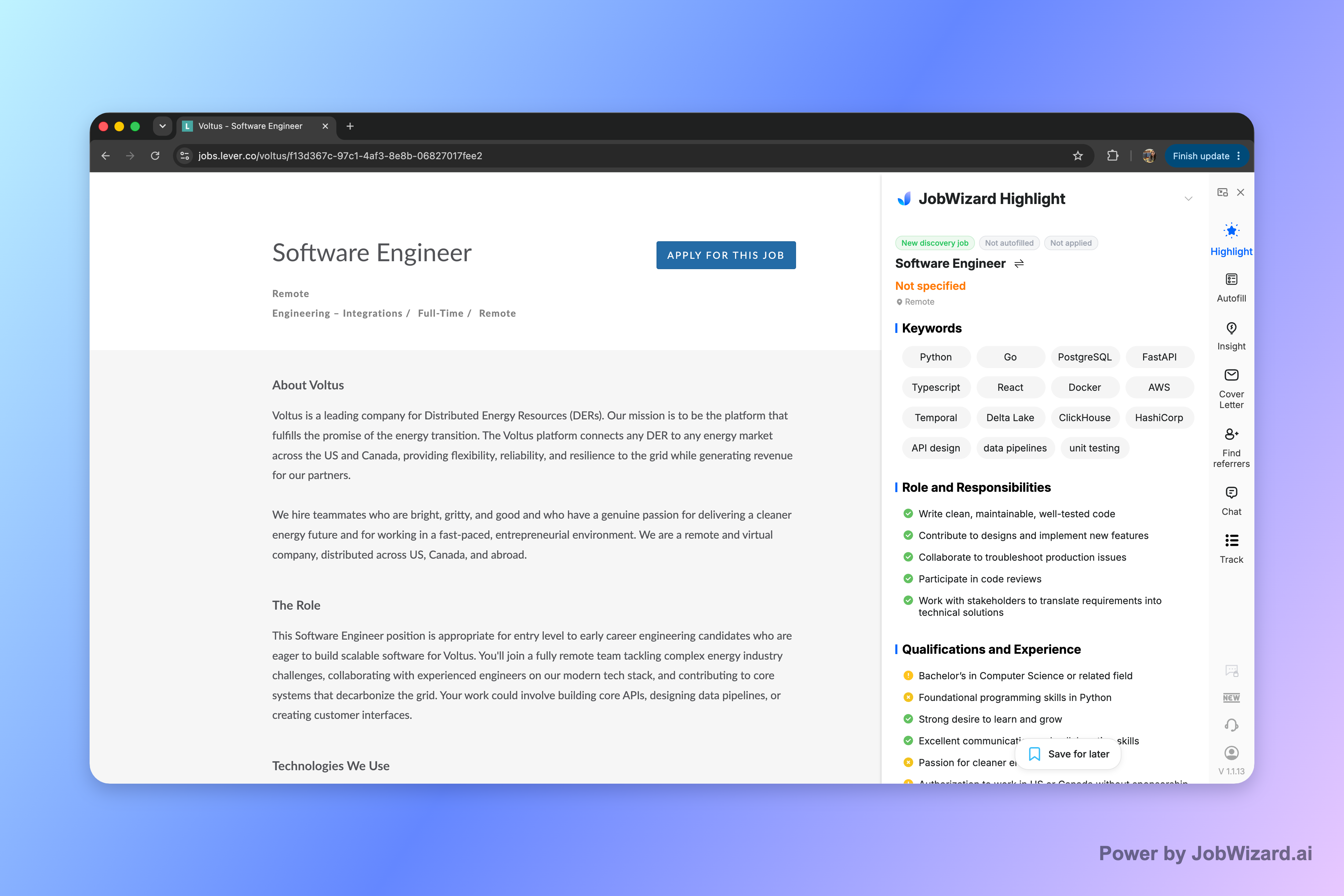
One efficient way to do that is to start from the job description itself. JobWizard’s JD Highlights can organize a job description into keywords, role responsibilities, and qualifications so you can review requirements more systematically before applying.
Management keywords: the categories that actually show up in job descriptions
Management keywords resume research works best when you group terms into categories. Use this approach to select keywords that mirror the role, not just “leadership” in general.
1) People leadership (team, coaching, performance)
- Performance management
- Coaching / mentoring
- Hiring, onboarding, retention
- 1:1s, feedback, development plans
- Delegation and accountability
2) Stakeholder management (cross-functional influence)
- Cross-functional collaboration
- Stakeholder management
- Executive communication
- Partner management
- Requirements gathering / alignment
3) Operational leadership (process, quality, delivery)
- Operational excellence
- Process improvement
- Continuous improvement (Lean/Six Sigma—only if accurate)
- Quality assurance / compliance (domain-specific)
- Roadmap / delivery management
4) Planning and execution (projects, programs, roadmaps)
- Project / program management
- Planning, prioritization
- Risk management
- Escalation management
- Resource planning
5) Financial and planning terms (budgeting, forecasting)
- Budget ownership
- Forecasting
- Cost management
- Business cases / ROI (only if you did it)
6) Domain management terms (what “management” means in your field)
- Case management, service delivery, support operations (for relevant roles)
- Revenue operations / go-to-market operations (for relevant roles)
- Supply chain, logistics, or production management (for relevant roles)
Key rule: If a keyword category appears in the job description, you don’t have to use every term. Choose the specific ones you can support with accurate bullets.
How to tailor a management keywords resume in 3 passes (with examples)
Tailoring should feel like editing, not rewriting your whole identity. Use a repeatable workflow that keeps your content truthful and targeted.
Pass 1: Extract the role’s management language
From the job description, pull:
- Responsibilities (what you’ll be doing day-to-day)
- Qualifications (what they’ll use to screen fit)
- Keyword phrases (the terms they expect you to name)
This is where JD Highlights helps—turning a long posting into organized requirements so you can review more systematically.
As you extract terms, flag the ones that match your experience. You’re building a “keyword map” for the next passes.
Pass 2: Rewrite bullets so the management keywords fit your real scope
Instead of adding a keyword as a standalone line, build leadership bullets that naturally include them.
Example: People leadership bullet
- Generic: “Led a team and improved performance.”
- More aligned: “Managed performance across a team of X by setting weekly goals, running coaching 1:1s, and using feedback plans to improve delivery quality.”
Example: Stakeholder management bullet
- Generic: “Collaborated with stakeholders.”
- More aligned: “Partnered with cross-functional stakeholders (Product, Engineering, Operations) to align requirements, unblock escalations, and deliver agreed milestones.”
Example: Operational/process improvement bullet
- Generic: “Improved processes.”
- More aligned: “Drove process improvement by mapping workflows, standardizing handoffs, and implementing quality checks to reduce rework and improve operational consistency.”
Important limitation: Don’t treat keyword selection as a formula. Your bullets must remain accurate. If you don’t own budgeting, don’t force in “budgeting.” If you didn’t hire, don’t use “hiring.”
Pass 3: Diagnose expression gaps against the specific job
Even strong candidates miss matches because their achievements are real—but phrased differently than the posting. The goal here is not to “game” an ATS. It’s to ensure your resume language makes your fit easy to recognize.
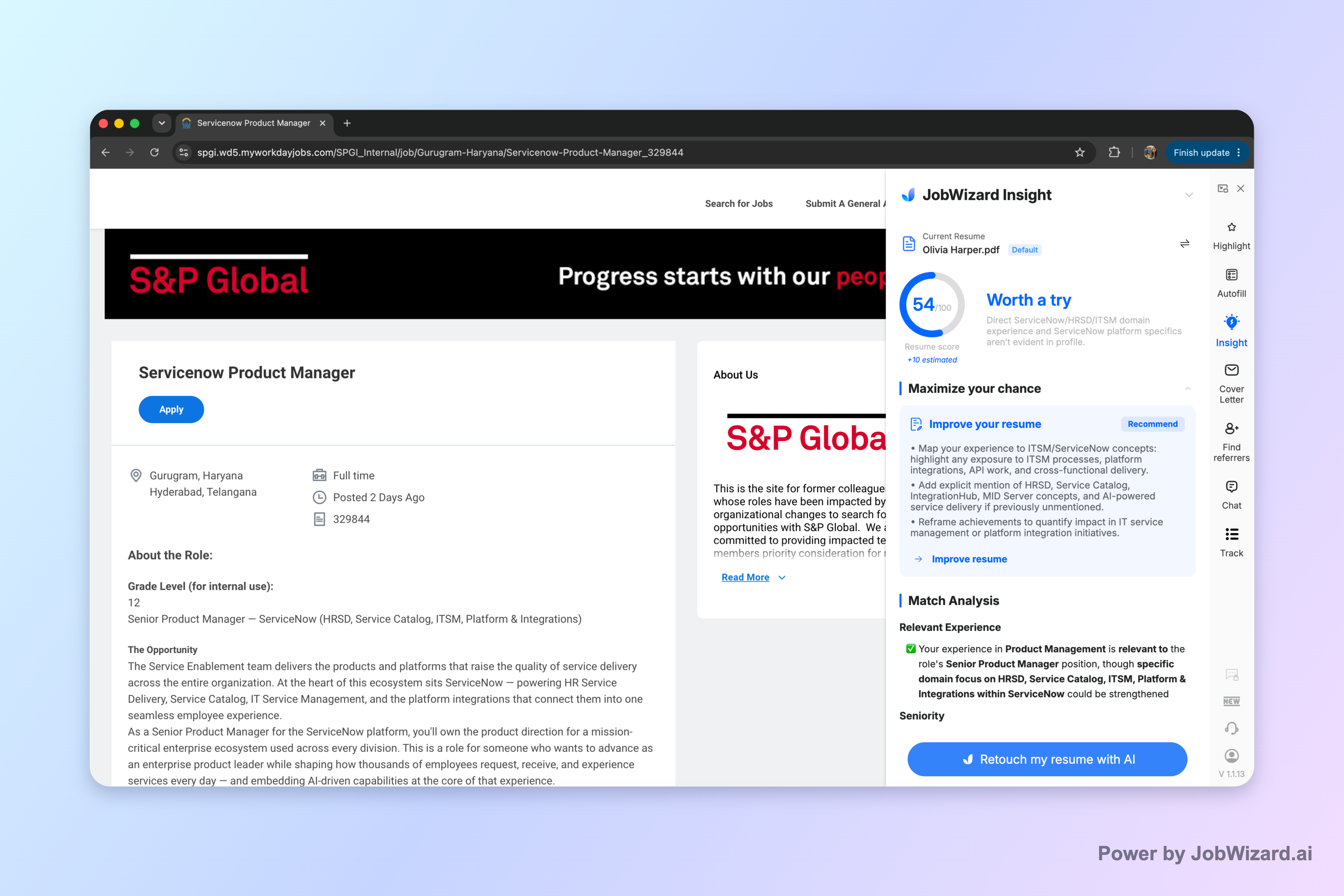
JobWizard’s Insight / Match Score can compare your selected resume with the current job description and present a match score, an overall assessment, and improvement suggestions. It can also identify resume expression gaps and turn them into an editable resume revision draft—so you can review the changes and keep only what’s accurate.
Limitations to keep in mind: The score is not a hiring probability and does not guarantee ATS passage or an interview. You must verify every suggested resume change and keep only accurate experience.
How to use the diagnosis effectively:
- Look for missing expression (you did the work, but didn’t use the role’s phrasing).
- Check for missing context (scope, stakeholders, delivery method).
- Apply edits to the sections that matter most for management keywords resume tailoring: summary, core skills, and the top 2–4 bullets under your most relevant leadership role.
Where to place management keywords on your resume (so they read naturally)
Management keywords are most effective when they’re placed in the right resume sections. This helps recruiters and screeners quickly see the leadership profile you’re presenting.
| Resume section | What to include | Management keywords resume placement tip |
|---|---|---|
| Headline / summary | Leadership role + scope + style | Use 2–3 management keywords that match the job’s responsibilities (people, operations, or program delivery). |
| Core skills | Keyword clusters | Group terms: “People Leadership,” “Stakeholder Management,” “Operational Excellence.” Keep it readable. |
| Experience bullets | Proof + context | Write bullets where the keyword is part of the sentence (what you did, who was involved, what changed). |
| Projects (if relevant) | Delivery leadership language | When the job emphasizes programs/projects, add delivery-specific keywords and ownership. |
| Education / certifications | Only if management-relevant | Include credentials if they support operational leadership requirements in the job posting. |
Common mistakes (and the fixes)
- Keyword dump at the bottom: If your resume ends with a list of leadership terms, it often reads like filler. Fix: move keyword clusters into skills and meaningful bullets.
- Overclaiming: Never use keywords for experience you can’t substantiate. Fix: swap the keyword for a closer, truthful responsibility.
- Wrong leadership focus: Some roles are people-management heavy; others are operations or program delivery heavy. Fix: prioritize the management keyword categories that mirror the posting’s responsibilities.
- Too few details: A bullet like “improved processes” is vague. Fix: add scope, method, stakeholders, and the type of improvement (quality, cycle time, reliability, compliance—only if accurate).
Management keywords resume checklist you can use before you apply
Use this checklist to align your resume to the specific job. The goal is to improve clarity, not to sound scripted.
- Responsibilities alignment: Do your top experience bullets reflect the job’s actual responsibilities (not just your previous title)?
- Qualification alignment: Did you mirror qualification keywords that describe the required management behaviors?
- People vs. operations vs. program: Is your resume emphasizing the same leadership type as the posting?
- Stakeholder language: Are you using terms that show who you worked with (cross-functional, executive stakeholders, partners)?
- Leadership proof: For each management keyword you use, can you point to an accurate bullet that demonstrates it?
- Natural writing: Do the keywords appear in context—without sounding like you copied-and-pasted?
- Revision sanity check: If you generated edits with an ATS-focused workflow, did you verify every suggested change and keep only accurate experience?
If you want a faster, more systematic way to compare your resume and the job description, open the target role and review its responsibilities, qualifications, and keywords before applying—then revise your resume based on the actual gaps you find.
Do this automatically with JobWizard
Skip the manual work — JobWizard's Match Score handles this for you.
FAQs about management keywords resume tailoring
What are management keywords for a resume?
Management keywords are the specific words and phrases job descriptions use for leadership and oversight—such as “cross-functional,” “stakeholder management,” “performance management,” “process improvement,” “hiring,” “budgeting,” and “operational excellence.” Use them only where you can back them up with accurate examples from your work history.
How do I choose the right management keywords without keyword stuffing?
Start by pulling the role’s exact responsibilities and qualifications from the job description, then choose keywords that match your real experience. Write leadership achievements using your own wording, and weave the keywords into sentences where they naturally describe what you did (scope, results, stakeholders, tools, and outcomes you can verify).
Should I use the same management keywords for every management job?
No—management roles vary by function (people leadership vs. project/operations), seniority, and domain. Use a repeatable process: scan each job’s responsibilities and qualifications, select the overlapping management keywords you truly match, and revise only the sections that need alignment (summary, key skills, and the most relevant bullets).
How can an ATS tool help with management keywords resume tailoring?
An ATS-focused workflow can compare your resume against the current job description, identify expression gaps (where your experience is accurate but not phrased similarly), and produce an editable draft revision. You still need to verify every suggested change so it stays truthful and specific to your experience.
Do management keywords guarantee I’ll get an interview?
No. Match signals help your resume align with job requirements, but they do not guarantee ATS passage or a hiring decision. The goal is to make your experience easy to recognize and evaluate, while you keep the content accurate and compelling.
Ready to tailor faster? Open the target job description, review its responsibilities, qualifications, and keywords, then compare your resume to that specific posting to identify expression gaps you can fix confidently—using JobWizard’s JD Highlights and Insight to tighten your management keywords resume story before you apply.
Frequently Asked Questions
See your resume's match score for any job
JobWizard compares your resume to each job description and shows the exact keywords to add — free.