Keywords for Electrical Engineer Resume: 35 ATS-Ready Terms to Match Real Job Requirements
Learn keywords for electrical engineer resume success by mapping your skills to job description requirements—then validate with JobWizard Insight and JD Highlights before you apply.
Free Chrome extension
See your resume's match score for any job
JobWizard compares your resume to each job description and shows the exact keywords to add — free.
Keywords for electrical engineer resume: pick terms that mirror the job description, not generic “ATS hacks”
When hiring managers and ATS screening tools scan a resume, they’re looking for evidence that your experience matches the keywords for electrical engineer resume in the job requirements. The fastest way to improve relevance is to start from the posting’s responsibilities and qualifications, then translate them into your own resume language.
If you’ve ever tailored a resume by swapping in a few skills and wondered why you still didn’t hear back, it’s usually because the resume didn’t align at the “requirement” level. In other words, your resume must read like you can do the job—not just like you’ve heard of the technologies.
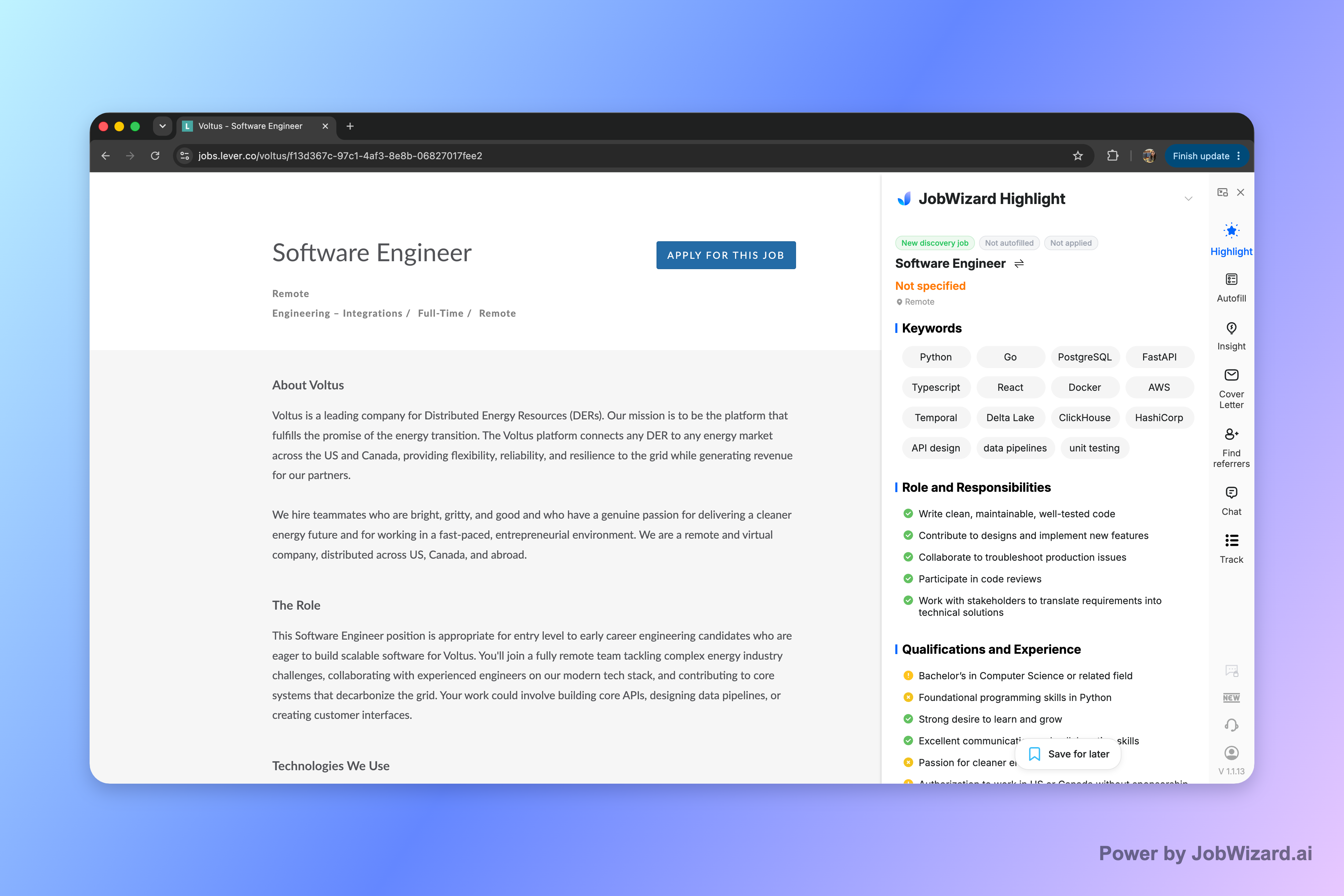
JobWizard can help you map a job description into keywords, responsibilities, and qualifications so you can review requirements in a structured way before you update your resume.
Turn the job posting into your keyword list using JD Highlights-style workflow
Effective keywords for electrical engineer resume selection starts with the job description’s language. Treat it like a checklist: responsibilities become action-oriented bullets on your resume, while qualifications become skills, tools, standards, and domains you can prove.
Use this simple workflow:
- Extract the job’s key phrases from the “responsibilities” and “requirements/qualifications” sections.
- Group them into buckets (for example: power systems, circuit design, validation/testing, documentation/standards, embedded/controls).
- Translate each bucket into resume bullets using your real work (tools, methods, and scope).
- Verify every change—keep only accurate experience in your final resume.
JobWizard organizes the job description into a structured view of key requirements, which makes the rest of the process less guesswork. Don’t aim for “more keywords”—aim for clear alignment to what the role asks you to do.
What to extract (and what to ignore)
Extract terms that describe: what the engineer builds, tests, analyzes, or maintains; the standards used; the documentation expected; and the environments the role operates in. You can also extract “soft requirements” if they’re concrete (for example, “cross-functional collaboration” becomes bullets about working with firmware, mechanical, or manufacturing teams).
Ignore vague buzzwords that aren’t tied to a requirement. If a posting says “team player” but doesn’t mention any collaboration context, you don’t need to add filler phrases. Your resume should support specific capabilities that match the job’s stated needs.
Keyword buckets you should expect in electrical engineering postings
- Design: schematic, PCB layout, circuit design, power conversion topology, control logic, embedded integration.
- Analysis: simulation, signal integrity, thermal analysis, reliability modeling, tolerance/derating.
- Validation & testing: bench testing, characterization, instrumentation, troubleshooting, compliance testing.
- Systems & domains: power systems, power electronics, motor drives, energy storage, industrial controls, avionics (if applicable).
- Standards & documentation: design control docs, test plans/procedures, verification/validation, engineering change management.
- Tooling: CAD/EDA, SPICE/simulation tools, MATLAB/Simulink, instrumentation and data analysis workflows.
35 practical keywords for electrical engineer resume (grouped by real requirements)
Below are keywords for electrical engineer resume that commonly appear across job descriptions. Use them as a menu: include only the ones you can support with accurate, verifiable experience.
Pro tip: prioritize the terms that match the job’s responsibilities first. Skills lists help, but ATS alignment is strongest when your bullet points use requirement language naturally.
1) Electrical design & hardware build (use when you actually designed or laid out)
- schematics
- PCB design
- PCB layout
- circuit design
- signal routing
- impedance matching
- design for manufacturability (DFM)
- design for test (DFT)
- component selection
- power stage design
2) Power systems & power electronics (use for power-related roles)
- power distribution
- power electronics
- power conversion
- DC-DC conversion
- AC-DC conversion
- inverter design
- motor drive systems
- protection circuits
- efficiency optimization
- thermal management
3) Embedded, controls, and interfaces (use if the role includes control logic)
- embedded systems
- control systems
- feedback control
- PID control
- signal conditioning
- communication interfaces
- data acquisition
- firmware integration
- HIL (hardware-in-the-loop)
- real-time systems
4) Simulation, analysis, and verification (use when you validated design behavior)
- SPICE simulation
- circuit simulation
- system modeling
- thermal analysis
- signal integrity
- tolerance analysis
- reliability considerations
- derating
- performance modeling
- root cause analysis (RCA)
5) Testing, instrumentation, and troubleshooting (use when you did bench or field validation)
- test plan
- test procedure
- characterization
- bench testing
- oscilloscope
- multimeter
- data logging
- instrumentation
- troubleshooting
- failure analysis
6) Documentation, quality, and cross-functional work
- engineering documentation
- design documentation
- verification & validation (V&V)
- requirements traceability
- engineering change management (ECM/ECN)
- test reports
- technical reports
- cross-functional collaboration
- stakeholder communication
- compliance support
Example: rewrite a bullet to include requirement-level keywords (without stuffing)
Before: “Worked on power electronics and performed testing.”
After: “Designed and verified DC-DC conversion circuits; ran bench tests with instrumentation to characterize efficiency and troubleshoot deviations.”
The “after” bullet uses requirement categories (design + validation/testing) and includes concrete keyword terms that match typical postings. That’s what makes keywords for electrical engineer resume effective: relevance plus specificity.
Use Insight-style matching to find expression gaps (and draft revisions)
After you choose your keywords, you still need to make sure your resume wording actually reflects the job description’s requirements—this is where matching tools help. JobWizard Insight compares your resume with the specific job description and provides a match score, an overall assessment, and improvement suggestions.
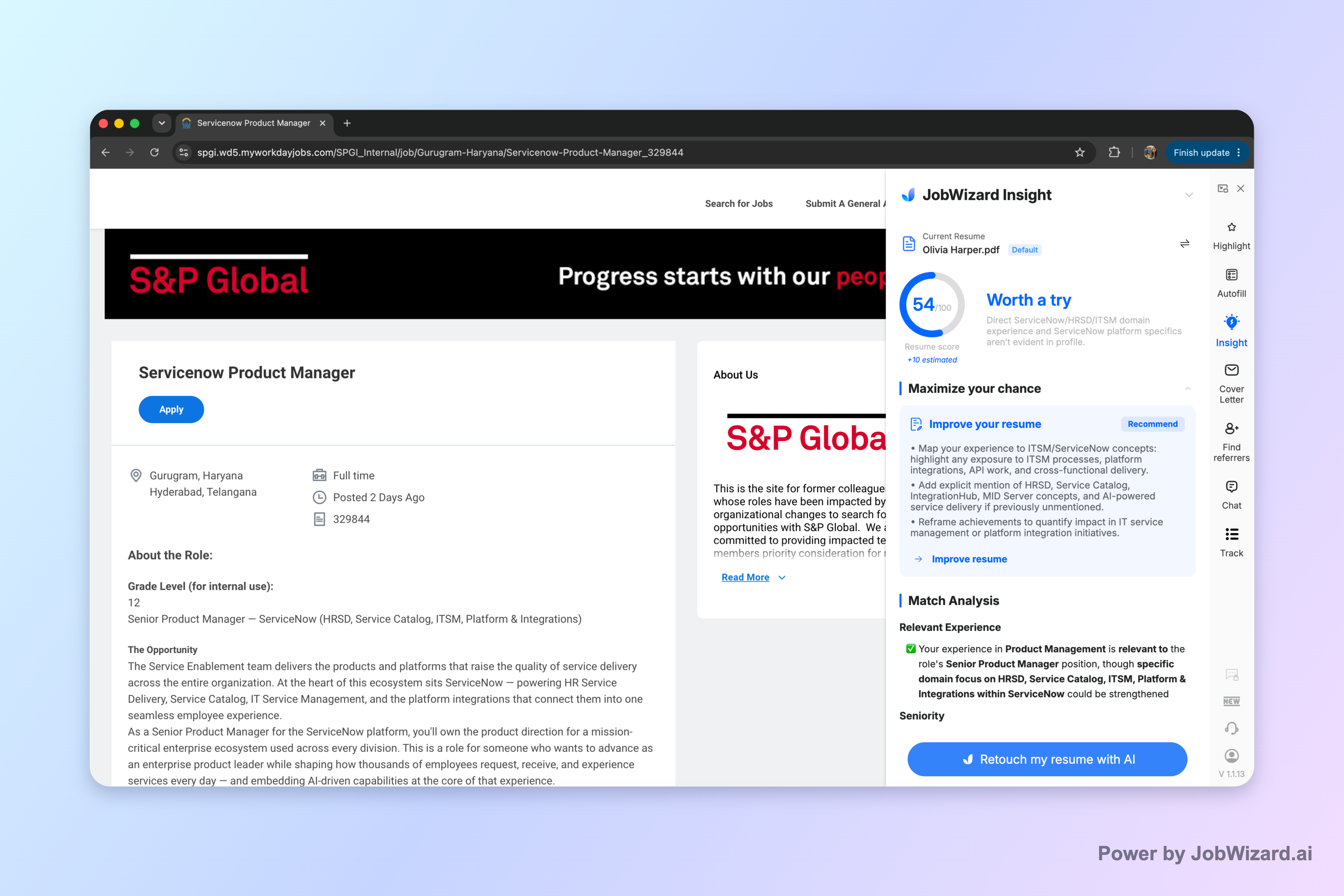
Insight can identify resume expression gaps and turns them into an editable resume revision draft, so you can focus on what to change rather than staring at your resume wondering what’s missing.
Important: a match score is not a hiring probability, and it doesn’t guarantee ATS passage or an interview. You still must verify every suggested resume change and keep only accurate experience.
What “expression gaps” usually look like
- Your resume mentions “power systems,” but the job asks for “power distribution” or “protection circuits.”
- Your bullets list tools, but the posting emphasizes “test plan” and “verification/validation” documentation.
- Your experience is strong, but the wording doesn’t clearly connect design work to validation outcomes.
How to apply suggested changes safely
When a tool generates draft language, treat it like a starting point. Confirm that:
- The scope is accurate (what you personally owned vs. what you supported).
- The tools/standards are correct (don’t assume you used a tool just because your team did).
- The keyword appears in context (paired with an action you performed).
This keeps your resume credible—especially for electrical engineering roles where hiring teams expect technical precision.
Common keyword mistakes that quietly hurt electrical engineering resumes
The goal is alignment, not keyword volume. These common mistakes prevent keywords for electrical engineer resume strategies from working even when you’ve picked “the right skills” on paper.
1) Keyword stuffing without responsibility-level evidence
If your resume lists “signal integrity” but your bullets don’t describe any analysis, validation, or troubleshooting activity tied to it, the keyword feels hollow. Add evidence: what you analyzed, what method you used, and what you improved.
2) Using only broad categories
“Power electronics” is real, but many postings also include narrower requirements like “DC-DC conversion,” “inverter design,” or “thermal management.” If your experience supports it, include the narrower terms to better match requirements.
3) Ignoring documentation and verification language
Electrical engineering resumes often miss the “paper trail” side of the job: verification & validation, test plans, test reports, requirements traceability, and engineering change management. If those appear in the job posting, reflect them with documentation-focused bullets.
4) Copying job descriptions verbatim (and risking inaccuracies)
Copy/paste can be a problem because it may introduce claims you didn’t do. Instead, mirror the intent and write bullets in your voice while keeping the meaning accurate. If a matching tool flags expression gaps, review its draft suggestions before you adopt them.
Do this automatically with JobWizard
Skip the manual work — JobWizard's Match Score handles this for you.
FAQ: Keywords for electrical engineer resume
Which keywords for electrical engineer resume matter most for ATS?
Start with the exact words from the job description for responsibilities and qualifications—then add closely matching variants only when they’re true to your experience (e.g., “PCB design” vs. “PCB layout,” “power distribution” vs. “distribution systems”). Avoid stuffing; ATS systems mainly look for alignment between your resume text and the posting’s requirements.
How do I pick electrical engineering keywords if I don’t have every requirement?
Prioritize keywords tied to your strongest, most recent work: responsibilities you actually performed and tools you used. For gaps, you can still include nearby keywords if they’re accurate (e.g., “testing” and “instrumentation” if you supported validation), but keep sponsorship, EEO, and salary or custom questions for your own verified answers.
Should I copy the job description keywords verbatim onto my electrical engineer resume?
Use the wording as a guide, not a copy-paste script. Mirror the intent (what you did, with what tools, and what results you can support) while keeping the phrasing accurate to your experience. If JobWizard Insight flags expression gaps, treat its suggestions as draft language to review—not something to submit without verifying.
How can JobWizard help me tailor keywords for an electrical engineer resume?
JobWizard JD Highlights organizes a job description into keywords, responsibilities, and qualifications so you can review the requirements systematically. Then JobWizard Insight compares your resume with the specific job description and provides a match score plus an editable revision draft focused on gaps—so you can update your resume and still verify every change.
What’s the best way to structure a resume section around keywords for electrical engineering?
Build sections that naturally support keyword alignment: a targeted “Core Skills” list (tools, standards, and domains), a “Technical Experience” section that maps each role to the job’s responsibilities, and a “Projects / Selected Work” section for specific systems (e.g., power electronics, embedded control, PCB design). Use bullet points that reference the same categories the job posting uses, then confirm your wording with JD Highlights and Insight.
Ready to apply the keywords for electrical engineer resume approach to a specific job? Open the target role, review its responsibilities and qualifications using JD Highlights, then compare your resume with the job description in Insight to find gaps and draft precise updates you can verify before submitting with confidence.
Frequently Asked Questions
See your resume's match score for any job
JobWizard compares your resume to each job description and shows the exact keywords to add — free.