How to Answer Visa Sponsorship Question Without Sounding Unprepared (Use This Script + Follow-Ups)
Learn how to answer the visa sponsorship question with clear, credible language and smart follow-ups—without oversharing. Includes scripts you can copy and tailor.
Free Chrome extension
Let AI answer these questions for you
JobWizard fills sponsorship, work-auth, and availability answers correctly on every application — free.
Visa sponsorship questions can feel like a trap: one vague sentence and you risk sounding unprepared, but one too-detailed answer can create unnecessary friction. This guide shows how to answer visa sponsorship question prompts with clear wording, the right level of detail, and follow-up questions that keep you in the “serious candidate” lane.
If you’ve ever wondered whether you should confirm your status, name a specific visa, or push the topic into a later conversation, you’re in the right place. You’ll also get copy-and-paste scripts for the most common application phrasing, plus a quick review checklist before you submit.
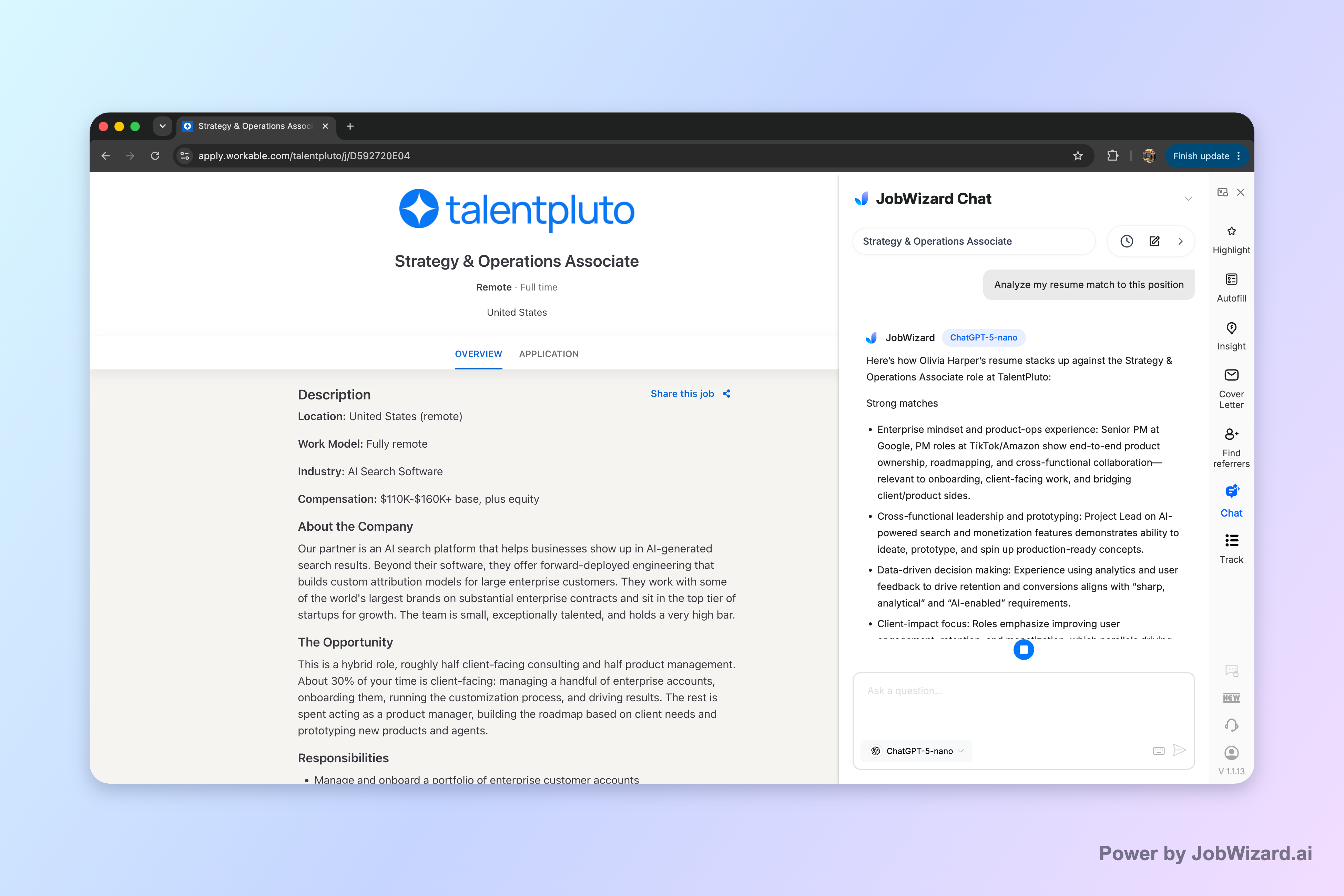
When you prepare your application answers, you still want them to match the job and role context. JobWizard’s Career Chat keeps the current role in context so you can ask follow-up questions about resume fit and your application strategy without re-pasting the job description.
Answer the visa sponsorship question by separating “today” from “going forward”
The fastest way to write a strong answer is to split it into two parts: your current work authorization and whether you’ll need visa sponsorship in the future. Most prompts are trying to understand planning risk, not your life story.
Here’s a simple formula you can use on almost any form:
- Today: confirm whether you currently have authorization to work for that employer/location.
- Future: state whether you will need sponsorship to continue employment if you’re hired.
- Close: offer a short, professional line about being able to provide documentation if required.
Example structure (customize to your facts): “I am authorized to work (currently). If selected, I may require visa sponsorship to continue employment.” This reads confident and avoids speculation.
Copy-ready scripts for the most common visa sponsorship application prompts
Use scripts that match the exact wording of the prompt. Small differences in phrasing—“now or in the future,” “will you require,” “current and future”—change what you should emphasize.
Below are practical answers you can adapt. Keep each one short enough to stay readable in a form field.
Prompt: “Do you now or will you in the future require sponsorship for employment authorization?”
- If you don’t need sponsorship now and don’t expect to later: “No. I do not require sponsorship for employment authorization now or in the future.”
- If you’re authorized now but will need sponsorship later: “Not at this time. However, I will require visa sponsorship in the future to continue employment.”
- If you require sponsorship immediately: “Yes. I require visa sponsorship to work for the employer if selected.”
Prompt: “Will you now or in the future require visa sponsorship?”
- Authorized now; sponsorship later: “No for now, but I will need visa sponsorship in the future to continue employment.”
- Sponsorship needed if hired: “Yes. If selected, I will require visa sponsorship.”
Prompt: “Are you currently authorized to work in the United States?”
- Yes: “Yes, I am currently authorized to work in the United States.”
- No (but may become authorized through employer sponsorship): “No. Authorization would be possible through employer sponsorship if I’m selected.”
Prompt: “Will you require sponsorship now or later?” (short variations)
- If future sponsorship is required: “I’m authorized to work currently, but I will require sponsorship in the future.”
- If sponsorship is required immediately: “Yes. I would require sponsorship if selected for this role.”
Tip: Don’t “over-answer” the form. If the field doesn’t ask for timing details, skip them. You can offer to discuss specifics later after you know the role is a strong match.
Decide whether to name your visa type (and how to phrase it)
Whether to mention a specific visa type depends on the form and how much precision the recruiter expects. Your goal is clarity without extra risk—especially when you’re not being asked for technical detail.
When naming a visa type can help
- The application explicitly asks for the visa type.
- The form requests details that are hard to interpret without specifics.
- You already have a clean, accurate, employment-focused explanation you can state briefly.
When it’s better to keep it general
- The prompt is general (“sponsorship required”) and doesn’t ask for types.
- You’re worried that naming a visa type might lead to assumptions about timing.
- You can communicate what matters—authorization now vs. sponsorship later—without adding technical language.
Example general phrasing: “If selected, I may require visa sponsorship to continue employment.” This communicates the planning reality without inviting an unnecessary deep dive in a one-line field.
If you want a deeper approach for applicants who already have a specific status, use this guide on how to answer sponsorship questions if you already have an H-1B.
Use smart follow-ups to stay professional—without making it sound like a demand
The best follow-up questions clarify process and timing while keeping the relationship cooperative. Think “help me understand your process”, not “prove you’ll sponsor.”
After you submit (or during later interview stages), you can ask questions that demonstrate readiness and reduce ambiguity:
- Process: “If I’m selected, what are the next steps for visa sponsorship?”
- Fit and timing: “Are there timing considerations I should plan for regarding employment authorization?”
- Documentation: “What documentation do you need from me to support the process?”
- Role continuity: “Is sponsorship something that’s supported for this type of role?”
These questions keep you credible and respectful of their workflow. And they give you a chance to confirm whether the role’s planning assumptions match your reality.
Key principle: Keep your application answer simple, then use questions later to confirm details. This prevents oversharing in a form while still addressing the concern recruiters are trying to solve.
If you’re also refining your overall application quality, use this complete method for answering job application questions so your visa response fits the rest of your story instead of standing alone.
Do this automatically with JobWizard
Skip the manual work — JobWizard's Smart Autofill handles this for you.
FAQ: How to answer visa sponsorship question for forms and interviews
What should I say if the application asks, “Will you now or in the future require visa sponsorship?”
Use a direct, status-specific sentence: confirm your current status and whether you’ll need sponsorship going forward (e.g., “I will need visa sponsorship in the future,” or “I don’t require sponsorship at this time,” if that’s accurate). Then add one short line about your timeline or ability to work once hired.
Should I mention my specific visa type (H-1B, O-1, etc.) when answering?
Usually, you can mention the visa type only if the form expects it or if it helps the recruiter understand the exact support you’ll need. If the prompt doesn’t ask for details, you can keep it general (e.g., “I may require sponsorship”) and offer to share specifics later.
How do I answer if I’m not sure whether sponsorship will be needed?
If you’re genuinely uncertain, don’t guess. Say what you know now (your current work authorization) and explain that sponsorship needs depend on timelines or future eligibility. You can also add that you’re happy to discuss requirements once the process starts.
What follow-up questions should I ask after submitting my application?
Ask questions that clarify process and fit: “If I’m selected, what are the next steps for visa sponsorship?” and “Do you sponsor for this role, and are there timing considerations I should plan for?” Keep the tone professional and avoid pressuring for an immediate commitment.
How can I avoid sounding negative or oversharing in my visa sponsorship answer?
Avoid apologizing, complaining, or leading with limitations. Keep the answer to two parts: (1) your current status and (2) whether you will need sponsorship going forward. Finish with a calm, competency-focused line like “I’m prepared to provide any documentation required for the process.”
Before you submit: a 60-second review checklist
Even a great script can lose clarity if it conflicts with your resume, dates, or other answers on the form. Do a fast consistency check so your visa sponsorship answer matches the rest of your application.
- Confirm accuracy: “Today” and “future” statements must be factually correct.
- Match the prompt: Don’t answer a “visa sponsorship” question using a “work authorization” detail that doesn’t align.
- Keep it brief: If it’s a form field, prioritize clarity over explanations.
- Check tone: Neutral and professional beats apologetic or confrontational.
- Prepare an interview line: If asked verbally later, you should be able to summarize in one sentence.
If you’re looking to strengthen other application answers or interview follow-ups too, you may also find these helpful: this framework for the “How did you hear about us?” question and this STAR+ approach for behavioral questions you can actually defend.
One more thing: If you use AI to draft or refine your wording, still review it before you submit. The goal isn’t to “auto-skip thinking”—it’s to help you produce a polished, accurate answer you’d be comfortable defending.
JobWizard CTA: Want help tightening your application answers without losing control? Use JobWizard to autofill the repetitive fields fast, then review before submitting—and ask a focused follow-up in Career Chat about your role fit and how to align your responses with the job description.
Frequently Asked Questions
Let AI answer these questions for you
JobWizard fills sponsorship, work-auth, and availability answers correctly on every application — free.