Co Pilot Vacancy? Avoid Bot-Apply Mistakes—Use JobWizard to Review & Submit Yourself
Searching for a co pilot vacancy and thinking about an auto-apply “co-pilot” tool? Learn what goes wrong when a bot submits—then use JobWizard to autofill and review before you submit.
Free Chrome extension
Autofill your next job application
JobWizard is a free Chrome extension that fills applications, tracks statuses, and optimizes your resume.
Co pilot vacancy “co-pilot” tools can backfire when they submit for you—here’s why
When you’re hunting a co pilot vacancy, it’s tempting to use an auto-apply “co-pilot” that fires off applications with minimal effort. But the problem with bot-style submission is simple: you can’t reliably ensure the answers match the role, your background, and the employer’s requirements.
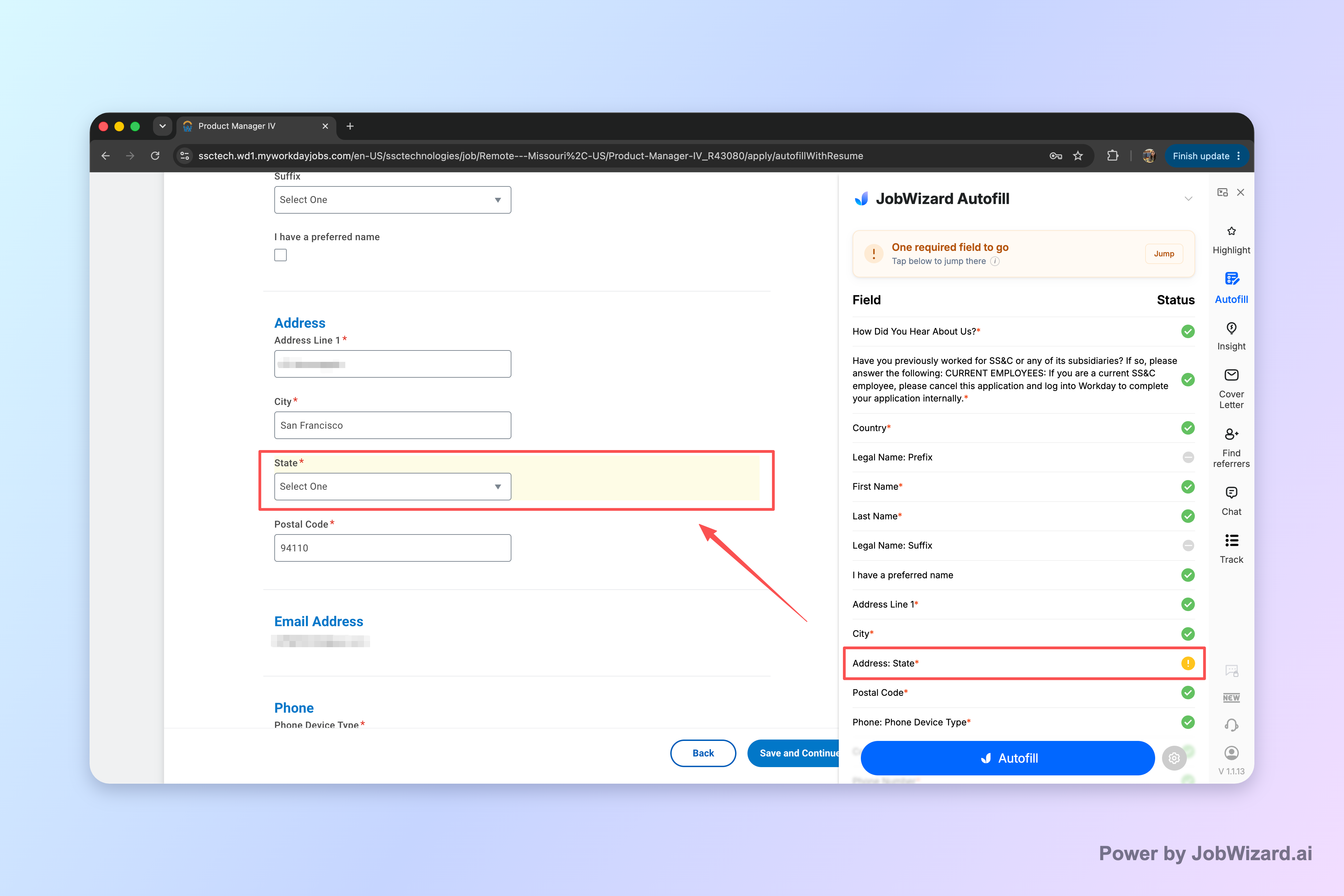
In practice, wrong answers to screening questions, mismatched resume content, or inconsistencies across EEO/work-authorization prompts can trigger rejection. Worse, some employers have automated defenses that detect “application patterns” that look like spam—so even if the intent is legitimate, you may pay for a speed mistake.
The safer approach: fill in seconds, then check and submit yourself. JobWizard is built for that exact workflow—autofill the repetitive fields while you’re on the application, then you review-before-submit.
What goes wrong when a bot submits your application for a co pilot vacancy
Bot submission fails in predictable places—especially on forms built to confirm fit. If a tool can’t “think” through your specific circumstances, it has to guess, and guesses are exactly what screening systems look for.
- Wrong screening answers: Many “pilot-adjacent” roles (and adjacent aviation/dispatch/co-pilot support roles) include role-specific eligibility, availability, and scenario-based questions. A bot can misread requirements or select an option that’s close—but not correct.
- Resume mismatches: Even when a resume is uploaded, a form may ask for specific experience ranges, certifications, or systems knowledge. If the filled fields don’t align with what your resume actually says, your application can look careless.
- Custom questions get mishandled: Employers often include open-ended or structured prompts (e.g., “Describe relevant experience” or “List equipment familiarity”). If a tool uses the wrong version of your background—or leaves blanks—you may be filtered out before a human even reviews.
- Employer-side spam filters: Automated submission patterns can trip defenses designed to stop low-quality traffic. Even legitimate applicants can get caught when the “volume + timing + content similarity” looks suspicious.
- Reputation damage with a real employer: If you submit a flawed application to a company you actually want, you’re not just wasting one shot. You’ve also created a paper trail that may influence how recruiters view future applications.
None of this means every tool that automates must be unethical or malicious—it’s just a trade-off. The more a workflow runs without you watching what’s being sent, the more room there is for misalignment between what the employer asked and what you truly offer.
Use autofill as a draft accelerator: fill in seconds, then review-before-submit
The best way to apply faster without creating avoidable errors is to treat autofill like a draft generator, not an autopilot. You keep control of the final answers—exactly where the application quality lives.
JobWizard’s approach: it autofills an application the user is already on, then the user reviews and submits. It never submits by itself, never mass-applies, and never applies while the user is away—so the “final mile” stays with you.
That workflow matters for a co pilot vacancy because the difference between “considered” and “rejected” often comes down to small form details. When you’re reviewing manually, you can correct the screening questions that matter, confirm that the right resume is selected, and ensure custom questions reflect your real experience.
Why review-before-submit is the practical safety net
Autofill can reduce repetitive typing—names, dates, addresses, employment history fields—so your time goes toward the parts that require judgment. That’s where you verify fit, not just completeness.
- Confirm screening choices: If the form asks about availability, eligibility, or scenario preferences, scan each response and edit anything that isn’t an exact match.
- Validate resume alignment: If the employer asks for specific systems, ratings, or experience duration, cross-check your selections against your resume content.
- Rewrite custom answers in your voice: Even if autofill helps, tailor any open-ended responses so they’re accurate and specific.
JobWizard usage shows that applicants typically rely on autofill for repetitive fields and still review-before-submit—720,000+ applications submitted and 600,000+ autofill sessions run through JobWizard, with an average of ~18 repetitive fields autofilled per application.
Where it helps most (and why that matters for co-pilot-style roles)
Many job sites use long, structured forms that repeat the same identity and history details. That repetitive portion is where autofill tends to deliver the most value—especially during high-volume search weeks.
JobWizard autofills applications across common ATS platforms, including Workday (~65% of submitted applications), Greenhouse (~19%), Ashby (~12%), and Lever (~4%). Workday is where it saves the most time.
If you’re applying for a co pilot vacancy and juggling multiple listings, that time saved can go into review and tailoring rather than faster clicking that increases error risk.
Spot the “bot-apply” warning signs before you use any automation
If you’re considering an auto-apply tool for a co pilot vacancy, sanity-check the workflow against what can go wrong. A good rule: if you can’t easily see and verify what will be submitted, you’re making quality harder, not easier.
Look for these warning signs:
- It submits without your active review: If the process can complete submission while you’re not looking, you lose control over screening questions and custom prompts.
- It doesn’t clearly separate autofill from final review: You want a workflow where repetitive fields are filled quickly, but your final “yes/no” decisions are yours.
- It encourages speed at the expense of tailoring: If your answers become generic, you’ll likely lose to employers who filter for specificity.
- It obscures what it chose: If you can’t confirm what it selected for resume-related fields and eligibility questions, treat it as a risk.
To be fair, many job seekers use automation because forms are tedious and time-consuming. The real issue isn’t the desire to save time—it’s when automation runs past the point where you must verify correctness.
A fair comparison mindset (without overselling)
Different tools optimize for different goals. Some products focus on locating roles or scanning fit; others concentrate on application workflows. For this article’s intent, the key differentiator is whether you review before submission.
JobWizard is aligned with review-before-submit: you stay in control of the final answers, and autofill handles repetitive fields while you’re on the application.
A practical “co pilot vacancy” application checklist you can run in minutes
Here’s a tight workflow for applying quickly while protecting accuracy when you’re targeting a co pilot vacancy.
- Open the listing: Go to the employer’s application page so you’re filling the exact form they will evaluate.
- Autofill repetitive fields: Use JobWizard to populate the common identity and history sections.
- Do a screening pass: Scan every screening question and confirm each response matches your real qualifications and constraints.
- Confirm document alignment: Check that the resume you’re effectively representing matches the role-specific questions on the form.
- Tailor custom questions: Replace generic answers with accurate, role-relevant details in your voice.
- Review for consistency: Make sure employment dates, eligibility/EEO answers, and experience claims don’t contradict each other.
- Submit yourself: Only after the above checks are correct.
This keeps the speed benefits of autofill without turning your search into a “trust the machine” experiment—especially important when you’re applying to companies you genuinely want.
If you want to get more applications out without sacrificing accuracy, this is exactly the job-to-be-done JobWizard supports: autofill + you review + you submit.
Ready to apply faster the safe way? Use JobWizard to autofill the repetitive fields on each application you’re actively viewing, then review everything before you hit submit.
Do this automatically with JobWizard
Skip the manual work — JobWizard's Smart Autofill handles this for you.
FAQ: co pilot vacancy and bot-apply risk
What’s the biggest risk when a bot applies to a co pilot vacancy for you?
The biggest risk is wrong or mismatched answers—especially for screening questions, employment eligibility, or role-specific requirements. A bot can’t verify your exact details, so it may submit information that’s incomplete, outdated, or inconsistent with your real background, which can hurt your chances with the employer.
How is JobWizard different from “auto-apply” tools for co pilot vacancy applications?
JobWizard autofills an application you’re already viewing, then you review the filled fields and submit yourself. It’s designed to speed up repetitive form entry without sending your application automatically while you’re away.
What can I do to prevent employer spam filters when applying to a co pilot vacancy?
Use a tool that helps you fill forms accurately without blind submission, and always review before you submit. Be especially careful with resume selection, work authorization/EEO answers, and custom questions—small inconsistencies can trigger employer-side rejection or spam-like heuristics.
Should I use autofill for a co pilot vacancy if the screening questions are long?
Yes—autofill can help, as long as you review every screening question carefully before submitting. Long questionnaires often contain details that must match your experience precisely, so treat autofill as a draft generator, not an end-to-end autopilot.
What’s a practical workflow for applying to a co pilot vacancy quickly but safely?
Open the listing, let JobWizard autofill the repetitive fields, then do a focused review pass: verify screening answers, confirm the right resume/cover letter, check role-specific requirements, and review any custom questions. When everything matches your real profile, submit yourself.
Frequently Asked Questions
Autofill your next job application
JobWizard is a free Chrome extension that fills applications, tracks statuses, and optimizes your resume.