Autoapplier Reviews: Why “Submit for Me” Backfires (and How to Review in Seconds)
Autoapplier reviews explain what goes wrong when a bot submits for you—wrong screening answers, resume mismatches, and spam-filter trouble—plus a safer alternative: fill, check, and submit yourself.
Free Chrome extension
Autofill your next job application
JobWizard is a free Chrome extension that fills applications, tracks statuses, and optimizes your resume.
Autoapplier reviews usually focus on “more applications,” but the real story is what happens when a tool submits for you before you can verify the details. When the form is sent automatically, even small mismatches—like a screening answer that’s slightly off—can turn a good opportunity into a silent rejection.
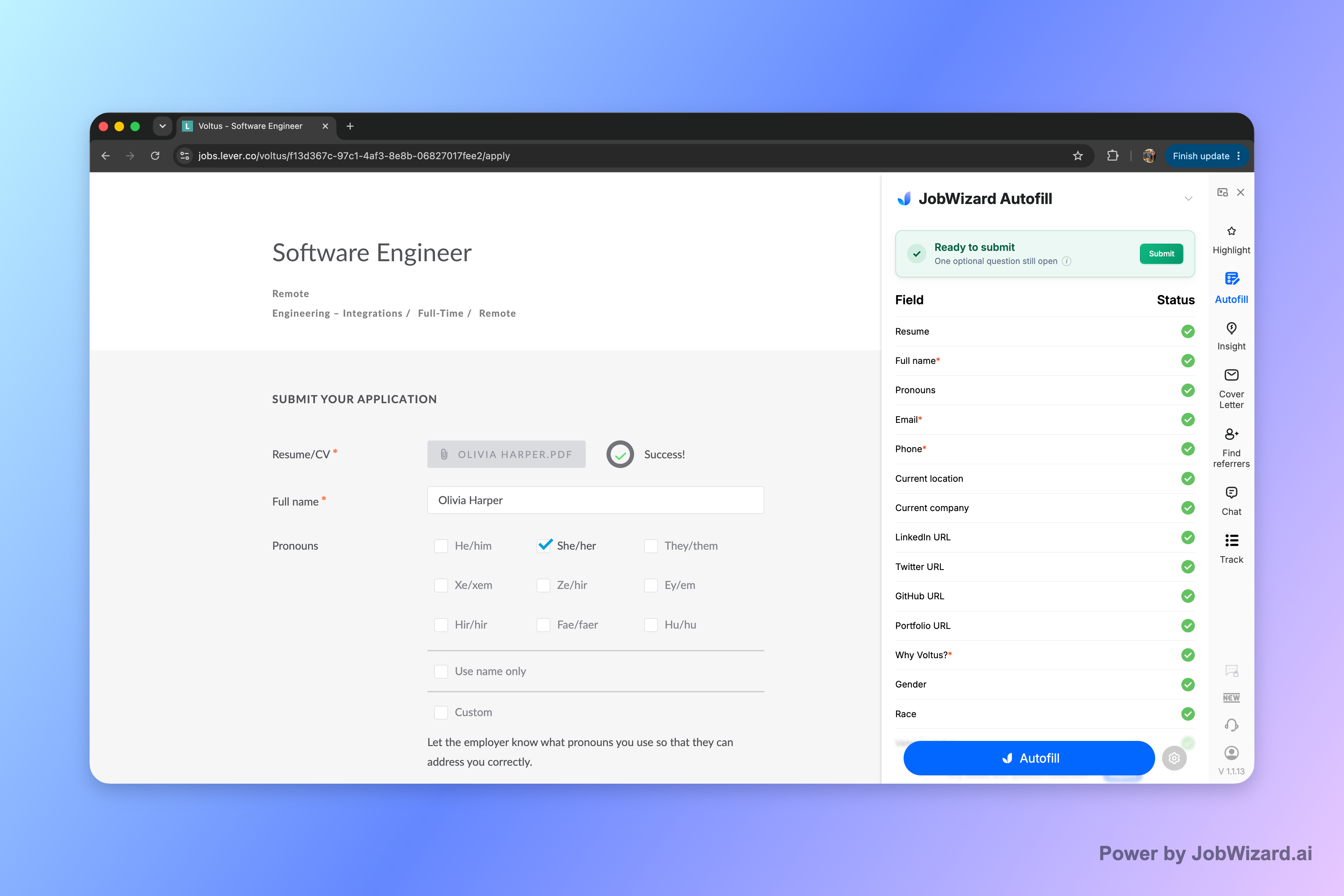
Job seekers want speed, but speed without review is a risk. The good news: you can still move fast by autofilling repetitive fields and then doing a tight, intentional “review-before-submit” pass—so you submit yourself, with accuracy you can stand behind.
Why autoapplier reviews are often negative: the bot can’t verify what matters
The core problem is simple: an auto-submit tool can’t think like a hiring team or reliably interpret every question the employer asks. Even when it fills most fields, it may guess on the parts that require context—so your application goes out with answers that don’t reflect your actual experience.
Here are the most common failure modes people call out in autoapplier reviews, with concrete examples of how they play out:
- Wrong answers to screening questions: A question like “Are you authorized to work in the U.S.?” may get a default or outdated selection. If you later update your status or preferences, an automatic submission can contradict the truth.
- Resume/experience mismatches: The application form might request a specific role history (“3+ years in X”), but the tool submits the wrong resume version or incomplete experience. Your work history can be accurate overall and still fail the exact filters.
- Inconsistent details across sections: Your application form might list one job title or date range, while your resume shows another. Screening systems often treat these inconsistencies as signal to route you away.
- Overly repetitive submission patterns: If a tool applies at scale with similar wording and fields, employer-side systems may flag behavior as automated. That doesn’t mean you’re “bad,” but it can lead to throttling or filtering.
- Custom questions left in a generic state: Many applications include open-ended questions about motivation, projects, or fit. If those are auto-generated or left generic, they can read like copy-paste rather than genuine interest.
One important nuance for autoapplier reviews: these issues aren’t always caused by “malice” or low-quality software. Many tools try to help, but job applications are too variable. The same company may ask different questions on different postings, and your background may fit one role more than another.
What goes wrong when a bot submits for you (even if it autofills “correctly”)
Auto-fill can make your workflow faster, but auto-submit changes the stakes. Once the application is sent, you’ve lost the chance to verify the details that determine whether your profile aligns with the role.
Consider what can go wrong in the exact flow of a typical posting—especially with screening and job-specific prompts.
1) Screening questions: the fastest path to rejection
Screening questions are often the first gate. They’re usually yes/no, multiple-choice, or require specific qualifiers. A small mismatch can happen when a tool interprets your experience too broadly or assumes the wrong detail.
- If you selected “Yes” to something you only partially meet, you may be disqualified automatically.
- If you selected “No” to something you actually do have, you may never reach a human review.
- If you’re asked about timing (“available to start within…”), an out-of-date answer can misalign you with scheduling needs.
2) Resume selection: “similar” isn’t “matching”
Even a great resume can be the wrong version for a specific job. Tools may attach a default resume when the posting calls for a targeted set of skills or a specific job title history.
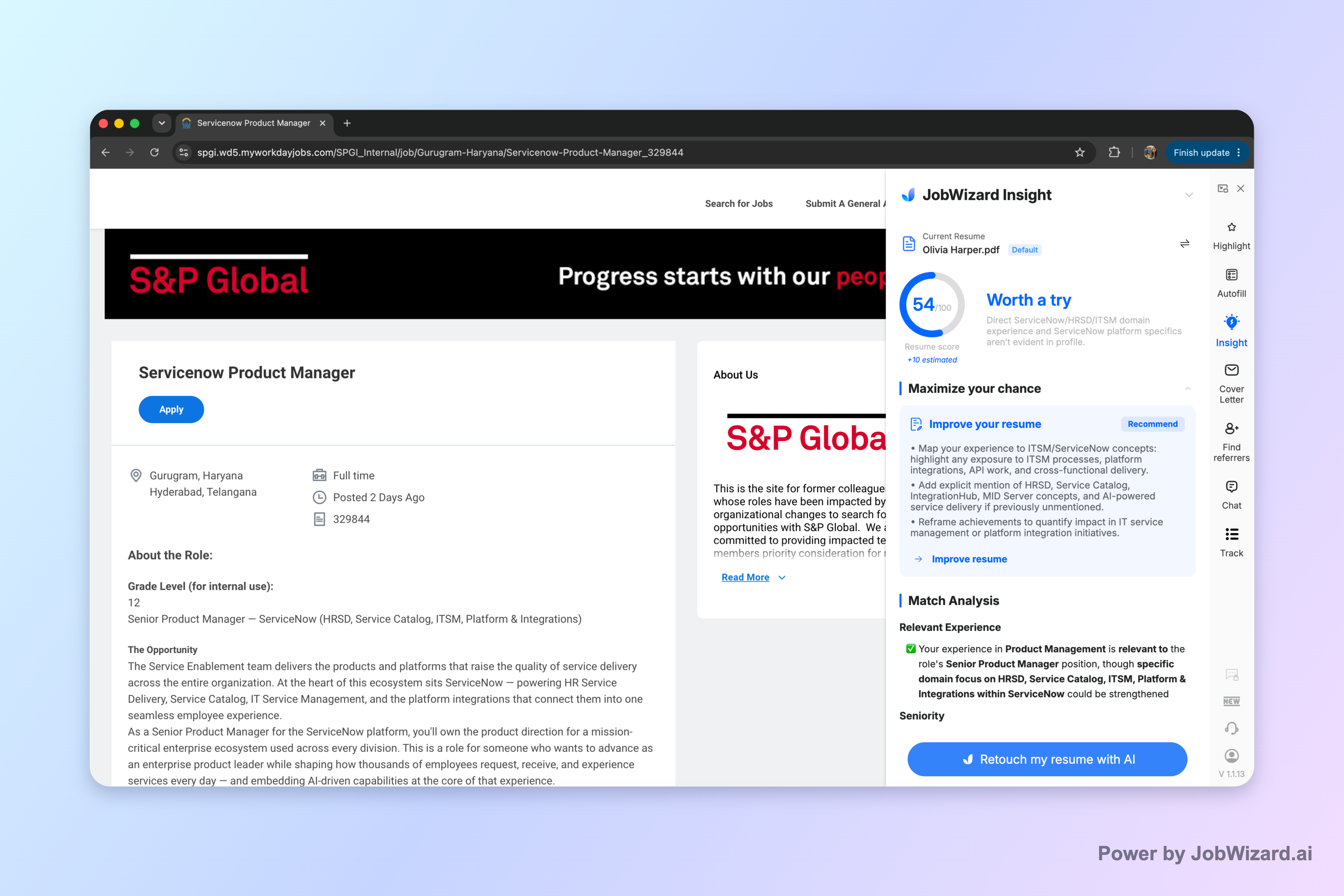
Resume mismatch shows up when the employer expects one specialization, but your submission highlights another. The hiring team may still like you—but if the application gets scored or filtered, you may be sorted out before they can reconsider.
3) Employer-side spam filters: automation can look like spam
Employers use systems to protect inboxes and manage volume. High-volume activity, repetitive patterns, and inconsistent application fields can trigger filtering behaviors. That means your legitimate interest may be treated as automation.
Auto-submit doesn’t just risk wrong answers—it can also increase the chance that your application is throttled or filtered due to repetitive or automated patterns.
4) Reputation damage: you can’t “unsend” a bad fit
There’s also a human element. If you submit an application that doesn’t reflect your actual experience or reads careless (generic answers, mismatched work history), it can reduce goodwill with a company you might genuinely want to join.
In other words, auto-submit can create a “first impression” problem. If you later reapply with corrected information, the system or recruiter may still see the earlier submission as signal.
The reviewed alternative: autofill repetitive fields, then submit yourself
The best approach for most job seekers is to split the work into what tools can do safely and what you should verify yourself. That’s the difference between speed and accuracy.
JobWizard is designed for that exact workflow: it helps by autofilling applications you’re actively viewing, then you review before submitting. It’s not about sending applications while you’re away.
Using JobWizard also reflects how job applications really work: many fields are repetitive, but the job-specific and screening parts need your judgment. That’s why a “review-before-submit” step matters.
What to check in your review pass (fast, but not sloppy)
To make review quick, use a predictable checklist. Your goal is to catch the mistakes that cause rejections—not to read every word like a cover letter.
- Screening questions: Verify every selection you make aligns with your current, true status.
- Role-specific details: Titles, dates, location/commute, and any “required” experience qualifiers.
- Resume/attachment choices: Confirm you’re submitting the correct version for the posting.
- Custom answers: Replace “generic” text with one or two job-specific specifics (project, tool, measurable outcome).
- Final consistency check: Scan for mismatched dates/job titles between the form and your resume.
This is also where autoapplier reviews usually land: users feel burned when the tool behaves like a hands-free autopilot. Your workflow should be “autofill + review + submit,” not “submit for me while I’m away.”
Why “fill in seconds, check, submit yourself” is the practical sweet spot
You still get momentum. Autofill can reduce the time spent retyping the same contact info and repeating standard profile sections. Then your review step protects you from the most common failure modes: wrong screening answers, resume mismatch, and inconsistencies.
If you want to understand why job seekers gravitate toward this approach, it helps to know how the workload breaks down in real usage. In aggregate, JobWizard has enabled 720,000+ applications submitted and 600,000+ autofill sessions. On average, JobWizard autofills ~18 repetitive fields per application (typically 11–23), and the majority of submissions come from Workday (~65%), with additional usage on Greenhouse (~19%), Ashby (~12%), and Lever (~4%). These numbers reflect autofill + review-before-submit, not blind auto-submission.
Choosing between “auto-submit” and “review-before-submit”: a comparison that won’t mislead you
If you’re scanning tool options, compare them by what they actually do at the moment of submission—because that’s where risk lives.
| Decision point | Auto-submit tools | Review-before-submit workflow (like JobWizard) |
|---|---|---|
| Who clicks submit? | Typically the tool (you may not be actively reviewing the final state). | You submit after reviewing the autofilled fields and any job-specific answers. |
| Screening accuracy | Higher risk of wrong answers if the tool can’t interpret context perfectly. | Lower risk because you verify screening selections before submission. |
| Resume alignment | Risk of attaching the wrong resume version if the tool chooses a default. | You confirm the correct resume/attachment for each posting. |
| Employer filtering signals | More likely to trigger automation-like patterns when volume is high. | Still benefits from speed, but submission is tied to your review and decision. |
| Reputation impact | A bad mismatch can be sent while you’re away. | You catch mistakes before they’re permanently submitted. |
This isn’t about dunking on any single brand. Many “auto-apply” tools exist because job searching is exhausting. The honest trade-off is that when you let a tool submit without you verifying, you increase the chance of avoidable errors and filtering signals. That’s the heart of why many autoapplier reviews emphasize caution.
Autoapplier reviews checklist: the 60-second audit before you hit submit
When you’re busy, you don’t need a 30-minute perfect edit—you need a consistent 60-second audit that protects your outcomes.
Use this quick audit every time:
- Confirm screening alignment: Are your answers current and specific to the posting?
- Match the resume to the role: Are the relevant skills and job titles surfaced where the employer expects them?
- Verify dates and work history consistency: If anything differs between the form and your resume, fix it.
- Check custom questions for “you-ness”: Remove generic phrasing; add one role-specific detail.
- Re-check attachments: Make sure you didn’t submit the wrong version.
If any item feels uncertain, treat it as a stop sign. Submitting is easy; living with the consequences is harder. This is why the reviewed alternative—autofill repetitive fields, check job-specific details, then submit yourself—tends to win for real job outcomes.
Ready for a faster workflow that still keeps you in control? Try JobWizard to autofill repetitive application fields while you review everything before submitting.
Do this automatically with JobWizard
Skip the manual work — JobWizard's Smart Autofill handles this for you.
FAQ
What’s the biggest risk with an autoapplier that submits for you?
The biggest risk is that the bot can’t reliably match your profile to the job’s exact screening questions—so wrong answers, inconsistent work history, or missing details can slip through while you’re away.
Why do employer spam filters get triggered by auto-application tools?
Because high-volume or repetitive submissions can look automated to employers’ systems. Even if your resume is solid, repeated patterns (and inconsistent application fields) can increase the chance of throttling or filtering.
How can I review an autofilled application quickly without missing key questions?
Scan in a fixed order: (1) screening answers, (2) job-specific fields (title, dates, location), (3) resume/cover letter selection, then (4) any EEO or eligibility questions. If anything feels “generic” or inconsistent, edit before submitting.
Is it ever okay to use auto-fill tools if I still submit myself?
Yes. Auto-fill can reduce repetitive typing, as long as you review every field—especially screening and job-specific questions—then submit yourself when everything matches the posting.
What should I look for to prevent a resume mismatch?
Confirm the resume you’re submitting matches the role’s requirements (skills, job titles, and timeframe). Also check that dates and job titles are consistent with the work history you entered in the application form.
Frequently Asked Questions
Autofill your next job application
JobWizard is a free Chrome extension that fills applications, tracks statuses, and optimizes your resume.