How to Answer Earliest Start Date: Scripts That Keep You in Control (and Still Sound Flexible)
Struggling with how to answer earliest start date on job applications? Use clear scripts that balance timelines, notice, and flexibility—then review before you submit.

Free Chrome extension
Let AI answer these questions for you
JobWizard fills sponsorship, work-auth, and availability answers correctly on every application — free.
Getting stuck on how to answer earliest start date is common—especially when your calendar, notice period, and the employer’s timing don’t line up perfectly. The goal isn’t to guess what they want; it’s to give a truthful earliest date while sounding collaborative and ready.
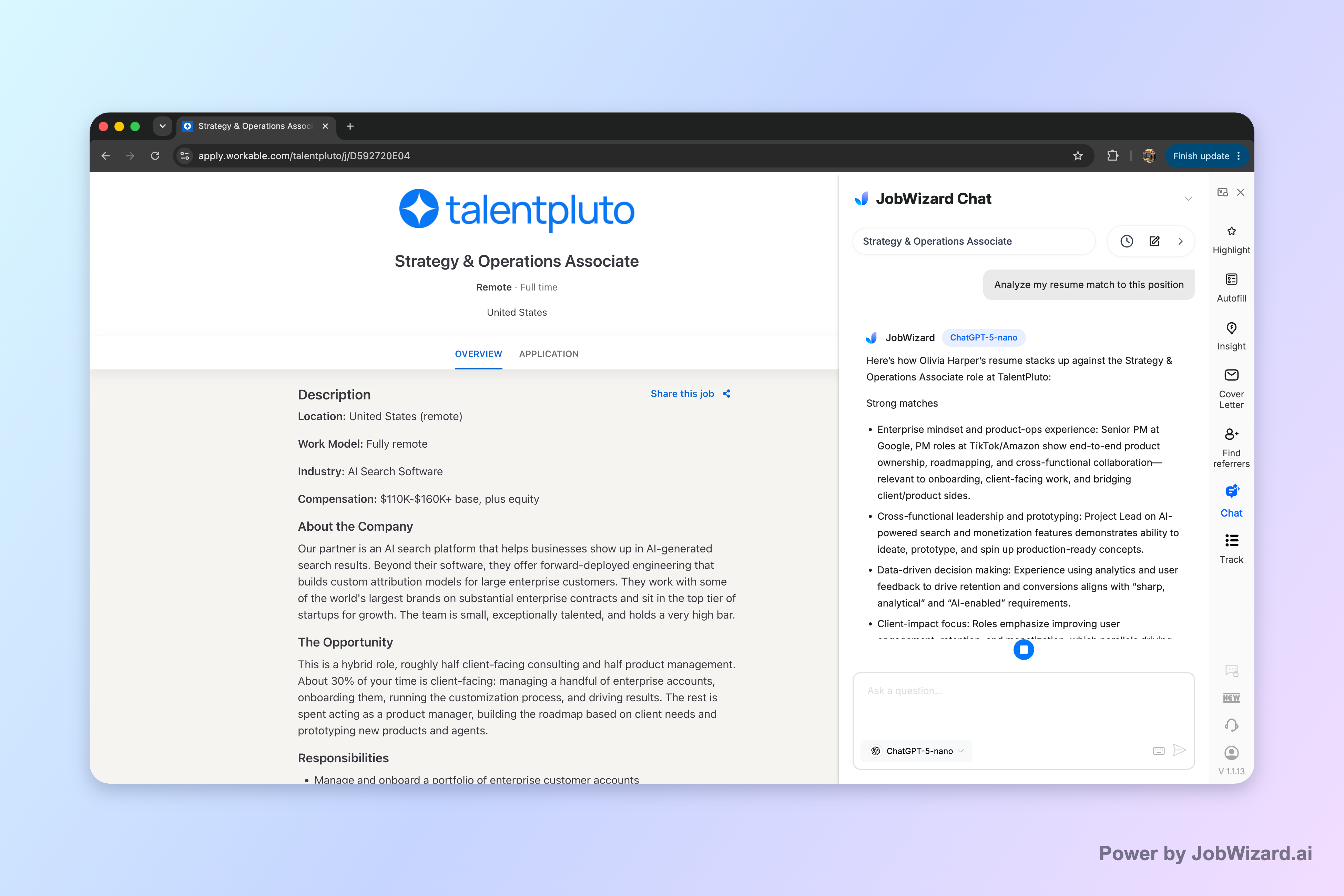
JobWizard’s Career Chat can help you refine your response using the role context, so you can ask follow-up questions about fit and application strategy without re-pasting the job description every time.
How to answer earliest start date: start with a truthful earliest “yes”
Answer the question with your earliest realistic date, then add flexibility only if it’s actually possible. Employers are trying to predict when they can schedule onboarding—your wording should reduce uncertainty, not create it.
Before you type anything, confirm three things: (1) your earliest date you can physically begin, (2) your current notice period (if applicable), and (3) any real constraints (training, relocation, or required documents). Once those are clear, you can write a one- or two-line answer that stays accurate.
Use this simple formula
Earliest start date + brief constraint (if needed) + optional flexibility works on most applications.
- Earliest start: the date you can truly begin.
- Constraint (optional): mention notice period or timing reason only if it helps.
- Flexibility (optional): offer to discuss timing if you can adjust.
Examples you can copy (and customize)
- Employed + notice period: “Earliest start: [date] (based on my notice period). I’m happy to discuss options if your timeline differs.”
- Between roles + can start soon: “Earliest start: [date]. I’m available to begin promptly.”
- Can start earlier than requested: “Earliest start: [date]. I can also start earlier if needed.”
- Relocation or paperwork pending: “Earliest start: [date] (pending relocation/processing timelines). I can confirm details as soon as needed.”
When “earliest start date” doesn’t match the job’s timeline
Your best move is to stay accurate and sound workable—even if you can’t match their ideal start date.
Many job forms implicitly reward vague optimism, but that backfires later. If you choose a date you can’t meet, you’ll either rush your transition or need to renegotiate, which can weaken trust. Instead, anchor on your earliest realistic date and clearly signal you’re not ignoring the role’s needs.
If your earliest date is later than their ideal
Use wording that frames the delay as planned, not accidental.
- Later due to notice: “Earliest start: [date] based on my current notice period. Please let me know what start window you’re targeting.”
- Later due to logistics: “Earliest start: [date] due to relocation/timing constraints. I’m ready to align on a concrete onboarding plan.”
If your earliest date is earlier than they expect
Offer early availability without overpromising.
- Earlier and flexible: “Earliest start: [date]. I’m available to start ahead of schedule if onboarding needs it.”
- Earlier but want to avoid chaos: “Earliest start: [date]. I can start on the earlier date if required, otherwise I’m ready for [date] onboarding.”
If you’re not sure yet
Choose the earliest date you’re confident you can meet, then keep your next step conversational. Avoid writing “TBD” unless the form allows it.
- Not sure: “Earliest start: [date]. I can confirm the exact start date shortly after final details are confirmed.”
Ready-to-use wording for the most common earliest start scenarios
Pick the scenario that matches you and use the script as a template—then replace the bracketed parts with your truth.
Scenario 1: You’re employed and serving notice
Earliest start date + notice period is the most straightforward approach.
- “Earliest start: [date] (based on my notice period). I’m happy to discuss a start-date window that works for your onboarding plan.”
Scenario 2: You’re available immediately (but confirm it)
“Immediate” only if it’s real—then keep the answer clean.
- “Earliest start: [date] (available immediately).”
- If the application specifically wants a label: “Earliest start: Immediate.” (Only if you truly can begin right away.)
Scenario 3: You have interviews but your schedule is tight
Write what you can support during the hiring cycle.
- “Earliest start: [date]. I can also accommodate reasonable scheduling for interviews and onboarding steps.”
Scenario 4: You need relocation time or documentation
Give an accurate earliest date and include a short clarifier that reduces back-and-forth.
- “Earliest start: [date] (relocation/documentation timeline). I’ll confirm details as soon as logistics are finalized.”
Scenario 5: You want to sound flexible without lying
Use flexibility as a willingness to discuss, not a guarantee.
- “Earliest start: [date]. If your team needs an adjusted timeline, I’m open to discussing options.”
Turn “earliest start date” into a confident conversation (without overexplaining)
Keep your application entry concise, then use follow-ups to clarify anything that could be misread.
If a form has a short answer field, you usually don’t need a paragraph—your goal is clarity. If you have more room (or a follow-up message later), you can ask questions that confirm the employer’s timing needs.
Ask a timing question that sounds professional
- “For this role, what start date window are you aiming for?”
- “My earliest start is [date] based on my current timeline—would that fit your plan?”
Where other “start date” questions fit
If you’re also seeing related prompts, you can match the script approach to the exact wording.
- Use a field-tested method for job application questions so your answers stay consistent.
- For “date available to start” questions, use timing scripts for notice and flexibility.
- If the prompt is “when are you available to start,” use this practical start-date script.
- For “availability to start work,” grab scripts for “immediate,” “two weeks,” and more.
How Career Chat helps you draft and sanity-check your answer
Use it to pressure-test fit and clarity, not to outsource truth. Career Chat keeps the current role in context so you can ask follow-up questions about resume fit and application strategy without pasting the job description again. Then you review the wording and confirm your real earliest date before you submit.
Do this automatically with JobWizard
Skip the manual work — JobWizard's Smart Autofill handles this for you.
FAQ: How to answer earliest start date
Use these quick answers when your situation doesn’t fit the “normal” script.
What should I write if my earliest start date is sooner than the job wants?
If you can start earlier than requested, write your earliest realistic date (not an aspirational one) and add a one-line flexibility note, like: “Earliest: [date]. I can also start earlier if needed.” Then double-check the date with your own calendar.
How do I answer “earliest start date” when I’m still employed?
Use your notice period as your earliest realistic start date, then offer flexibility: “Earliest start: [date] (based on my notice period). I’m happy to discuss options if the timeline can be adjusted.”
Should I pick “immediately” if I’m not sure I can?
No—only choose “immediately” (or the closest date) if you can support it. If you’re unsure, pick the earliest date you’re confident is accurate and keep it reviewable, e.g., “Earliest start: [date].”
Can I use Career Chat to draft my start-date answer?
Yes. Career Chat keeps the current role in context so you can ask a follow-up question about your timeline and how your answer should fit the job’s expectations. You still review the wording and submit yourself, so confirm the details before sending.
What’s a good follow-up question if my start date answer might be unclear?
Ask something like: “For this role, what start date window are you aiming for?” Then follow up with: “My earliest start is [date] based on notice—would that fit your timeline?”
Get your earliest start date answer right. If you tell Career Chat the role you’re applying to and your real timeline, ask it what wording best matches the job’s likely expectations—then review your final entry before you submit. You can start by asking a focused question about your start-date window for the current role.
Frequently Asked Questions
Let AI answer these questions for you
JobWizard fills sponsorship, work-auth, and availability answers correctly on every application — free.