Simplify Pricing for Job Hunting: How to Compare Tools Without Getting Lost in Plans
Simplify pricing decisions for job-search tools by using a side-by-side checklist: what you pay for, what you still review, and what you can safely compare. This guide focuses on practical comparison—not hype—so you can choose faster.

Free Chrome extension
Autofill your next job application
JobWizard is a free Chrome extension that fills applications, tracks statuses, and optimizes your resume.
Simplify pricing by comparing what you actually control (not just what you pay)
If you’re trying to simplify pricing for job-search tools, the hard part isn’t finding a number—it’s comparing plans that are worded differently. Most tools bundle “automation” into pricing language, but the real value depends on what gets filled for you versus what still requires your judgment.
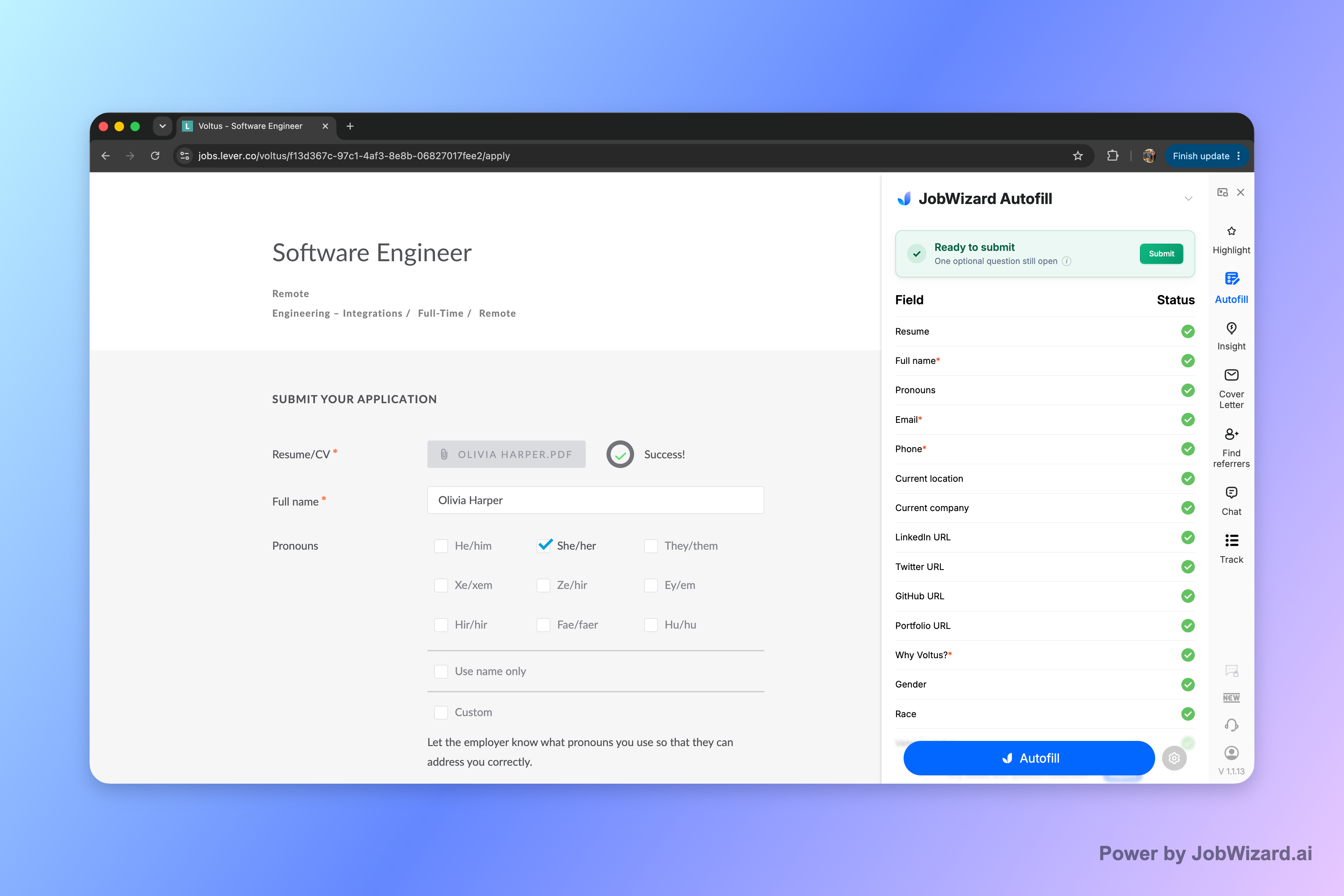
For job seekers, the fastest way to make a fair comparison is to use a consistent framework: identify (1) what the tool can fill automatically, (2) what you must review and answer yourself, and (3) where mistakes would be on you. This approach helps you compare tools without getting stuck in plan names, marketing tiers, or “upgrade to unlock” patterns.
Turn pricing into a checklist: automate vs. review-before-submit
To simplify pricing, convert each vendor’s plan into the same checklist so the differences show up clearly. You’re looking for the boundaries of automation—because your time and risk mostly come from the parts you still handle.
Use this checklist while you scan pricing pages and feature lists:
- Repetitive fields: Does the tool help with common, repetitive form items (like contact details, past job entries, or standard fields)?
- Review-before-submit items: Which questions are left for you to answer or verify (for example, sponsorship, salary, EEO, and custom questions)?
- Submission control: Does the workflow require you to confirm before submitting, or does the tool push submissions without your check?
- Evidence of boundaries: Is the “what’s automated vs what you review” described plainly, or is it buried behind vague terms?
This matters because even the best “automation” still depends on your accuracy where it counts. JobWizard’s workflow, for example, is designed as autofill + review-before-submit—repetitive fields are filled fast while sponsorship/salary/EEO/custom questions are left for you to review before submitting.
JobWizard supports an autofill + review-before-submit workflow (the user reviews sponsorship/salary/EEO/custom questions and submits themselves).
Build a fair side-by-side comparison table (so you don’t pay twice for the same thing)
A good simplify pricing strategy includes a side-by-side table so you can stop paying for overlapping features without realizing it. Many job seekers end up with multiple tools because they’re paying for “pieces” of a workflow that should be one coherent chain.
Create a table like this, and fill it in for every candidate tool:
| Category | What to record from the pricing page | Why it matters |
|---|---|---|
| Automation scope | Which fields are filled automatically? | Automated scope determines the time you save with repetitive data entry. |
| Review boundary | Which sections you must verify/answer before submitting? | That’s where accuracy and compliance matter most. |
| Control over submission | Does the user submit after review? | You want a workflow you control—especially for custom questions. |
| Plan differences | What actually changes between tiers? | Pricing tiers can represent different limits or feature access—capture the real differences. |
| Job platform coverage | Which application sources are supported? | If most of your roles are on one platform, coverage determines practical usefulness. |
Where numbers can help (without turning your comparison into guesswork)
You may see “how much” or “how often” claims. You don’t need speculation to simplify pricing—use verified context when you have it. For JobWizard, for example, internal usage indicates heavy real-world reliance on autofill + review-before-submit: 720,000+ applications submitted and 600,000+ autofill sessions run through JobWizard. On average, JobWizard autofills about ~18 repetitive fields per application (typically 11–23). It’s also used across major ATS ecosystems, with roughly ~65% on Workday, ~19% Greenhouse, ~12% Ashby, and ~4% Lever.
The key is how you interpret these numbers: they describe where automation is used—not a promise of outcomes. They help you judge whether a tool is built for the kind of application workflow you’re doing.
Choose the right pricing plan by matching your job-search workflow
To simplify pricing, pick the plan that matches how you apply—not how you hope to apply. Your best plan is the one that reduces repeated work while preserving the review step where you need control.
Here are practical “fit” questions you can use before you buy or upgrade:
- How repetitive are your applications? If you often re-enter the same profile info, automation for repetitive fields becomes more valuable.
- Do you frequently answer custom prompts? If yes, you’ll still spend time there. Prioritize tools that clearly separate autofill from review.
- Are your applications concentrated on one platform? If your targets skew toward a specific ATS, prioritize a tool that supports that environment well.
- Do you want control over what gets submitted? If you prefer to double-check before sending, emphasize review-before-submit workflows rather than marketing terms.
Why “review-before-submit” should influence your pricing decision
When you simplify pricing, it’s tempting to focus on the most automated-looking option. But from a job seeker’s perspective, the review step is where you maintain accuracy on sponsorship/salary/EEO and custom questions. Tools built around autofill + review-before-submit align with that reality: you get speed on repetitive fields while you remain responsible for the parts that can’t be safely guessed.
JobWizard’s design follows that principle: repetitive fields can be filled quickly, while you review the rest before submitting. That structure is exactly what you should look for when deciding whether a plan is worth it.
Common pricing traps (and how to avoid them when you simplify pricing)
Most people don’t struggle to find pricing—they struggle to interpret it. Simplify pricing by avoiding these traps that lead to wrong expectations.
- Trap 1: Comparing plan names instead of actual behaviors. Two tools might use different tier names, but the real difference is what automation does and what you verify.
- Trap 2: Treating “automation” as “set-and-forget”. For job applications, custom questions often require human review, even when autofill exists.
- Trap 3: Ignoring the review boundary. If you can’t clearly identify which parts are reviewed by you, your pricing comparison becomes subjective.
- Trap 4: Paying for overlaps. If you already have one tool that handles repetitive form-filling, you may not need to pay again for similar automation.
If you keep your checklist consistent across tools, pricing starts to look less like marketing and more like a set of understandable trade-offs.
Do this automatically with JobWizard
Skip the manual work — JobWizard's Smart Autofill handles this for you. On these platforms: JobWizard vs Simplify.
FAQ: Simplify pricing for job-search tools
How do I simplify pricing when each job tool uses different plan names?
Start by normalizing the plan details into the same categories for every tool—what’s included, what’s limited, and what you still control. Then compare on the “review-before-submit” items (custom answers, sponsorship/salary/EEO, and other prompts) because those parts are what you’ll need to handle personally regardless of the plan name.
What should I look for beyond the monthly or annual cost to truly simplify pricing?
Look for what actions the tool automates versus what it leaves for you to review: repetitive fields that can be filled quickly, plus the sections you must verify before submitting (like sponsorship/salary/EEO and custom questions). If you can’t clearly identify those boundaries, your comparison isn’t apples-to-apples.
Can I use JobWizard to autofill applications while still reviewing everything before I submit?
Yes. JobWizard supports an autofill + review-before-submit workflow, where repetitive fields are filled fast while sponsorship/salary/EEO/custom questions are left for you to review before submitting. The user still decides whether and what to submit.
Is “auto-apply” the same thing as “Simplify pricing”?
Not necessarily. Pricing can look similar across tools, but what matters is whether the tool helps with repetitive data entry while you review the parts you control. For comparisons, focus on the review-before-submit boundary rather than marketing terms like “auto-apply.”
Ready to simplify pricing with a workflow-based choice? If your goal is to reduce repetitive application typing while keeping a review step you control, try JobWizard for an autofill + review-before-submit approach—so you can focus on the answers that actually require your judgment before you submit.
Frequently Asked Questions
Autofill your next job application
JobWizard is a free Chrome extension that fills applications, tracks statuses, and optimizes your resume.