Nursing keywords that actually match job postings: how to spot them fast (with examples)
Learn how to use nursing keywords to mirror job requirements in real nursing job descriptions—so you can tailor your application with confidence and accuracy.

Free Chrome extension
See your resume's match score for any job
JobWizard compares your resume to each job description and shows the exact keywords to add — free.
Why “nursing keywords” decide how well you match the job posting
If you’ve ever wondered why two nearly identical nursing resumes can land totally different interviews, the answer is usually hidden in the job description. Many facilities don’t just hire for “nursing”—they hire for specific strengths: the exact skills you’ve used, the certifications you currently hold, and the responsibilities you can reliably perform in that unit.
That’s what nursing keywords are: the job posting’s own language for requirements like patient assessment, medication administration, wound care, infection prevention, charting/documentation, and qualifications like BLS/ACLS. When your resume and application clearly reflect those terms (accurately), the employer can understand your fit faster—and you can tailor with less guesswork.
The goal isn’t to “game” anything. The goal is to align your application with what the role actually asks for.
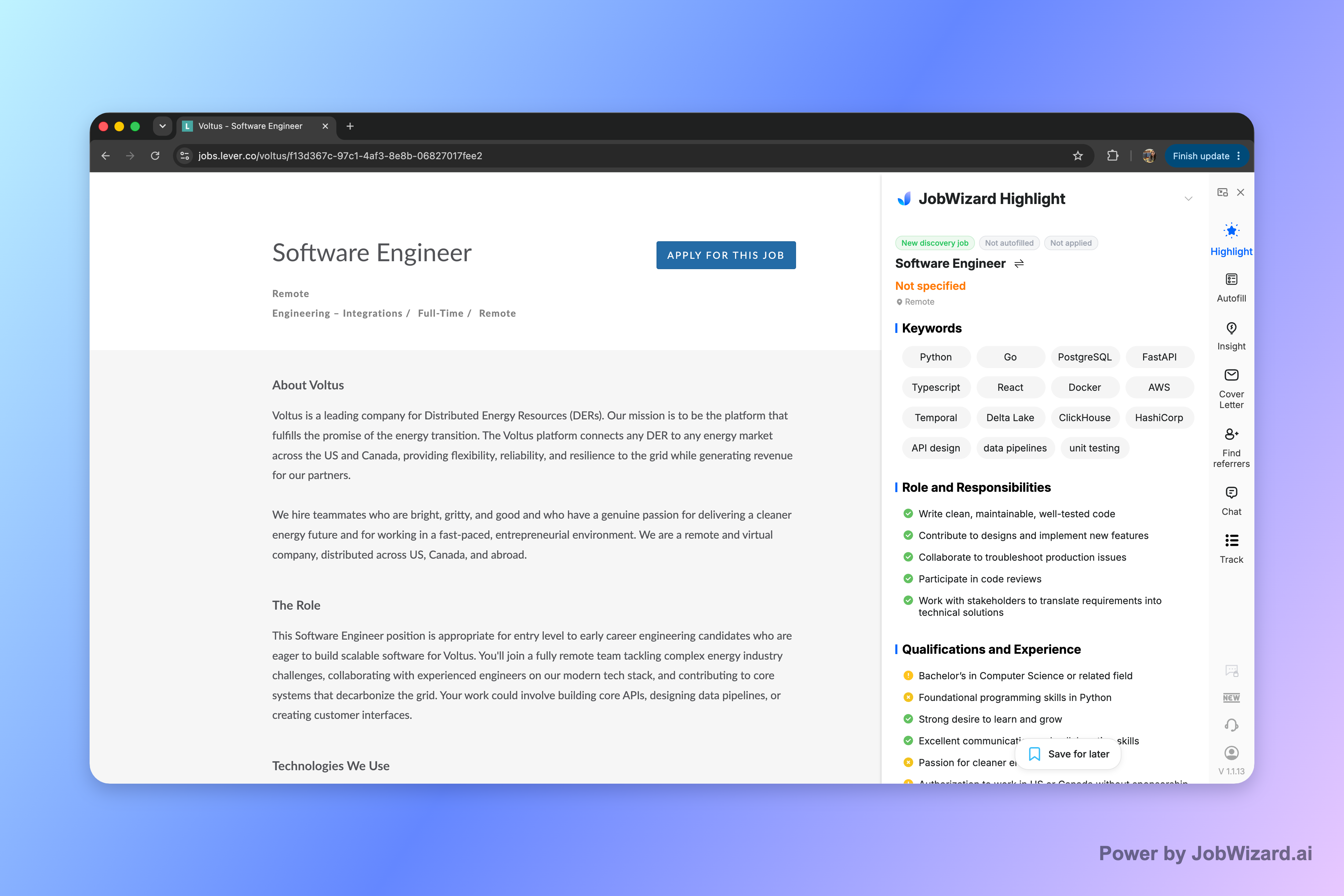
JobWizard can help you extract those requirements systematically. With JD Highlights, it turns a long job description into a structured view of keywords, role responsibilities, and qualifications so you can review the requirements more systematically.
How to pull nursing keywords from a job description (a reliable workflow)
When you’re searching for nursing roles, stop treating keywords like a generic “resume checklist.” Instead, treat them like a map to the exact job you’re applying to. Use this workflow for each posting so your nursing keywords match what the employer emphasized.
Step 1: Scan the job description for “keyword zones”
Most nursing postings include repeated categories of information. Focus on these zones:
- Responsibilities: what the nurse will do daily (e.g., “perform patient assessments,” “administer medications,” “coordinate care,” “document care”).
- Qualifications / Requirements: what must be true to be considered (e.g., RN license, BLS/ACLS, specialty experience, education).
- Preferred qualifications: extra signals that can separate candidates (e.g., “telemetry experience,” “wound care certification,” “charge nurse experience”).
- Unit-specific language: terms tied to the department (e.g., ED triage, oncology support, med-surg workflow, ICU readiness).
Step 2: Turn the posting into a keyword shortlist you can reuse
As you scan, rewrite the terms into your own shortlist. Keep it practical—aim for a few high-value buckets instead of dozens of random words. For example, your nursing keywords shortlist might look like this:
| Keyword bucket | What to extract | Example nursing keywords |
|---|---|---|
| Clinical skills | Core tasks the nurse performs | patient assessment, wound care, medication administration, fall prevention |
| Documentation / charting | How the role expects documentation to be handled | clinical documentation, nursing notes, medication records, care plan updates |
| Safety & quality | Standards and protocols the facility cares about | infection control, patient safety, quality improvement, escalation of concerns |
| Certifications & licenses | Requirements that must be current | RN license, BLS, ACLS, TNCC (if listed), specialized training (if listed) |
| Tools / systems | Any EHR or systems mentioned | EHR charting, electronic medication administration record (eMAR) (if stated) |
| Unit or role scope | What makes this role distinct | telemetry monitoring, discharge planning, case management collaboration, charge duties |
Important: only include tools/systems if the posting mentions them. If your experience matches, you can mirror those terms; if it doesn’t, replace with the closest accurate equivalent from your background.
Step 3: Map each keyword to a real accomplishment or responsibility
Keyword stuffing doesn’t work—because nursing is detail-heavy. Instead of listing keywords alone, attach each one to evidence you can explain in your own words. Here’s a simple mapping formula:
- Keyword: medication administration
- Proof: “Performed timely medication administration and documented per protocol.”
- Impact: “Partnered with team to verify orders and alert providers for changes.”
Repeat for 6–12 key items that show up most often in the responsibilities and qualifications sections.
Step 4: Use the same language in multiple places (without being repetitive)
Once your keyword shortlist is set, reflect it across your materials:
- Resume summary: 2–3 high-signal terms that match the role scope.
- Experience bullets: weave in the keywords naturally where they match your duties.
- Skills section: include certifications and clinical skill categories that are explicitly supported.
- Cover letter (optional but helpful): reference the top responsibilities and show you understand the unit’s priorities.
Examples of nursing keywords by setting (so you can tailor faster)
Different units use different language. Below are practical examples of nursing keywords you might see, organized by common settings. Use these as starting points, then confirm the exact terms in the posting you’re applying to.
Med-Surg / General Nursing
- patient assessment
- vital sign monitoring
- medication administration
- fall risk screening / fall prevention
- infection control
- clinical documentation / nursing notes
- patient education
- care coordination with interdisciplinary team
Telemetry
- cardiac rhythm monitoring
- interpretation/escalation of abnormal rhythms (only if the posting requests it)
- medication administration with telemetry-related precautions
- patient safety and monitoring standards
- ongoing assessment and reporting changes
ED / Emergency Department
- triage support
- rapid patient assessment
- vital sign monitoring
- documentation under time-sensitive workflows
- adherence to safety protocols
- treatment coordination and escalation
ICU / Critical Care
- high-acuity patient assessment
- continuous monitoring expectations
- care coordination for complex needs
- infection prevention practices
- medication administration with protocol adherence
- communication and escalation of clinical changes
Wound Care / Specialty Clinics
- wound care
- patient education on wound management
- documentation of wound status and care plan updates
- infection control considerations
- assessment and treatment coordination
How to adjust for RN vs. LPN vs. CNA
Even when the setting is the same, nursing keywords can shift with scope. A posting may use broad phrases that still imply different responsibilities. When you compare RN/LPN/CNA roles, look for these signals in the responsibilities and qualifications:
- Scope of assessment: does the posting emphasize broader assessment/care planning (common in RN roles) or basic nursing care under supervision (often in LPN/CNA roles)?
- Documentation expectations: does it call out nursing notes, care plan updates, or care coordination?
- Medication-related language: does it specify medication administration responsibilities and related documentation?
- Required certifications: some roles specify additional training.
If you’re unsure, use the job description as your truth source. The “right” keywords are the ones that appear in that specific posting and align with your experience.
Nursing keywords and application strategy: what to do (and what not to do)
Using nursing keywords effectively is mostly about discipline: accuracy, relevance, and review. Here’s how to get the most out of keyword tailoring without creating new problems.
Do: mirror responsibilities, not just titles
It’s tempting to focus only on job titles (“ICU nurse,” “case manager,” “charge nurse”). But employer language often focuses on responsibilities. If the job description says “document care and communicate changes,” that becomes a tailoring opportunity—even if your title differs.
Do: keep certifications and qualifications exact
For nursing keywords tied to licensure and certifications, be precise:
- Use the exact certification name if it appears in the posting.
- Only claim certifications you currently hold or can meet according to the posting’s requirements.
Do: treat keyword matches as “review prompts,” not predictions
JobWizard’s JD Highlights can organize keywords, responsibilities, and qualifications from a job description so you can review requirements more systematically. This is about helping you work faster and more clearly—not about predicting outcomes.
Note: Do not claim that highlighted keywords predict an ATS decision or hiring outcome. You still personalize, verify accuracy, and review before you apply.
Don’t: auto-send inaccurate details
Nursing applications often include sponsorship, salary expectations, EEO/ethnicity-related questions, and custom screening questions. Even if a tool helps you fill repetitive fields quickly, those items still need your review so you don’t introduce errors that can hurt your chances.
Best-fit approach: “autofill + review-before-submit” mindset
JobWizard is used to fill repetitive application fields fast while you review sponsorship/salary/EEO/custom questions before submitting. That means your nursing keywords strategy can stay human-centered: you verify content, tune phrasing to the posting, and ensure the final packet reflects your real experience.
In the aggregate, JobWizard has supported 720,000+ applications submitted and 600,000+ autofill sessions run through the tool. Users leverage autofill + review-before-submit workflows, and JobWizard autofills an average of about ~18 repetitive fields per application (typically 11–23). About ~65% of those applications are on Workday, where it saves the most time.
Quick checklist: tailor nursing keywords in 20 minutes per posting
If you’re applying frequently, speed matters. Use this short checklist to tailor nursing keywords without turning it into a multi-hour project.
- Read responsibilities first: circle 6–10 recurring tasks and expectations.
- Extract qualifications next: list required certifications, licenses, and must-have experience.
- Pick 8–12 nursing keywords you can support with real experience.
- Rewrite 3–5 resume bullets so each bullet includes one or two of your chosen keywords naturally.
- Confirm “must-have” accuracy: licensure, certifications, and any unit-specific requirements.
- Do a final scan: ensure your resume doesn’t claim skills you can’t explain.
If you want a fast starting point for extracting the job’s terms, open the target role and review its responsibilities, qualifications, and keywords in a structured view—so you’re not guessing what matters most.
Do this automatically with JobWizard
Skip the manual work — JobWizard's Smart Autofill handles this for you.
FAQ about nursing keywords
What are nursing keywords, and why do they matter?
Nursing keywords are the specific phrases employers use in job descriptions for skills, qualifications, and responsibilities (for example, “medication administration,” “wound care,” “patient assessment,” or “BLS/ACLS”). They matter because they help you tailor your resume and application materials so your experience is easy to match to the role’s requirements. They do not guarantee an ATS decision or hiring outcome—your content still needs to be accurate and reviewed before you apply.
Where can I find nursing keywords for a specific job?
Start with the job description itself. Look for recurring terms in sections like responsibilities, qualifications, and job requirements. Then convert those terms into a shortlist: core clinical skills, required certifications, tools/EHR references mentioned, and any role-specific expectations (like charge nurse duties or case management collaboration).
Should I copy nursing keywords word-for-word from the job posting?
You can mirror the wording when it accurately reflects your experience, but don’t force-fit terms you can’t support. A good approach is to use the same core concept (e.g., “patient assessment,” “time management,” “infection control”) while keeping your descriptions honest and specific—so the keyword match is backed by real details.
How do nursing keywords differ for RN, LPN, and CNA roles?
They often differ in scope and expectations. RN postings typically emphasize broader assessment, care planning, and coordination, while LPN roles may focus more on supervised medication administration and basic nursing care. CNA roles commonly emphasize direct patient care tasks and safety. The most reliable source is the exact job posting you’re applying to, since requirements vary by facility and unit.
Can JobWizard help me identify nursing keywords in job descriptions?
Yes. JobWizard’s JD Highlights can organize a job description into keywords, role responsibilities, and qualifications so you can review requirements more systematically. After that, you still review and personalize before submitting—don’t treat highlighted keywords as a prediction of ATS outcomes.
Ready to apply with confidence? Open the target nursing role in JobWizard, use JD Highlights to extract the nursing keywords and requirements, and then tailor your resume bullets and qualifications based on what the job description actually asks for—before you submit.
Frequently Asked Questions
See your resume's match score for any job
JobWizard compares your resume to each job description and shows the exact keywords to add — free.